
Short Answer
21 Facts About Brittle Star Autotomy
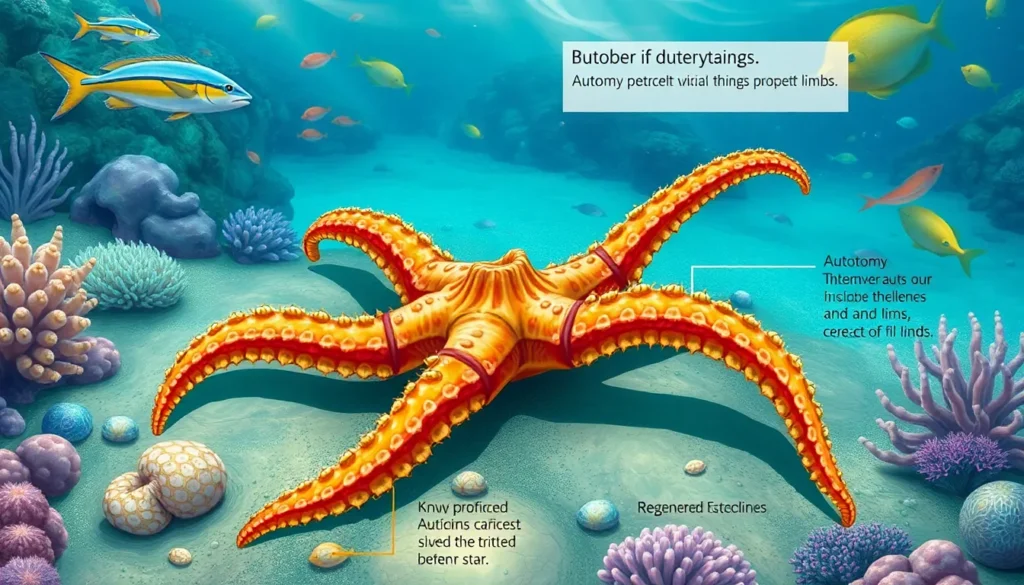
- Brittle stars can shed their arms. This process, known as autotomy, allows brittle stars to escape predators by sacrificing part of their body.
- Autotomy is a defense mechanism. By losing an arm, brittle stars can distract predators, giving them time to escape.
- Regeneration capabilities. After shedding an arm, brittle stars can regenerate a new one, though this process can take several months.
- Different species, different strategies. Not all brittle star species exhibit autotomy; some are more prone to this behavior than others.
- Arm loss does not significantly affect mobility. Brittle stars are capable of moving efficiently even after losing one or more arms.
- Autotomy triggers physiological changes. The act of shedding an arm can initiate hormonal changes that facilitate regeneration.
- Brittle stars have a unique skeletal structure. Their bodies are supported by a calcified skeleton known as an endoskeleton, which allows for flexibility.
- Autotomy can be influenced by environmental stress. Factors such as overcrowding or lack of food may increase the likelihood of autotomy.
- Some brittle stars can autotomize multiple arms. In certain species, losing one arm may lead to the loss of additional limbs if the stress persists.
- Predation pressure affects autotomy rates. In areas with higher predator populations, brittle stars are more likely to exhibit autotomy.
- Autotomy can be a costly strategy. While it allows escape from predators, the energy required for regeneration can impact the brittle star’s survival.
- Research on brittle star autotomy is ongoing. Scientists study this phenomenon to understand the evolutionary benefits and mechanisms involved.
- Some predators can adapt to brittle star autotomy. Certain species have learned to target the remaining body parts of brittle stars post-autotomy.
- Brittle stars inhabit diverse environments. They can be found in a range of marine habitats, from coral reefs to deep-sea environments.
- They use their arms for feeding. Brittle stars are filter feeders, using their arms to capture food particles from the water.
- Some brittle stars engage in parental care. Certain species exhibit behaviors that protect their young during early development.
- Autotomy may have evolutionary advantages. The ability to escape predation can enhance the survival and reproductive success of brittle stars.
- Brittle stars are ecologically significant. They play a vital role in their ecosystems by contributing to nutrient cycling and serving as prey for various marine animals.
- Some brittle stars are bioluminescent. Certain species exhibit bioluminescence, which may aid in predator evasion.
- Autotomy is not unique to brittle stars. Other echinoderms, such as some species of sea cucumbers and starfish, also exhibit autotomy.
- Human activity impacts brittle star populations. Overfishing and habitat destruction can threaten brittle star habitats, affecting their populations.
- Conservation efforts are crucial. Protecting marine ecosystems is vital for the survival of brittle stars and their ability to perform autotomy and regeneration.
Habitat and Behavior
Brittle stars are primarily found in marine environments, inhabiting diverse habitats including coral reefs, rocky substrates, and deep-sea areas. They are often associated with the seafloor, where they can hide among crevices and under rocks to avoid predators. Brittle stars exhibit a range of behaviors, including active movement using their long, flexible arms to navigate and forage for food. They are primarily nocturnal, feeding on small particles in the water and detritus during the night.
Why This Animal Matters
Brittle stars play a crucial role in marine ecosystems as scavengers and prey. Their feeding habits contribute to nutrient cycling, helping to maintain the health of their environments. Additionally, their ability to regenerate lost limbs is of interest to researchers studying biological regeneration, which may have implications for medical science. Conservation of brittle stars is important not only for their survival but also for the overall health of marine ecosystems.
Common Misconceptions
Misconception: All brittle stars can regenerate limbs quickly and easily.
Correction: While brittle stars can regenerate limbs, the process can take several months and requires significant energy.
Misconception: Autotomy is a sign of weakness in brittle stars.
Correction: Autotomy is a survival strategy that allows brittle stars to escape predators, demonstrating an evolutionary adaptation.
FAQ
What triggers autotomy in brittle stars?
Autotomy in brittle stars can be triggered by predation pressure, environmental stress, or physical injury.
How long does it take for brittle stars to regenerate lost limbs?
Regeneration can take several months, depending on the species and environmental conditions.
Are all brittle stars capable of autotomy?
Not all brittle star species exhibit autotomy; it varies among different species.




Leave a Reply