
Short Answer
21 Facts About Manta Ray Filter Feeding
- Manta rays are filter feeders. They primarily feed on plankton, small fish, and other microscopic organisms by filtering water through their gills.
- They use cephalic lobes. Manta rays have specialized structures called cephalic lobes that help funnel food into their mouths while swimming.
- Manta rays can consume large quantities. An adult manta ray can filter up to 60,000 cubic meters of water daily in search of food.
- They have a unique feeding behavior. Manta rays often perform a behavior known as “barrel rolling” to maximize their feeding efficiency.
- They are found in tropical and subtropical waters. Manta rays inhabit warm oceanic regions but can sometimes be seen in temperate waters as well.
- Manta rays exhibit social behavior. They are known to gather in groups, particularly in areas rich in food sources.
- They have a high metabolic rate. Manta rays require a significant amount of energy, which drives their continuous feeding habits.
- Manta rays have a long lifespan. They can live for up to 50 years or more in the wild.
- They have few natural predators. Adult manta rays are largely safe from predators, though young rays may be vulnerable to larger fish and sharks.
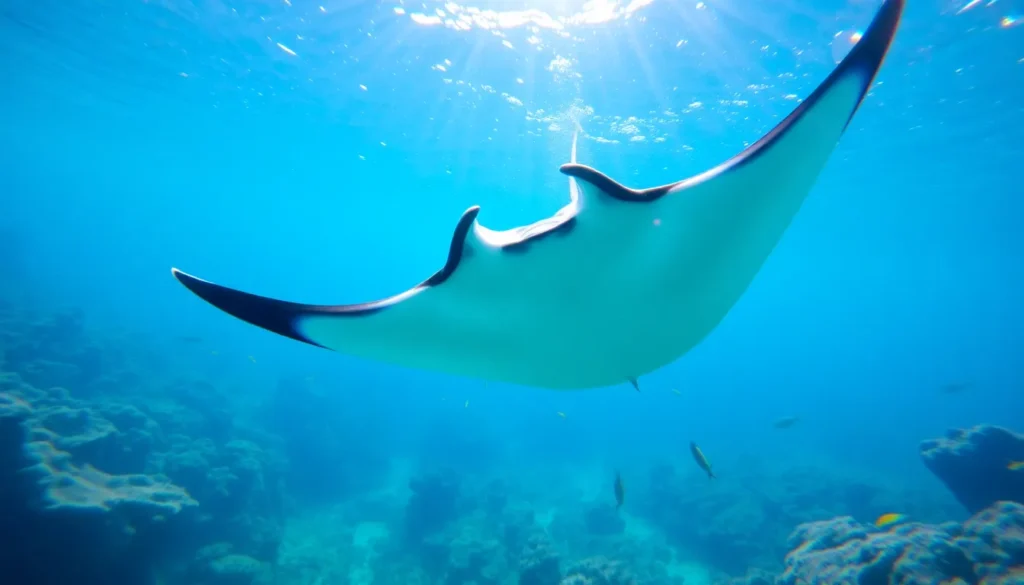
- Manta rays can reach large sizes. The giant manta ray can have a wingspan of up to 7 meters (23 feet).
- They are highly intelligent. Research suggests that manta rays exhibit complex behaviors and social interactions, indicating high intelligence.
- Manta rays are part of the mobulidae family. This family includes the manta rays and their close relatives, the devil rays.
- They have a unique reproductive strategy. Manta rays are ovoviviparous, giving birth to live young after a gestation period of about a year.
- Manta rays play a role in nutrient cycling. Their feeding habits contribute to the distribution of nutrients in marine ecosystems.
- They are vulnerable to fishing. Manta rays are often caught unintentionally in fishing nets, and their populations are threatened by overfishing.
- Conservation efforts are ongoing. Various organizations are working to protect manta rays through international treaties and local regulations.
- Manta rays have a unique coloration. They exhibit a dark dorsal surface and a lighter ventral surface, which may help in camouflage and species identification.
- They can migrate over long distances. Manta rays are known to travel thousands of kilometers between feeding and breeding grounds.
- They are a popular subject for ecotourism. Many people travel to observe manta rays in their natural habitat, contributing to local economies.
- Research on manta rays is limited. Despite their fascinating biology, much about their behavior and ecology remains unexplored.
- Manta rays communicate through body language. They use various movements and postures to signal to one another, particularly during mating rituals.
Habitat and Behavior
Manta rays are typically found in tropical and subtropical waters, often near coral reefs, coastal areas, and occasionally in open oceanic environments. They prefer areas with abundant food sources, such as plankton blooms. Manta rays are known for their migratory behavior, traveling to different locations based on seasonal food availability. They exhibit social behavior, often forming aggregations during feeding and mating periods.
Why This Animal Matters
Manta rays play a crucial role in marine ecosystems as filter feeders. By consuming large amounts of plankton and small organisms, they help regulate these populations, thus maintaining the balance of marine life. Additionally, their presence supports ecotourism, which can promote conservation efforts and raise awareness about marine biodiversity. Conservation of manta rays is essential due to their vulnerability to fishing practices and habitat degradation, highlighting the need for protective measures in marine environments.
Common Misconceptions
Misconception: Manta rays are dangerous to humans.
Correction: Manta rays are gentle creatures and pose no threat to humans; they are known to be curious and often approach divers.
Misconception: Manta rays are the same as stingrays.
Correction: While both belong to the same class of fish, manta rays and stingrays are different species with distinct behaviors and physical characteristics.
FAQ
What do manta rays eat?
Manta rays primarily feed on plankton, small fish, and other microscopic organisms.
Where are manta rays commonly found?
They are typically found in tropical and subtropical waters, often near coral reefs.
How do manta rays filter feed?
They use their cephalic lobes to funnel water and food into their mouths while swimming.



Leave a Reply