
Short Answer
21 Facts About Lions and Eagles in Heraldry
- Lions are the most common heraldic animal. They symbolize courage, nobility, royalty, and strength, making them a frequent charge in European heraldry.
- The “lion passant” posture is widely used. This depicts a lion walking with one forepaw raised, often representing vigilance and bravery.
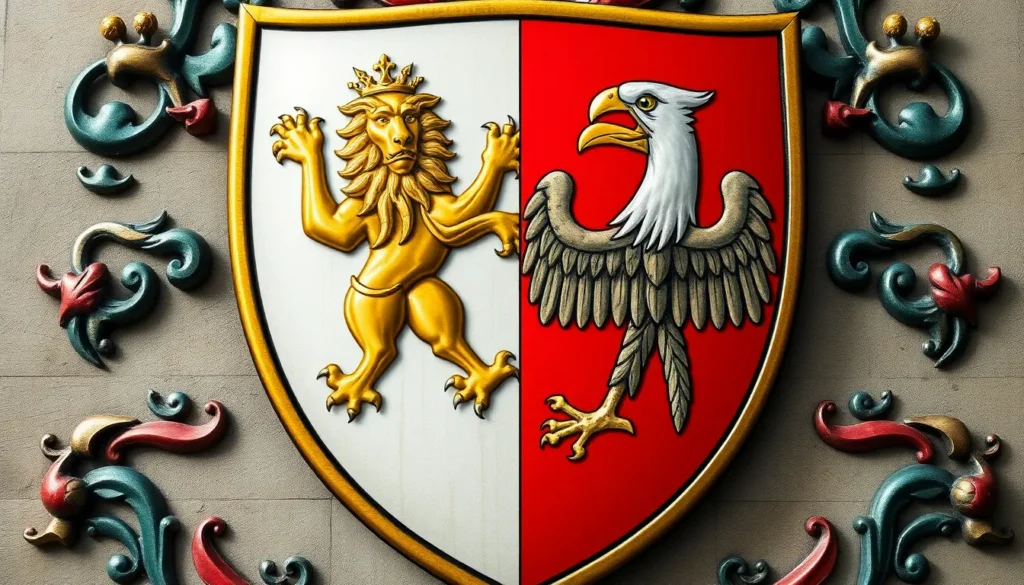
- The “lion rampant” is a powerful heraldic pose. Shown standing erect on one hind leg with forepaws raised, it conveys fierceness and valor.
- Golden lions often denote generosity. The color gold (or) in heraldry symbolizes generosity and elevation of the mind, enhancing the lion’s noble qualities.
- The eagle is a symbol of imperial power. It often represents sovereignty, courage, and farsightedness in heraldic traditions.
- The double-headed eagle is associated with empires. Used notably by the Byzantine and Holy Roman Empires, it symbolizes dominion over both East and West.
- Eagles in heraldry are often depicted with outstretched wings. This posture, called “displayed,” conveys protection and vigilance.
- The lion and eagle occasionally appear together. Combining terrestrial and aerial dominance, they symbolize comprehensive power.
- Heraldic animals are often stylized rather than realistic. Artistic conventions emphasize symbolic attributes over anatomical accuracy.
- The lion is linked to Christian symbolism. It often represents Christ’s resurrection or the virtues of bravery and justice.
- The eagle is a symbol of St. John the Evangelist. In Christian heraldry, the eagle represents divine inspiration and the ability to see truth.
- Colors and tinctures affect symbolism. Different tinctures (colors) like azure (blue) or gules (red) modify the meaning of lions and eagles.
- Heraldic lions may be crowned. A crowned lion denotes sovereignty, authority, or royal lineage.
- Eagles sometimes carry objects. They can hold swords, scepters, or orbs, further emphasizing power or divine right.
- Mythical variations exist. Creatures like the griffin combine lion and eagle traits, symbolizing strength and vigilance.
- The lion is a symbol in many national coats of arms. Countries like England, Scotland, and the Netherlands feature lions prominently.
- The eagle is a widespread emblem in many nations. The United States, Germany, and Poland prominently use eagles in their heraldic symbols.
- Heraldic animals serve to identify individuals and families. They function as visual markers of lineage, valor, and social status.
- Animals in heraldry often embody human virtues. Lions and eagles represent qualities admired and aspired to by medieval and early modern societies.
- Heraldic animals are used in modern logos and symbols. Their historical connotations continue to influence design and branding.
- The study of heraldic animals involves specialized terminology. Terms like “rampant,” “passant,” and “displayed” describe specific animal poses.
Habitat and Behavior
Lions (Panthera leo) are large carnivorous mammals native primarily to African savannas and some parts of India. They live in social groups called prides and are apex predators, primarily hunting large ungulates. Their behavior is characterized by cooperation in hunting and territorial defense.
Eagles represent a group of large birds of prey found worldwide, typically inhabiting mountainous or forested areas near water where they hunt fish or small mammals. Eagles display keen eyesight, powerful flight, and territorial behavior. In heraldry, their natural traits of dominance and keen vision are symbolically emphasized.
Why This Animal Matters
Lions and eagles have profound ecological roles as apex predators, maintaining balance in their ecosystems by controlling prey populations. Culturally, these animals have been revered for millennia, embodying ideals such as strength, courage, and leadership. Their importance in heraldry reflects these symbolic values, serving as emblems of authority and identity. Conservation efforts for lions and some eagle species are active due to habitat loss and human conflict, underscoring their continued relevance both ecologically and culturally.

Common Misconceptions
Misconception: Heraldic lions always represent actual lions.
Correction: Many heraldic lions are stylized or mythical and may not correspond exactly to real lions but symbolize broader virtues.
Misconception: The double-headed eagle is simply two eagles.
Correction: The double-headed eagle is a distinct symbol representing dual sovereignty or dominion and is not just two eagles placed together.
Misconception: All lions in heraldry are shown in the same pose.
Correction: Lions can appear in various postures, each with specific meanings, such as rampant, passant, sejant, or couchant.
Misconception: Eagles in heraldry always look like real eagles.
Correction: Heraldic eagles are often highly stylized, emphasizing features like wings and talons for symbolic effect rather than realism.
Misconception: Heraldic animals have fixed symbolic meanings everywhere.
Correction: Symbolism can vary by culture, period, and context, so meanings are not universally fixed.
FAQ
Why are lions so common in heraldry?
Lions symbolize courage, nobility, and strength, qualities highly valued by medieval nobility, making them a popular choice for heraldic charges.
What does a double-headed eagle represent?
The double-headed eagle symbolizes dominion over two realms or directions, often East and West, and is associated with imperial power.
Are heraldic animals based on real animals?
While heraldic animals are inspired by real creatures, they are often stylized or mythical, emphasizing symbolic meaning over naturalistic accuracy.





Leave a Reply