
Short Answer
21 Facts About Mosquitoes
- Mosquitoes are responsible for more human deaths than any other animal. They transmit diseases such as malaria, dengue fever, Zika virus, and yellow fever, which collectively cause hundreds of thousands to millions of deaths each year.
- Only female mosquitoes bite humans. Female mosquitoes require blood to develop their eggs, while males feed on nectar and plant juices.
- There are over 3,500 known species of mosquitoes worldwide. However, only a small subset of these species are vectors of human diseases.
- Mosquitoes have existed for over 100 million years. Fossil evidence shows that mosquitoes coexisted with dinosaurs during the Cretaceous period.
- Different mosquito species are adapted to specific environments. Some prefer urban areas, while others thrive in forests, marshes, or deserts.
- Mosquitoes locate their hosts using carbon dioxide, body heat, and odors. They are highly sensitive to these cues, enabling them to find humans and animals from a distance.
- The life cycle of a mosquito consists of four stages: egg, larva, pupa, and adult. The aquatic stages depend on standing water for development.
- Mosquitoes can lay hundreds of eggs at one time. Some species deposit eggs on water surfaces, while others lay eggs on moist soil or container walls.
- Mosquitoes have a short lifespan, typically ranging from a few days to a few weeks. Environmental factors such as temperature and humidity influence their longevity.
- Mosquitoes are attracted to dark colors and certain types of clothing. Wearing light-colored clothes can reduce the likelihood of bites.
- Some mosquitoes have developed resistance to insecticides. This has complicated efforts to control their populations and reduce disease transmission.
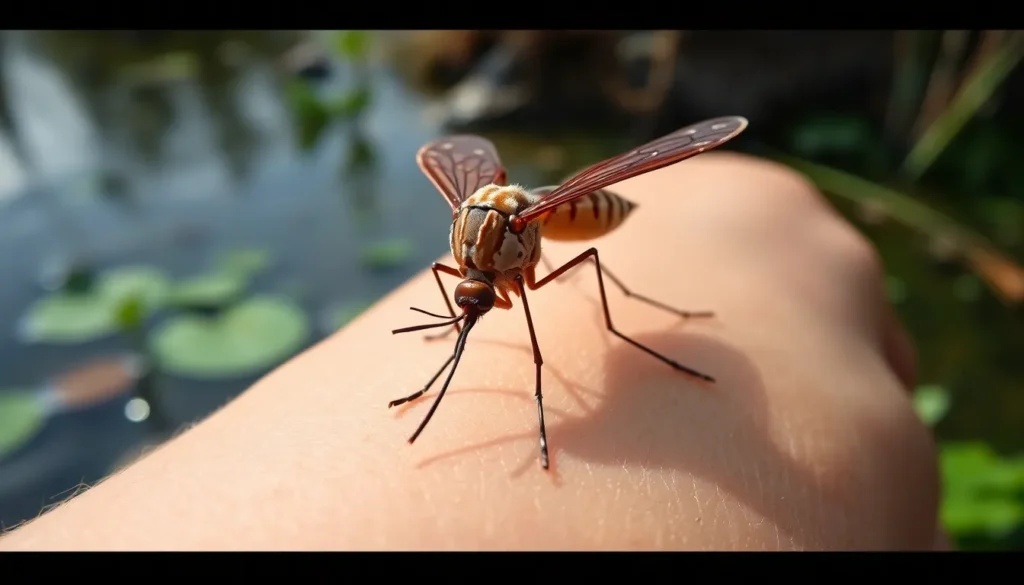
- The Aedes aegypti mosquito is a primary vector for dengue, Zika, chikungunya, and yellow fever viruses. It is distinguished by white markings on its legs and a lyre-shaped pattern on its thorax.
- Anopheles mosquitoes are the main transmitters of malaria parasites. They are predominantly active during nighttime hours.
- Mosquitoes play a role in food webs. Their larvae serve as food for fish and other aquatic organisms, while adults are prey for birds, bats, and other insects.
- Mosquito saliva contains anticoagulants and proteins that can cause allergic reactions in humans. This saliva is what triggers itching and swelling after a bite.
- Climate change impacts mosquito distribution. Rising temperatures and altered rainfall patterns have expanded mosquito habitats into new regions.
- Mosquito-borne diseases have influenced human history and population dynamics. Epidemics have shaped settlement patterns, agriculture, and military campaigns.
- Technological advances include genetically modified mosquitoes to reduce disease transmission. These approaches aim to suppress or alter mosquito populations but remain under evaluation.
- Preventative measures include use of insect repellents, bed nets, and elimination of stagnant water. These strategies remain central to reducing mosquito bites and disease spread.
- Mosquitoes exhibit diverse mating behaviors, often involving swarming males. Females select mates based on acoustic signals produced by wing beats.
- Mosquitoes have developed various adaptations to survive in diverse climates. Some species can enter dormant states to survive dry or cold conditions.
Habitat and Behavior
Mosquitoes inhabit a wide range of environments globally, from tropical and subtropical regions to temperate zones. They primarily require standing or slow-moving water to complete their aquatic larval and pupal stages. Mosquito species differ in their habitat preferences; for example, some breed in natural water bodies like ponds, marshes, and tree holes, while others utilize artificial containers such as tires and buckets in urban settings. Behaviorally, mosquitoes are mostly crepuscular or nocturnal feeders, although some species like Aedes aegypti are active during the day. Female mosquitoes seek hosts for blood meals using sensory cues including carbon dioxide exhaled by animals, body heat, and specific odors. After feeding, females lay eggs in suitable aquatic habitats to continue their life cycle. Mosquitoes also engage in mating swarms, where males gather in groups to attract females. Their survival strategies include rapid reproduction, egg dormancy during unfavorable conditions, and behavioral adaptations to avoid predators.
Why This Animal Matters
Mosquitoes hold a significant ecological role as both prey and pollinators. Their larvae contribute to aquatic ecosystems by recycling organic matter and serving as a food source for fish and invertebrates. Adult mosquitoes pollinate various plants, although this role is less prominent compared to other insects. From a human perspective, mosquitoes are critically important due to their role as vectors of numerous infectious diseases. Diseases like malaria, dengue fever, Zika virus, and West Nile virus transmitted by mosquitoes represent major global public health challenges, especially in tropical and subtropical regions. Understanding mosquito biology and behavior is essential for developing effective vector control measures and reducing disease burdens. Additionally, mosquitoes have cultural and scientific importance, as their impact on human health has influenced medical research, epidemiology, and public health policies worldwide.
Common Misconceptions
Misconception: All mosquitoes bite humans.
Correction: Only female mosquitoes bite humans to obtain blood necessary for egg development; males feed exclusively on nectar and plant juices.

Misconception: Mosquitoes die immediately after biting.
Correction: Unlike some insects, mosquitoes do not die after biting; females can bite multiple hosts during their lifespan.
Misconception: Mosquitoes transmit HIV.
Correction: Mosquitoes cannot transmit HIV; the virus does not survive or replicate inside mosquitoes.
Misconception: All mosquitoes transmit diseases.
Correction: Only certain species of mosquitoes are vectors for human diseases; many species do not transmit pathogens.
Misconception: Mosquitoes are only a nuisance and have no ecological value.
Correction: Mosquitoes play important ecological roles, including serving as food for other animals and contributing to pollination.
FAQ
Why are mosquitoes considered the deadliest animals?
Mosquitoes are considered the deadliest animals because they transmit pathogens that cause diseases such as malaria, dengue fever, and Zika virus, which together result in millions of human deaths annually.
Do all mosquitoes bite humans?
No, only female mosquitoes bite humans to obtain blood needed for egg development. Male mosquitoes feed on nectar and do not bite humans.
Can mosquitoes transmit HIV or COVID-19?
No, mosquitoes cannot transmit HIV or COVID-19. These viruses do not survive or replicate inside mosquitoes and thus cannot be spread through their bites.


Leave a Reply