
Short Answer
21 Facts About Box Jellyfish
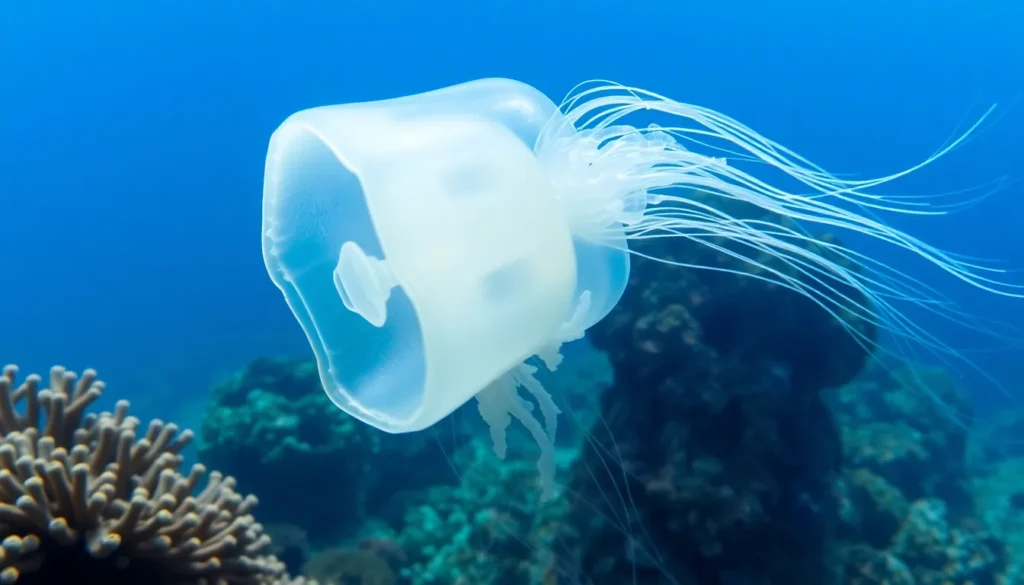
- Box jellyfish are named for their cube-shaped bell. Unlike other jellyfish with rounded bells, box jellyfish have a distinctive square or box-like shape, which gives them their common name.
- They possess 24 eyes grouped in clusters called rhopalia. These eyes include lenses, corneas, and retinas, allowing the jellyfish to navigate and hunt effectively.
- Box jellyfish are among the most venomous creatures in the world. Their venom can cause severe pain, heart failure, and in some cases, death if untreated.
- Their tentacles can reach up to 3 meters (10 feet) in length. Each tentacle is lined with thousands of nematocysts, specialized cells that deliver venomous stings.
- They use their venom primarily to capture prey such as small fish and shrimp. The venom rapidly immobilizes prey, facilitating capture and consumption.
- Box jellyfish are capable swimmers. Unlike many jellyfish that drift passively, box jellyfish can propel themselves with controlled movements, making them efficient hunters.
- Their venom affects the cardiovascular system. It can cause cardiac arrest by disrupting heart muscle function and electrical signaling.
- Not all box jellyfish species are equally dangerous to humans. Some species have milder venom, while others, like Chironex fleckeri, are highly lethal.
- Chironex fleckeri is commonly referred to as the sea wasp. It is considered the most dangerous box jellyfish species due to its potent venom and aggressive nature.
- Box jellyfish have a complex life cycle including a polyp and medusa stage. The polyp stage is sessile, attaching to substrates, while the medusa is the free-swimming adult form.
- They inhabit warm coastal waters, particularly around northern Australia and Southeast Asia. These areas provide the tropical conditions favorable for their survival and reproduction.
- The venom delivery system is highly efficient and fast-acting. Upon contact, nematocysts explosively discharge venom into the victim’s skin within milliseconds.
- Box jellyfish stings can leave severe scars and cause long-lasting pain. Survivors often report chronic skin sensitivity and scarring at sting sites.
- Antivenom exists for some box jellyfish species. Prompt medical treatment including antivenom administration significantly improves survival rates.
- Box jellyfish have a relatively short lifespan, typically less than a year. Their life cycle is adapted to rapid growth and reproduction within this timeframe.
- They play an important role as predators in their marine ecosystems. By preying on small fish and invertebrates, they help regulate these populations.
- Box jellyfish are mostly transparent and can be difficult to see in water. This transparency serves as camouflage, increasing their hunting success and reducing predation risk.
- Despite their dangers, box jellyfish are studied for their venom’s potential medical applications. Research explores its components for painkillers and treatments for heart conditions.
- Box jellyfish can detect light and dark but have no brain. Their simple nervous system coordinates complex behaviors like navigation and prey detection.
- Swimmers are advised to wear protective clothing in areas where box jellyfish are common. Stinger suits can prevent contact with tentacles and reduce sting risk.
- Climate change and coastal development may influence box jellyfish populations. Changes in water temperature and habitat availability could affect their distribution and encounters with humans.
Habitat and Behavior
Box jellyfish primarily inhabit shallow coastal waters of the Indo-Pacific region, including northern Australia, the Philippines, Thailand, and Malaysia. They prefer warm tropical and subtropical waters, often found near mangroves, estuaries, and coral reefs. These jellyfish are active swimmers capable of directional movement, which distinguishes them from many other jellyfish that drift with currents. Their behavior includes hunting small fish and crustaceans using their venomous tentacles, which deliver rapid and potent stings. Box jellyfish are mostly solitary but may aggregate seasonally near breeding sites. Their life cycle includes a sessile polyp stage attached to underwater surfaces, which asexually produces medusae (the free-swimming adult form). Their transparent bodies and complex eyes aid in navigation and prey detection.
Why This Animal Matters
The box jellyfish holds significant ecological importance as a mid-level predator in marine ecosystems, helping balance populations of small fish and invertebrates. Their venom contributes to scientific research, with components being studied for pharmaceutical applications such as novel analgesics and cardiac drugs. Culturally, box jellyfish stings have shaped local knowledge and safety practices in affected coastal communities, especially in northern Australia. Conservation-wise, their sensitivity to environmental changes highlights the impact of climate change and coastal habitat degradation on marine biodiversity. Understanding box jellyfish biology aids in improving public safety through education and medical preparedness.
Common Misconceptions
Misconception: All jellyfish stings are harmless.
Correction: While many jellyfish stings cause minor irritation, the box jellyfish’s sting is extremely venomous and can be life-threatening.

Misconception: Box jellyfish are aggressive and actively attack humans.
Correction: Box jellyfish do not seek out humans; stings usually occur when swimmers accidentally come into contact with their tentacles.
Misconception: There is no treatment for box jellyfish stings.
Correction: Immediate medical attention and the use of antivenom can effectively reduce the severity of symptoms and prevent fatalities.
Misconception: All box jellyfish species are equally deadly.
Correction: Venom potency varies among species; some are highly venomous, while others pose less risk to humans.
FAQ
Are box jellyfish deadly to humans?
Yes, certain species of box jellyfish, especially Chironex fleckeri, possess venom potent enough to cause severe injury or death in humans if stung and left untreated.
How do box jellyfish hunt their prey?
Box jellyfish use their long tentacles lined with venomous nematocysts to sting and immobilize small fish and crustaceans, which they then move toward their mouth for consumption.
Is there a treatment for box jellyfish stings?
Immediate medical treatment is essential. Antivenom exists for some box jellyfish species, and applying vinegar to a sting can deactivate unfired nematocysts, reducing venom injection.


Leave a Reply