
Short Answer
21 Facts About Service Animals (Guide Dogs)
- Guide dogs assist visually impaired individuals. They help navigate obstacles, signal changes in elevation, and increase the independence of their handlers.
- Training for guide dogs begins early. Most start as puppies and undergo extensive socialization before formal training at about one year old.
- Common breeds used as guide dogs include Labrador Retrievers, Golden Retrievers, and German Shepherds. These breeds are chosen for their intelligence, temperament, and trainability.
- Guide dogs must learn to disobey unsafe commands. This is known as “intelligent disobedience,” allowing them to protect their handler from harm.
- Training can take up to two years. During this time, dogs learn to follow directional commands, avoid obstacles, and behave appropriately in public places.
- Guide dogs are protected by law in many countries. They have the right to accompany their handlers in public spaces, including restaurants, transportation, and workplaces.
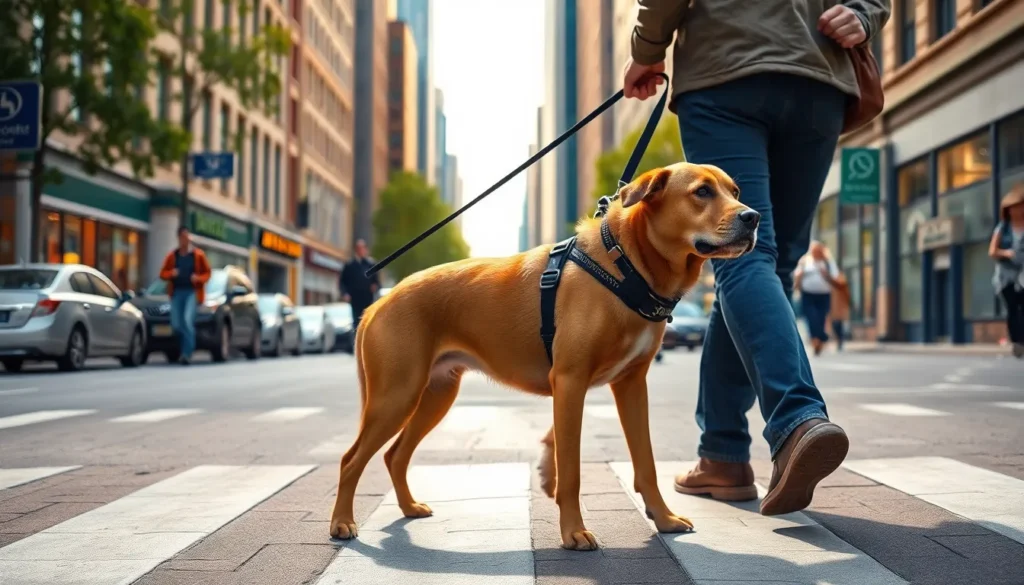
- Service dogs, including guide dogs, wear identifying harnesses or vests. This helps distinguish them from pets and signals their working status.
- Guide dogs are matched carefully with their handlers. Factors such as lifestyle, personality, and mobility needs are considered to ensure compatibility.
- Guide dogs improve safety and confidence. Their presence helps reduce accidents and increases social interaction for their handlers.
- They require regular veterinary care and ongoing training. Maintaining health and skills is essential for effective assistance.
- Guide dogs can live around 10 to 14 years. Retirement usually occurs when the dog is no longer able to perform its duties safely.
- After retirement, guide dogs often stay with their handlers or are adopted by familiar families. This ensures a comfortable transition.
- Not all dogs qualify as guide dogs. Only those meeting strict behavioral and health standards complete training successfully.
- Service dogs must remain calm in all environments. Exposure to crowds, noise, and distractions is part of their training to ensure reliability.
- Guide dogs facilitate increased independence. They enable handlers to travel, work, and socialize more freely.
- International guide dog organizations collaborate to improve training and accessibility. Standards and best practices are shared globally.
- Guide dogs communicate with their handlers through subtle body language. For example, stopping at curbs or changing pace signals important environmental information.
- There are specific programs that raise and train guide dog puppies. Volunteers often assist in early socialization before professional training begins.
- Guide dogs can also alert handlers to hazards such as moving vehicles or low-hanging branches. This helps prevent injuries while navigating.
- The bond between a guide dog and its handler is critical. Trust and mutual understanding develop over time and are essential for effective teamwork.
- Guide dogs are one category within service animals, which also include dogs trained for hearing assistance, seizure response, and mobility support. Each type undergoes specialized training for its tasks.
Habitat and Behavior
Guide dogs are domesticated animals trained to live and work closely with humans, primarily in urban and suburban environments where their handlers reside. Unlike wild animals, they adapt to diverse surroundings, including crowded streets, public transportation, and indoor spaces. Their behavior is characterized by calmness, focus, and obedience, necessary traits for safely guiding visually impaired individuals. Survival for guide dogs is dependent on proper care, human support, and ongoing training rather than natural instincts. They rely on consistent routines, healthy diets, veterinary care, and socialization to perform their duties effectively.
Why This Animal Matters
Guide dogs play a vital role in enhancing the autonomy and quality of life for people with visual impairments. Ecologically, these dogs are domesticated animals bred and trained through human intervention rather than natural ecosystems. Culturally, guide dogs are symbols of empowerment and accessibility. They contribute to social inclusion by enabling individuals with disabilities to participate more fully in society. From a conservation perspective, while guide dogs themselves are not endangered, the breeds commonly used are maintained through responsible breeding to preserve health and temperament. Overall, guide dogs represent a significant human-animal partnership that improves safety, mobility, and emotional well-being.
Common Misconceptions
Misconception: All dogs can be guide dogs.
Correction: Only dogs that meet strict behavioral, health, and temperament criteria successfully complete guide dog training.
Misconception: Guide dogs are pets.
Correction: Guide dogs are working animals trained to assist handlers and should not be treated as pets when on duty.
Misconception: Guide dogs can be taken away from their handlers in public places.
Correction: Laws in many countries protect the rights of guide dog handlers to be accompanied by their dogs in most public areas.
Misconception: Guide dogs can perform all types of assistance for disabilities.
Correction: Guide dogs are specifically trained to assist with visual impairments; other service dogs specialize in different tasks.
Misconception: Guide dogs do not require ongoing training after placement.
Correction: Continuous training and reinforcement are important to maintain a guide dog’s skills and behavior.
FAQ
What breeds are most commonly used as guide dogs?
Labrador Retrievers, Golden Retrievers, and German Shepherds are the most commonly used breeds due to their temperament, intelligence, and trainability.
How long does it take to train a guide dog?
Training a guide dog typically takes up to two years, including puppy socialization, formal training, and matching with a handler.
Are guide dogs allowed in all public places?
In many countries, laws protect the rights of guide dog handlers to bring their service animals into public places such as restaurants, stores, and public transport.






Leave a Reply