
Short Answer
21 Facts About Seahorse Male Pregnancy
- Male Pregnancy is Unique to Seahorses and Their Relatives
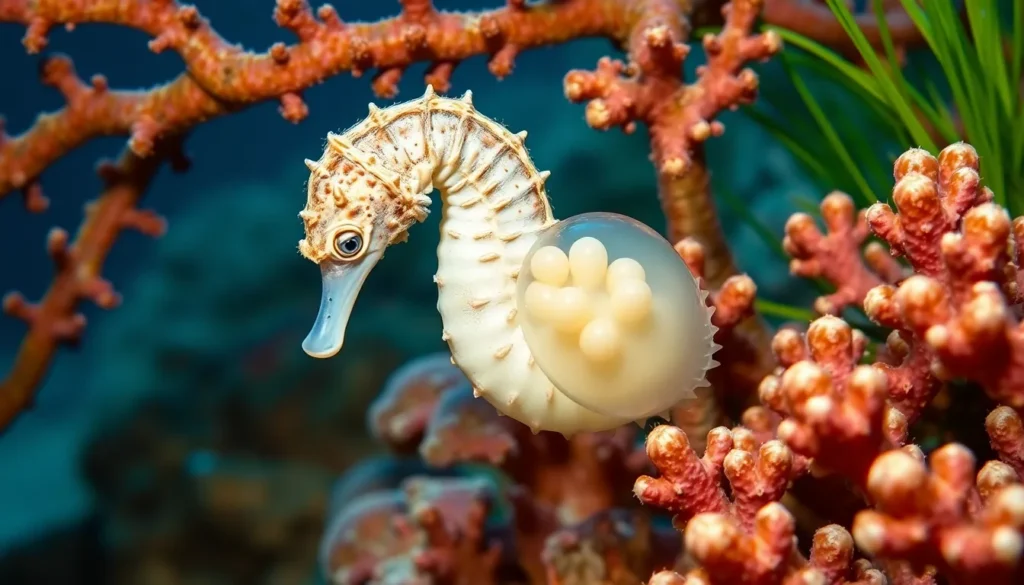
Seahorses, along with pipefish and sea dragons, are among the few species where males become pregnant and carry developing embryos. - Male Seahorses Have a Specialized Brood Pouch
Male seahorses possess a brood pouch on their abdomen where females deposit eggs during mating. - The Male Fertilizes the Eggs Internally
After the female transfers eggs into the pouch, the male fertilizes them inside, providing protection and oxygen. - Brood Pouch Environment Supports Embryo Development
The pouch regulates salinity, supplies nutrients, and removes waste, creating a controlled environment similar to a placenta. - Pregnancy Duration Varies by Species
Gestation can last from 10 days to six weeks depending on species and environmental conditions. - Male Seahorses Can Carry Hundreds of Offspring
Depending on size, a male seahorse may carry anywhere from 100 to over 1,500 embryos at once. - Birth is a Physically Demanding Process for Males
Labor involves muscular contractions to expel fully formed young from the brood pouch into open water. - Male Pregnancy Enhances Offspring Survival
By carrying embryos in a protected environment, males increase the chances of offspring survival compared to external fertilization. - Pregnancy Influences Male Seahorse Behavior
Males become less active and more secretive during pregnancy to reduce predation risks. - Seahorse Mating is Often Monogamous
The unique male pregnancy system often coincides with pair bonding during a breeding season or longer. - Hormones Regulate Male Pregnancy
Hormonal changes in males control brood pouch development, embryo care, and birth timing. - Male Pregnancy Represents a Role Reversal
Unlike most animals, male seahorses invest heavily in parental care by gestating offspring. - Embryos Receive Immune Protection
The pouch provides immune tolerance to prevent rejection of developing embryos. - Seahorses Can Become Pregnant Multiple Times Per Year
Depending on conditions, males can undergo several pregnancy cycles annually. - Male Seahorse Pregnancy is Studied for Evolutionary Insights
This reproductive strategy provides valuable understanding of sexual selection and parental investment evolution. - Not All Seahorse Species Have Identical Pregnancy Traits
Differences exist among species in pouch structure, gestation length, and brood size. - Environmental Stress Affects Male Pregnancy Success
Factors like water temperature and pollution can impact embryo development and male health. - After Birth, Males Are Ready for Another Mating Quickly
Males can often become pregnant again shortly after releasing their young. - Male Seahorse Brood Pouch is Analogous to a Mammalian Uterus
Both serve to protect, nourish, and oxygenate developing embryos internally. - Male Pregnancy is Rare Among Animals
Seahorses are one of the very few vertebrates where males gestate offspring. - Seahorse Male Pregnancy Challenges Traditional Gender Roles in Biology
This process highlights diversity in reproductive strategies beyond conventional norms.
Habitat and Behavior
Seahorses inhabit shallow coastal waters, including seagrass beds, coral reefs, and mangroves, primarily in tropical and temperate regions worldwide. They are slow swimmers and rely on their prehensile tails to anchor themselves to vegetation or coral. Seahorses are solitary or form monogamous pairs, especially during breeding seasons. Their diet consists mainly of small crustaceans and plankton. Due to their limited swimming ability, they depend heavily on camouflage and stillness to avoid predators. Male pregnancy influences their behavior, making males more cautious during gestation to protect developing embryos.
Why This Animal Matters
Seahorses play a crucial ecological role as mid-level predators in coastal ecosystems, helping regulate small invertebrate populations. Their unique reproductive strategy offers important insights into evolutionary biology, parental care, and sexual selection. Additionally, seahorses hold cultural significance in various societies, often symbolizing patience and protection. Conservation-wise, many seahorse species face threats from habitat loss, pollution, and overfishing, making understanding their biology essential for effective protection efforts.
Common Misconceptions
Misconception: Male seahorses give birth like mammals.
Correction: While male seahorses carry embryos internally, they lay eggs deposited by females and fertilize them inside the pouch; the process differs significantly from mammalian live birth.
Misconception: Only male seahorses are involved in pregnancy.
Correction: Although males gestate, females are equally involved by producing and transferring eggs to the male’s pouch.
Misconception: Seahorses can reproduce quickly without limitations.
Correction: Environmental factors and physical constraints limit reproduction rates and pregnancy success in seahorses.
FAQ
How do male seahorses become pregnant?
Male seahorses have a brood pouch where females deposit eggs during mating. The male fertilizes the eggs internally and carries them in the pouch until they hatch.
How long does male seahorse pregnancy last?
The gestation period varies by species but typically lasts from 10 days to six weeks depending on environmental factors.
Do male seahorses provide care after birth?
After birth, male seahorses release fully formed young into the water, and parental care generally ends there as the young are independent.

Leave a Reply