
Short Answer
21 Facts About Animal Magnetoreception
- Magnetoreception refers to an animal’s ability to sense magnetic fields. This sensory ability allows animals to detect Earth’s magnetic field and use it for orientation and navigation.
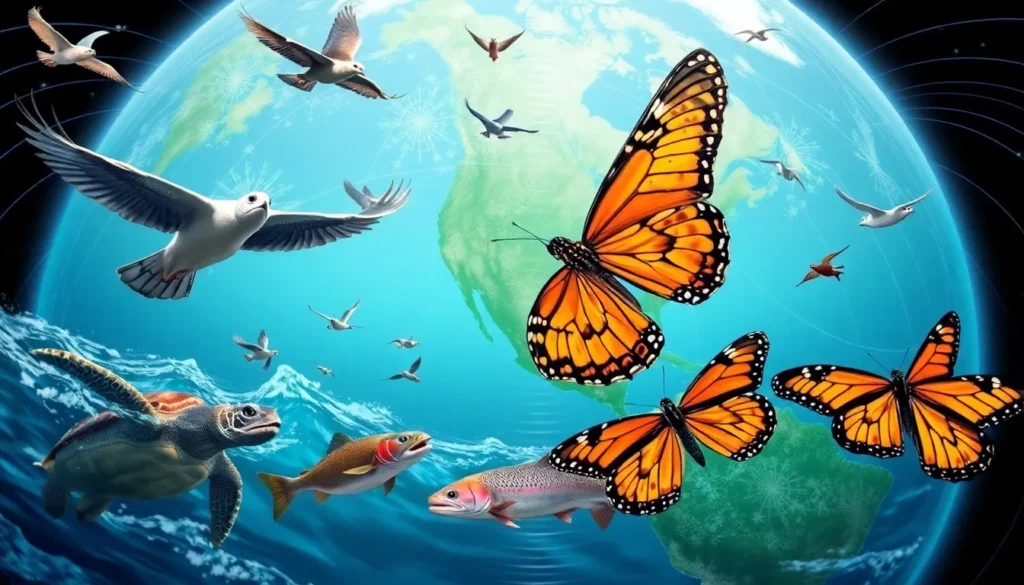
- It is found in a diverse range of species. Birds, fish, sea turtles, insects, and some mammals have demonstrated magnetoreceptive abilities.
- The exact biological mechanisms remain partially understood. Two main hypotheses involve magnetite-based receptors and light-dependent chemical reactions known as cryptochromes.
- Magnetite, a magnetic mineral, has been found in animal tissues. This mineral may act as a biological compass by responding to magnetic fields.
- Cryptochromes are proteins sensitive to blue light. They are thought to enable magnetoreception through a quantum chemical process affecting vision in some species.
- Birds use magnetoreception during migration. Species such as European robins can detect magnetic fields to navigate thousands of kilometers seasonally.
- Sea turtles rely on magnetoreception for long-distance navigation. Hatchlings imprint on the magnetic signature of their natal beach and use it to return years later.
- Salmon use magnetoreception to find their spawning streams. They integrate magnetic cues with other environmental information to complete their life cycle.
- Magnetoreception is sometimes combined with other senses. Animals often integrate magnetic information with visual, olfactory, and auditory cues for precise navigation.
- Disruption of magnetic fields can affect animal behavior. Experiments with altered magnetic environments show disorientation in species reliant on magnetoreception.
- Some insects, like monarch butterflies, use magnetoreception. This helps them migrate across continents despite their small size.
- Magnetoreception may influence homing pigeons. Pigeons are known to use magnetic cues alongside visual landmarks during navigation.
- Research suggests that humans might have a weak magnetoreceptive sense. However, evidence remains inconclusive and is an active area of study.
- Magnetoreception is thought to involve specialized cells or structures. For example, certain cells in bird beaks contain magnetite particles aligned to detect magnetic fields.
- Magnetoreception can operate in low-light or dark conditions. This makes it especially valuable for nocturnal or deep-sea animals.
- Quantum biology plays a role in some magnetoreception models. Radical pair mechanisms involving electron spins in cryptochromes depend on quantum effects.
- Magnetoreception research has implications for technology. Understanding this natural sensory system inspires developments in navigation devices and robotics.
- Some animals can detect both magnetic intensity and polarity. This dual detection helps them determine both direction and position relative to Earth’s magnetic field.
- Magnetoreception likely evolved independently multiple times. Its presence in diverse taxa suggests convergent evolution due to navigational advantages.
- Climate change and electromagnetic pollution may impact magnetoreceptive species. Changes in Earth’s magnetic environment and human-made electromagnetic noise could disrupt navigation.
- Animal magnetoreception remains a multidisciplinary research field. It combines biology, physics, chemistry, and ecology to unravel the complexities of this sensory ability.
Habitat and Behavior
Animals exhibiting magnetoreception inhabit a wide variety of environments, including terrestrial, marine, and aerial habitats. Migratory birds often travel vast distances across continents and oceans, using magnetic cues to maintain their migratory routes. Sea turtles hatch on beaches and navigate through open oceans, relying on magnetic signatures imprinted during early life stages. Fish species, such as salmon, use magnetoreception to locate suitable spawning grounds in freshwater and marine environments. Insects like monarch butterflies undertake long migrations spanning thousands of kilometers, also guided by magnetic fields. Magnetoreceptive behavior often complements other navigational strategies, enabling animals to maintain orientation during seasonal migrations, daily movements, or homing activities. This sensory ability helps them find food, mates, breeding sites, and safe habitats, enhancing survival in complex environments.
Why This Animal Matters
Magnetoreceptive animals play essential ecological roles in maintaining biodiversity and ecosystem functioning. Their long-distance migrations contribute to gene flow, population dynamics, and nutrient cycling across large geographic areas. For example, migratory birds aid in seed dispersal and pollination, while sea turtles influence marine food webs and coastal habitats. Understanding magnetoreception informs conservation efforts, especially as environmental changes threaten migratory routes and reproductive success. Additionally, the study of magnetoreception expands scientific knowledge of sensory biology and navigation, with potential applications in technology and environmental monitoring. These animals also hold cultural significance for many human societies, symbolizing endurance, navigation, and the mysteries of natural phenomena.
Common Misconceptions
Misconception: All animals can sense Earth’s magnetic field.
Correction: Only certain species possess magnetoreception, and its presence varies widely among animal groups.
Misconception: Magnetoreception works like a built-in compass with a single mechanism.
Correction: Magnetoreception likely involves multiple mechanisms, including magnetite-based and light-dependent processes, which may operate differently across species.
FAQ
What is animal magnetoreception?
Animal magnetoreception is the ability of some animals to detect Earth's magnetic field and use it for navigation and orientation.
Which animals have magnetoreception?
Magnetoreception has been observed in birds, sea turtles, fish like salmon, certain insects such as monarch butterflies, and some mammals.
How do animals sense magnetic fields?
Animals may sense magnetic fields through magnetite crystals in their tissues or via light-sensitive proteins called cryptochromes, which involve quantum chemical reactions.




Leave a Reply