
Short Answer
21 Facts About Naked Mole Rat Colonies
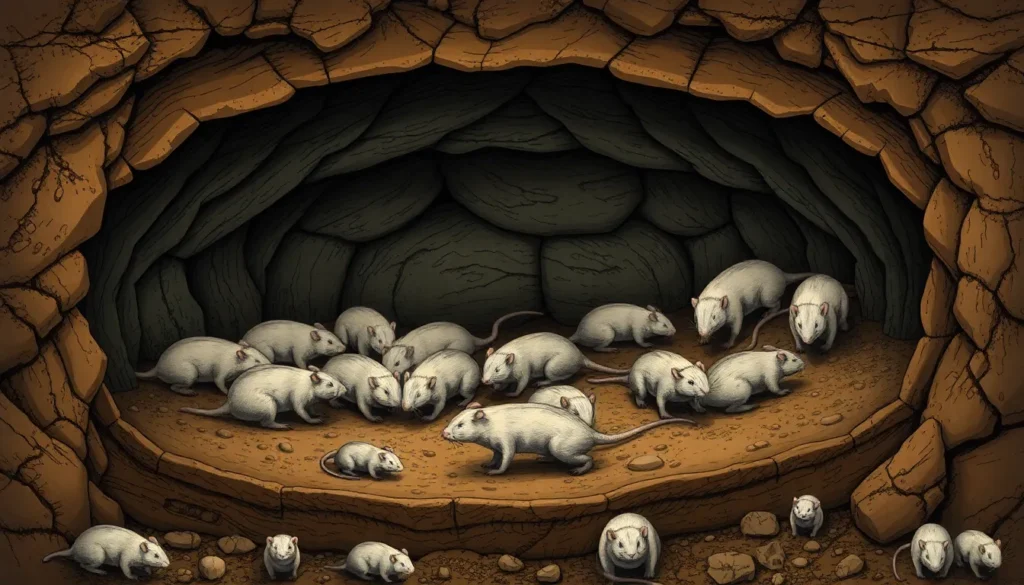
- Eusocial Structure: Naked mole rats are one of the few mammal species that exhibit eusociality, a social system similar to that of ants and bees, with a single breeding queen and non-reproductive workers.
- Single Breeding Queen: Each colony is typically led by one dominant female, the queen, who is the only individual that breeds and produces offspring.
- Large Colony Size: Colonies can contain up to 300 individuals, living together in an extensive network of underground tunnels.
- Division of Labor: Within colonies, individuals perform specialized roles such as workers, soldiers, and the queen, ensuring colony survival and efficiency.
- Longevity: Naked mole rats live exceptionally long lives for rodents, often exceeding 30 years, which is far longer than typical rodents of similar size.
- Resistance to Cancer: These animals show remarkable resistance to cancer, a trait under active scientific research.
- Thermoregulation: Naked mole rats are poikilothermic, meaning their body temperature varies with the environment, unlike most mammals that maintain a constant temperature.
- Pain Insensitivity: They have a reduced sensitivity to certain types of pain, such as acid and capsaicin-induced pain, likely an adaptation to their harsh underground environment.
- Oxygen Efficiency: Naked mole rats can survive in very low oxygen conditions typical of their underground burrows, exhibiting physiological adaptations to hypoxia.
- Communication: Colonies communicate through a complex system of vocalizations, including chirps and squeaks, to coordinate activities and maintain social structure.
- Tunnel Systems: Their colonies are connected by extensive networks of tunnels that can stretch hundreds of meters underground.
- Diet: Naked mole rats primarily feed on tubers and roots found underground, which they carefully harvest without killing the plant to ensure a sustainable food source.
- Reproductive Suppression: Non-breeding individuals are physiologically suppressed from reproduction by the queen and colony dynamics.
- Cooperative Care: Colony members assist in caring for the queen’s offspring, demonstrating cooperative breeding behavior.
- Low Metabolic Rate: Their metabolic rate is lower than expected for rodents of similar size, which may contribute to their longevity and survival in low-resource environments.
- Unique Skin: Naked mole rats lack fur and have thick, wrinkled skin that helps them move easily through narrow tunnels.
- Dental Adaptations: They use their large incisors to dig tunnels, and these teeth can move independently from their lips to keep soil out.
- Social Hierarchy Enforcement: The queen maintains dominance through physical interactions and pheromonal signals to suppress subordinate breeding.
- Genetic Uniformity: Colonies exhibit high genetic relatedness, which promotes cooperation and reduces conflict within the group.
- Low Predation Risk: Living underground in large colonies reduces their exposure to predators compared to many other rodents.
- Scientific Importance: Their unique biology makes them valuable models for studying aging, cancer resistance, pain, and social evolution.
Habitat and Behavior
Naked mole rats (Heterocephalus glaber) inhabit arid regions of East Africa, primarily in parts of Ethiopia, Kenya, and Somalia. They live almost exclusively underground in complex burrow systems that protect them from predators and environmental extremes. These burrows include specialized chambers for nesting, food storage, and waste disposal.
Behaviorally, naked mole rats are eusocial mammals, a rarity outside insect species. Colonies are organized with a clear reproductive hierarchy led by a breeding queen, supported by non-reproductive workers who maintain the tunnels, forage for food, and care for the young. Communication is achieved through a variety of vocalizations and tactile signals, essential for coordination in the dark subterranean environment. Their social system emphasizes cooperation and division of labor, which enhances colony survival in resource-scarce habitats.
Why This Animal Matters
Naked mole rats are of significant ecological and scientific interest. Ecologically, they contribute to soil aeration and nutrient cycling through their extensive burrowing activities. Their eusocial behavior provides insight into social evolution and cooperation among mammals, challenging traditional views on mammalian social structures.
Scientifically, naked mole rats are model organisms in aging research due to their longevity and resistance to age-related diseases such as cancer. Their unique pain insensitivity and adaptation to hypoxic conditions offer potential biomedical insights for human medicine. Conservation-wise, while not currently endangered, their specialized habitat makes them susceptible to environmental changes, highlighting the importance of habitat preservation.
Common Misconceptions
Misconception: Naked mole rats are completely hairless.
Correction: While commonly described as hairless, naked mole rats have sparse, fine hairs on their bodies that serve sensory functions.
Misconception: Naked mole rats are rodents that live solitary lives.
Correction: Naked mole rats live in highly social colonies with complex cooperative behaviors, not solitary lives.
Misconception: All mole rats are naked mole rats.
Correction: There are multiple mole rat species, many of which have fur and different social structures; naked mole rats are just one distinct species.
Misconception: Naked mole rats can survive indefinitely without oxygen.
Correction: They have adaptations to tolerate low oxygen environments but cannot survive indefinitely without oxygen.
FAQ
What makes naked mole rat colonies unique among mammals?
Naked mole rat colonies are unique because they exhibit eusociality, a social system commonly found in insects, characterized by a single breeding queen and non-reproductive workers cooperating to maintain the colony.
How do naked mole rats survive in low oxygen environments?
Naked mole rats have physiological adaptations such as a low metabolic rate and altered hemoglobin affinity that allow them to tolerate hypoxic conditions typical of their underground burrows.
Why are naked mole rats important for scientific research?
They are important due to their exceptional longevity, resistance to cancer, unique pain insensitivity, and social structure, all of which offer valuable insights into aging, disease resistance, and social evolution.





Leave a Reply