
Short Answer
21 Facts About Kinorhynchs (Mud Dragons)
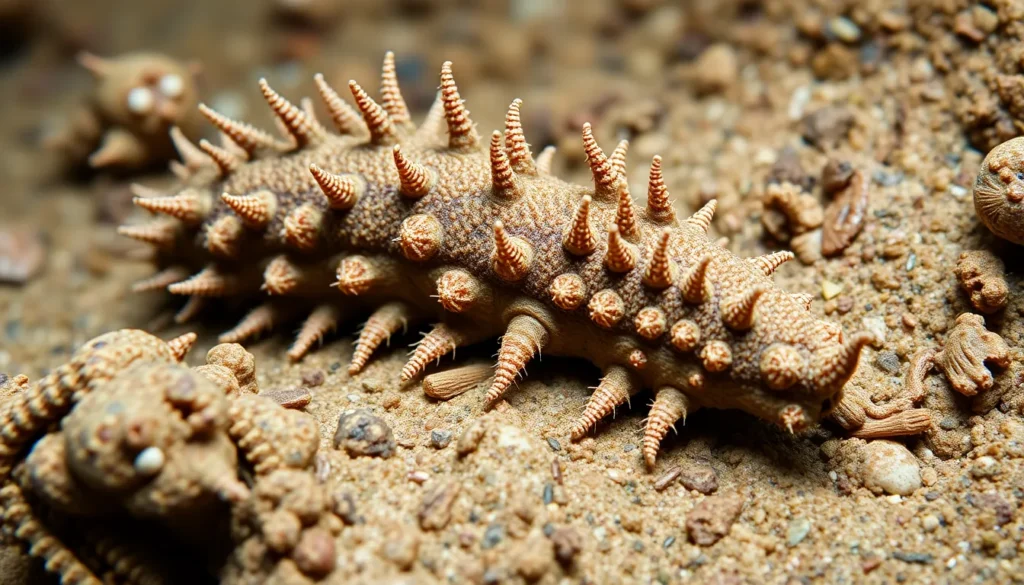
- Microscopic Size: Kinorhynchs are very small, typically ranging from 0.1 to 1 millimeter in length, making them difficult to observe without a microscope.
- Marine Habitat: They live exclusively in marine environments, often inhabiting the spaces between sediment particles on the sea floor.
- Body Structure: Their bodies are segmented into 13 distinct parts, each with a tough cuticle that provides protection.
- Spiny Head: The name “Kinorhyncha” means “movable snout,” referring to their retractable, spiny head used for locomotion and burrowing.
- Locomotion Mechanism: Kinorhynchs move by extending and retracting their head and using spines on their body segments to anchor themselves in sediment.
- Cuticular Plates: Their bodies are covered in plates made of chitin, which is unusual among microscopic marine animals.
- Molting Process: Like arthropods, kinorhynchs molt their cuticle to grow, shedding their outer layer periodically.
- Ecdysozoans: They belong to the Ecdysozoa group, which includes arthropods and nematodes, characterized by molting behavior.
- Feeding Habits: Kinorhynchs feed mainly on diatoms, algae, and detritus found within sediment layers.
- Digestive System: They possess a complete digestive tract with a mouth, pharynx, intestine, and anus.
- No Respiratory System: They lack specialized respiratory organs, relying on diffusion through their body surface for gas exchange.
- Nervous System: Their nervous system consists of a brain ring around the pharynx and paired nerve cords extending along the body.
- Reproduction: Kinorhynchs reproduce sexually with separate sexes, and fertilization is internal.
- Egg Development: Eggs are laid in the sediment and develop directly into miniature adults without a larval stage.
- Global Distribution: They are found worldwide, from shallow coastal areas to deep-sea sediments.
- Ecological Role: Kinorhynchs contribute to sediment turnover and nutrient cycling in marine ecosystems.
- Species Diversity: Over 200 species of kinorhynchs have been described, classified into several families and genera.
- Scientific Study: Despite their ecological importance, kinorhynchs remain understudied due to their small size and cryptic habitat.
- Evolutionary Interest: Their position within Ecdysozoa makes them important for understanding the evolution of molting animals.
- Resilience: Kinorhynchs can survive in a range of sediment types, including mud, sand, and gravel, adapting to different marine conditions.
- Common Name: The nickname “mud dragons” comes from their spiny appearance and habitat preference in muddy sediments.
Habitat and Behavior
Kinorhynchs inhabit marine sediment environments around the world, from shallow coastal waters to the deep sea. They are interstitial animals, meaning they live between sediment particles, primarily in mud and sand. Their behavior is characterized by slow movement through these sediments, facilitated by their retractable spiny head and segmented body spines. They burrow to find food and avoid predators, feeding primarily on microscopic algae and organic detritus. Their molting process allows them to grow despite their protective cuticle. Kinorhynchs are solitary and have minimal interaction with other organisms beyond ecological roles.
Why This Animal Matters
Kinorhynchs play a crucial role in marine sediment ecosystems. By burrowing and feeding on detritus and microalgae, they contribute to the breakdown and recycling of organic material, aiding nutrient cycling. This activity helps maintain sediment health and supports the broader benthic food web. Their evolutionary significance helps scientists understand the development of Ecdysozoa, a major animal group that includes insects, crustaceans, and nematodes. While they have no direct cultural importance, their ecological role and unique biology make them valuable subjects in marine biology and evolutionary research.
Common Misconceptions
Misconception: Kinorhynchs are microscopic dragons.
Correction: Although nicknamed “mud dragons,” kinorhynchs are tiny marine invertebrates, not dragons, and their name reflects their spiny appearance rather than any mythical traits.
Misconception: Kinorhynchs are insects.
Correction: Kinorhynchs are not insects but belong to a separate phylum within Ecdysozoa, distinct from arthropods which include insects.
Misconception: They have a larval stage.
Correction: Kinorhynchs develop directly into miniature adults without a larval stage, unlike many other marine invertebrates.
FAQ
What are kinorhynchs commonly called?
Kinorhynchs are often referred to as mud dragons due to their spiny appearance and habitat in muddy marine sediments.
How do kinorhynchs move?
They move by extending and retracting their spiny, retractable head and anchoring themselves with spines on their segmented body to crawl through sediment.
Do kinorhynchs have a larval stage?
No, kinorhynchs undergo direct development, hatching as miniature versions of the adults without a larval stage.



Leave a Reply