
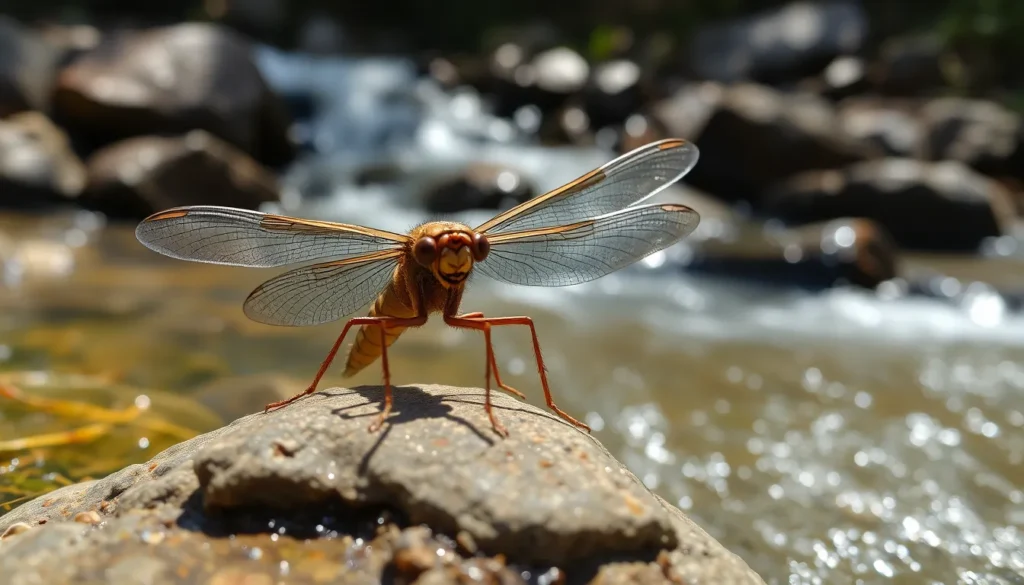
Short Answer
21 Facts About Dobsonflies
- Large Size: Dobsonflies are among the largest aquatic insects, with some species having wingspans up to 18 centimeters (7 inches).
- Distinctive Mandibles: Male dobsonflies have very long, curved mandibles, which they use for mating displays rather than feeding.
- Short Adult Lifespan: Adults typically live only for about a week, during which their primary function is reproduction.
- Long Larval Stage: The larval stage, known as hellgrammites, can last up to several years before metamorphosis into adults.
- Predatory Larvae: Hellgrammites are aquatic predators that feed on other small invertebrates and sometimes small fish.
- Habitat Preference: They primarily inhabit clean, fast-flowing streams and rivers with abundant oxygen.
- Indicator Species: Due to their sensitivity to pollution, dobsonflies serve as indicators of water quality.
- Wide Distribution: Dobsonflies are found in North and South America, Asia, and parts of Australia.
- Nocturnal Behavior: Adults are mostly active at night and are attracted to lights.
- Non-feeding Adults: Adult dobsonflies generally do not feed and rely on energy stored from the larval stage.
- Strong Fliers: Despite their size, adults are capable fliers, often seen near water bodies where they emerged.
- Sexual Dimorphism: Males and females differ significantly, especially in mandible size and shape.
- Pupation on Land: After the larval aquatic stage, they pupate in moist soil or under rocks near streams.
- Molting: Larvae undergo multiple molts before reaching maturity, sometimes more than ten times.
- Defensive Mechanisms: When threatened, larvae can release a foul-smelling fluid to deter predators.
- Role in Food Web: Both larvae and adults serve as prey for fish, birds, and other predators.
- Common Name Origin: The name “dobsonfly” is derived from an early entomologist, but exact naming origins are unclear.
- Scientific Classification: Dobsonflies belong to the family Corydalidae within the order Megaloptera.
- Unique Wing Venation: Their membranous wings have distinctive vein patterns used for species identification.
- Reproductive Behavior: Females lay eggs on vegetation or rocks overhanging streams, ensuring larvae drop into water upon hatching.
- Contribution to Angling: Hellgrammites are popular bait for freshwater fishing due to their attractiveness to fish.
Habitat and Behavior
Dobsonflies are primarily found near clean, oxygen-rich freshwater environments such as fast-flowing streams and rivers. Their larvae, known as hellgrammites, are aquatic and live under stones, logs, or debris in these water bodies. They are predatory, feeding on various small aquatic organisms, which helps maintain balanced ecosystems. The larvae undergo multiple molts over several years before pupating in moist terrestrial areas adjacent to water. Adult dobsonflies emerge primarily at night, displaying strong flying abilities to find mates. Adults are short-lived and do not eat; their behavior revolves around reproduction. The species’ sensitivity to pollution makes their presence a useful indicator of water quality and ecosystem health.
Why This Animal Matters
Dobsonflies play a significant ecological role as both predators and prey in freshwater ecosystems. Their predatory larvae help control populations of other aquatic invertebrates, contributing to biodiversity and ecosystem stability. Additionally, as prey items for fish and birds, they support food webs. The sensitivity of dobsonflies to water pollution makes them valuable bioindicators for monitoring freshwater habitat quality. Culturally, hellgrammites have been used as fishing bait for decades, linking humans to these insects indirectly. Conservation of dobsonfly habitats ensures freshwater ecosystem health, which benefits a wide array of species, including humans.
Common Misconceptions
Misconception: Dobsonflies use their large mandibles to bite humans aggressively.
Correction: While male dobsonflies have large mandibles, they are primarily used in mating displays and are not efficient for biting humans. Dobsonflies are generally harmless to people.

Misconception: Adult dobsonflies live for several months.
Correction: Adult dobsonflies have a very short lifespan, usually only about a week, during which they focus on reproduction rather than feeding or long-term survival.
Misconception: Hellgrammites are harmful pests in streams.
Correction: Hellgrammites are beneficial predators in freshwater environments that help control populations of other aquatic insects, contributing positively to ecosystem balance.
FAQ
What do dobsonflies eat?
Dobsonfly larvae are predatory and feed on various aquatic invertebrates, while adults generally do not feed.
Are dobsonflies dangerous to humans?
Dobsonflies are not dangerous to humans. Although males have large mandibles, they rarely bite and are not aggressive.
Why are dobsonflies important to ecosystems?
Dobsonflies contribute to freshwater ecosystem health by controlling prey populations and serving as food for other animals. Their presence also indicates good water quality.

Leave a Reply