
Short Answer
21 Facts About Atlas Moths
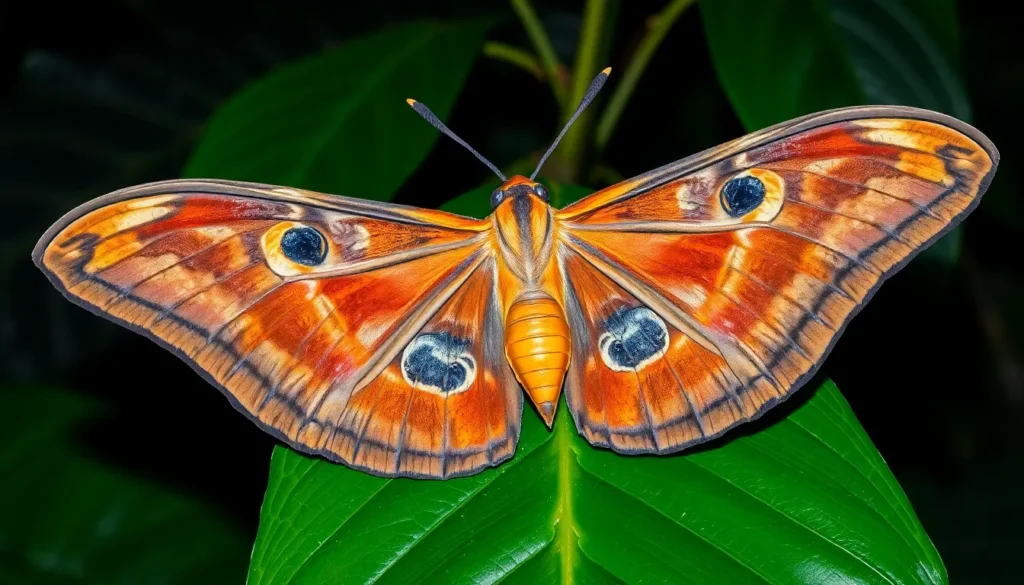
- One of the Largest Moths: The atlas moth (Attacus atlas) is regarded as one of the largest moth species in the world, with wingspans reaching up to 25-30 centimeters (10-12 inches).
- Distinctive Wing Patterns: Their wings feature triangular markings that resemble snake heads, which may serve as a defense mechanism to deter predators.
- Geographic Distribution: Atlas moths are native to the tropical and subtropical forests of Southeast Asia, including countries such as India, Malaysia, Indonesia, and the Philippines.
- Short Adult Lifespan: Adult atlas moths typically live for only 1 to 2 weeks, during which they do not feed because their mouthparts are underdeveloped.
- Larval Diet: The caterpillars of atlas moths feed on the leaves of various trees and shrubs, including citrus, guava, and cinnamon plants.
- Metamorphosis Duration: The complete life cycle from egg to adult moth takes approximately 4 to 5 months, depending on environmental conditions.
- Silk Production: Atlas moth caterpillars produce silk cocoons that are often harvested in some regions to make non-woven textiles, though they are not commercially used for fine silk.
- Non-Feeding Adults: As adults, atlas moths lack functional mouthparts and rely solely on fat reserves accumulated during their larval stage.
- Nocturnal Behavior: Atlas moths are primarily nocturnal and are most active during the night, resting during the day on tree trunks or foliage.
- Reproductive Strategy: Female atlas moths release pheromones to attract males for mating and can lay hundreds of eggs during their brief adult phase.
- Wing Transparency: Sections of atlas moth wings are semi-transparent, which helps reduce visibility to predators when resting.
- Wing Shape Adaptation: The tips of their forewings are elongated and curved, resembling snake heads, which may deter predation.
- Flight Characteristics: Despite their large wings, atlas moths are relatively slow flyers and tend to avoid long-distance flights.
- Temperature Sensitivity: The development and survival of atlas moths are sensitive to temperature and humidity, thriving in warm, humid environments.
- Natural Predators: Birds, bats, and other insectivores are common predators of atlas moths, especially during the vulnerable pupal stage.
- Population Status: While not currently listed as endangered, habitat loss due to deforestation poses a threat to their natural populations.
- Scientific Classification: Atlas moths belong to the family Saturniidae, which includes some of the largest and most spectacular moths worldwide.
- Cultural Significance: In some Asian cultures, atlas moths symbolize transformation and are admired for their impressive size and beauty.
- Role in Ecosystem: As herbivores, they contribute to plant population control, and as prey, they support local food webs.
- Distinct from Atlas Butterfly: Atlas moths are often confused with butterflies but differ significantly in morphology and behavior.
- Scientific Research: Their large size and silk production have made atlas moths subjects of entomological and materials science research.
Habitat and Behavior
Atlas moths are predominantly found in tropical and subtropical forested regions of Southeast Asia. They prefer warm, humid climates that support the growth of host plants for their larvae. The moths are nocturnal, spending daylight hours camouflaged against tree bark or foliage. The adult moths do not feed, relying on energy stored from the larval stage, and are primarily focused on reproduction during their brief adult life. Caterpillars feed on a variety of tree leaves and construct large silk cocoons during pupation. Their behavior includes pheromone-based mating communication and slow, deliberate flight patterns that reduce detection by predators.
Why This Animal Matters
Atlas moths play an important ecological role by participating in food webs as both herbivores during their larval stage and as prey for birds and other predators. Their feeding helps regulate plant growth, contributing to forest ecosystem dynamics. Additionally, atlas moth silk, though not used for fine textiles, has cultural and economic significance in some regions. The moth’s striking appearance has also inspired cultural symbolism and scientific interest, particularly in studies of insect physiology, camouflage, and silk properties. Conservation of their habitats is important for maintaining biodiversity in tropical forest ecosystems.
Common Misconceptions
Misconception: Atlas moths can bite or sting humans.
Correction: Atlas moths do not have biting or stinging capabilities and are harmless to humans.
Misconception: Atlas moths are butterflies.
Correction: Although they are large and colorful, atlas moths are true moths and belong to a different taxonomic group than butterflies, with distinct behavioral and anatomical differences.
Misconception: Adult atlas moths eat during their lifespan.
Correction: Adult atlas moths do not feed; they rely entirely on energy reserves stored from their caterpillar stage.
FAQ
How large can atlas moths grow?
Atlas moths can have wingspans reaching up to 25 to 30 centimeters (10 to 12 inches), making them among the largest moth species worldwide.
Do atlas moths eat during their adult stage?
No, adult atlas moths do not have functional mouthparts and do not feed; they survive on fat reserves accumulated during their caterpillar stage.
Where can atlas moths be found?
Atlas moths are native to tropical and subtropical forests in Southeast Asia, including countries such as India, Malaysia, Indonesia, and the Philippines.



Leave a Reply