
Short Answer
21 Facts About Glasswing Butterflies
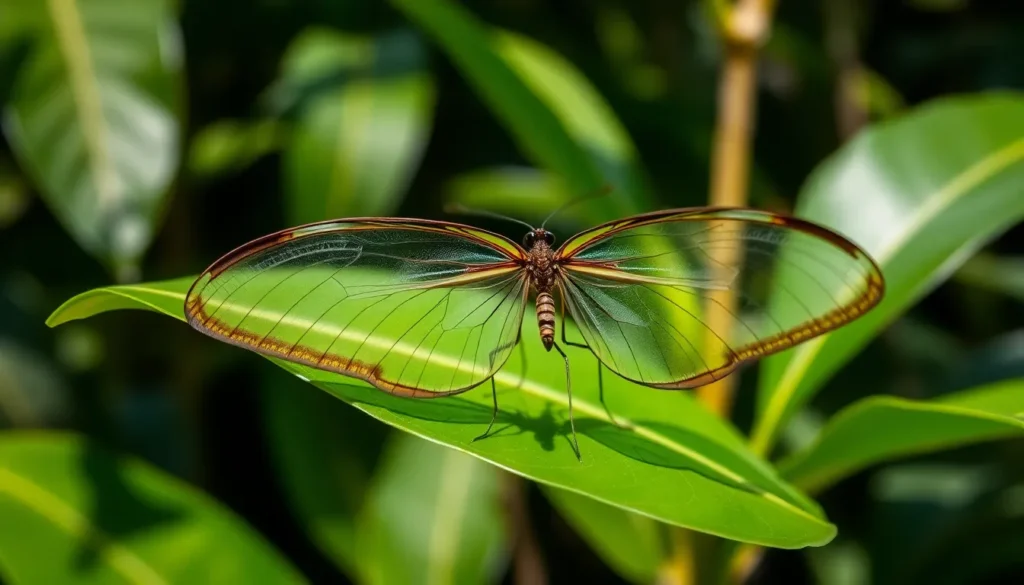
- Transparent Wings: Glasswing butterflies have wings with transparent sections, allowing them to blend into their surroundings by reducing visible wing patterns.
- Scientific Name: They belong to the genus Greta, with the most commonly known species being Greta oto.
- Geographical Range: These butterflies are native to Central and South America, especially found from Mexico to Panama and in parts of Colombia and Ecuador.
- Wing Composition: Their wings lack the typical colored scales found in most butterflies, which results in the transparent effect.
- Wing Edges: The wing borders are usually dark brown or black, providing contrast to the transparent areas.
- Size: Glasswing butterflies typically have a wingspan ranging from 5.6 to 6.1 centimeters (2.2 to 2.4 inches).
- Mimicry: They are part of a mimicry complex, resembling toxic butterflies to deter predators despite being non-toxic themselves.
- Flight Behavior: Known for their slow and graceful flight, which helps avoid detection.
- Host Plants: The caterpillars feed mainly on plants from the nightshade family (Solanaceae), which contain toxic compounds.
- Defense Mechanism: By feeding on toxic plants, the larvae accumulate toxins that make the adult butterflies distasteful to predators.
- Lifespan: Their adult lifespan is typically short, ranging from two to three weeks.
- Reproduction: Females lay eggs on the underside of host plant leaves to protect them from predators and environmental factors.
- Camouflage: The transparency of their wings helps them avoid predation by blending into the background, especially when resting.
- Wing Structure: The wing membrane is covered by a thin layer of chitin, which is responsible for the wings’ transparency.
- Temperature Regulation: The transparent wings may help in thermoregulation by allowing sunlight to pass through without overheating.
- Pollination: Glasswing butterflies contribute to pollination as they feed on nectar from various flowers.
- Predators: Their main predators include birds, spiders, and other insectivorous animals.
- Conservation Status: Currently, glasswing butterflies are not considered endangered, but habitat loss poses a potential risk.
- Cultural Impact: Their unique appearance has inspired art and scientific interest worldwide.
- Scientific Research: Studies of their wing transparency have contributed to biomaterials research and optical science.
- Observation Difficulty: Despite their beauty, glasswing butterflies can be difficult to spot in the wild due to their effective camouflage.
Habitat and Behavior
Glasswing butterflies inhabit tropical rainforests and cloud forests in Central and South America, thriving in warm, humid environments. They are typically found at elevations ranging from sea level to around 1,500 meters. Their behavior is characterized by slow, deliberate flight patterns that minimize detection by predators. During the day, they often rest on leaves where their transparent wings make them nearly invisible. Their larvae feed on toxic plants, which provide chemical defenses that persist into adulthood. Adults feed on nectar from a variety of flowering plants, playing a role in pollination. They are most active during daylight hours and tend to avoid open spaces to reduce predation risk.
Why This Animal Matters
Glasswing butterflies serve important ecological functions, particularly as pollinators in their native habitats. Their chemical defense mechanisms provide insight into evolutionary biology and predator-prey interactions. Additionally, their unique wing structure has attracted scientific attention for potential applications in materials science, such as creating transparent and lightweight materials. Culturally, they have inspired art and nature appreciation, highlighting the diversity of butterfly species. Conservation of their habitats is crucial as tropical forests face increasing threats from deforestation and climate change, which could impact glasswing populations and the broader ecosystem balance.
Common Misconceptions
Misconception: Glasswing butterflies are invisible.
Correction: While their wings are transparent, they are not invisible. Their transparent wings reduce visibility but do not make them completely undetectable.
Misconception: Glasswing butterflies are poisonous.
Correction: The butterflies themselves are not poisonous but derive chemical protection by feeding on toxic plants during their larval stage.
Misconception: All butterfly species have opaque, colorful wings.
Correction: Glasswing butterflies are a notable exception with transparent wings, demonstrating the diversity of butterfly wing structures.
FAQ
Why are glasswing butterfly wings transparent?
Their wings lack the dense colored scales that most butterflies have, and the wing membrane is thin and clear with microscopic structures that reduce reflection, creating transparency.
Are glasswing butterflies poisonous?
No, glasswing butterflies themselves are not poisonous, but their larvae feed on toxic plants that provide chemical defenses making them distasteful to predators.
Where can glasswing butterflies be found?
They are native to Central and South American tropical rainforests and cloud forests, from Mexico down through Panama and into parts of Colombia and Ecuador.



Leave a Reply