
Short Answer
21 Facts About Bumblebees
- Bumblebees are part of the genus Bombus. They belong to the family Apidae and are closely related to honeybees and stingless bees.
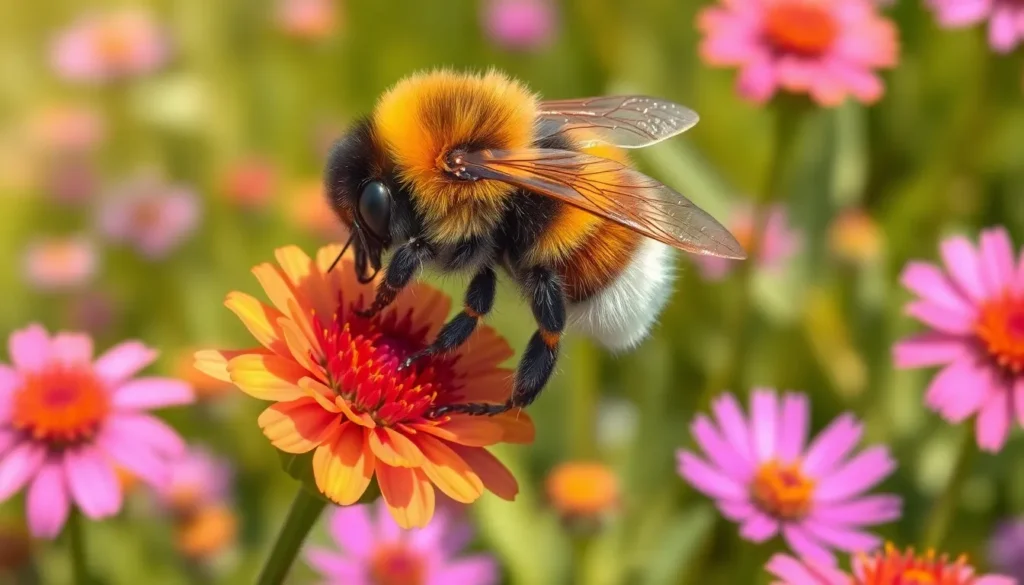
- They are generally larger and hairier than honeybees. Their dense hair helps them collect pollen efficiently and insulates them in cooler weather.
- Bumblebees have a unique ability called buzz pollination. By vibrating their flight muscles at a specific frequency, they dislodge pollen from certain flowers, aiding in pollination.
- Most bumblebee species are social insects. They live in colonies consisting of a queen, workers, and males, although colony sizes are smaller than those of honeybees.
- Bumblebee colonies typically last only one season. Unlike honeybee colonies that can persist for years, bumblebee colonies die off in winter except for the new queens.
- Queens hibernate during the winter. After emerging from hibernation, a queen starts a new colony by laying eggs and raising the first workers.
- Bumblebees can regulate their body temperature. They can generate heat by shivering their flight muscles, allowing them to fly in cooler conditions than many other bees.
- They have a relatively short tongue compared to some other bee species. This affects the types of flowers they can efficiently pollinate.
- Bumblebees are important pollinators for many crops. They contribute significantly to the pollination of tomatoes, berries, and other fruits and vegetables.
- Bumblebees communicate primarily through pheromones and body language. Unlike honeybees, they do not perform complex dances to share information about food sources.
- They have a distinctive buzzing sound. The sound is produced by rapid wing beats and muscle vibrations during flight and buzz pollination.
- Bumblebees are generally non-aggressive. They tend to sting only when provoked or threatened, as their stings are more painful than those of honeybees.
- Each bumblebee species has distinct color patterns. These colorations can serve as warning signals to predators and help differentiate species.
- Bumblebees have been observed to use flowers repeatedly. They often develop foraging routes known as traplines to efficiently gather nectar and pollen.
- Bumblebees have relatively good vision. Their eyes are sensitive to ultraviolet light, which helps them locate flowers.
- Some bumblebee species are declining in numbers. Habitat loss, pesticide use, diseases, and climate change contribute to population declines worldwide.
- Bumblebees can fly at speeds up to 15 miles per hour (24 km/h). Their flight involves powerful wing strokes aided by their robust bodies.
- They have a haplodiploid sex determination system. Females develop from fertilized eggs, while males develop from unfertilized eggs.
- Bumblebees contribute to biodiversity. By pollinating a wide range of plants, they help maintain healthy ecosystems and support other wildlife.
- They are found primarily in temperate climates. Bumblebees are more common in cooler regions of North America, Europe, and Asia but are also found in some tropical mountainous areas.
- Bumblebees do not produce large quantities of honey. They store only small amounts of nectar to feed their colony, unlike honeybees that produce surplus honey for winter.
Habitat and Behavior
Bumblebees typically inhabit temperate regions of the Northern Hemisphere, including North America, Europe, and parts of Asia. They prefer environments such as meadows, gardens, farmlands, and open woodlands where flowering plants are abundant. Some species also live in mountainous areas and cooler tropical zones. Bumblebees nest in a variety of locations, including underground burrows, abandoned rodent holes, grass tussocks, or sometimes in cavities within trees or buildings.
Behaviorally, bumblebees are social insects that form relatively small colonies compared to honeybees. A single queen initiates the colony each spring after hibernation and raises the first batch of workers. Workers then take over foraging and nest maintenance duties. Bumblebees forage for nectar and pollen, and they are capable of flying in lower temperatures and poor weather conditions due to their ability to thermoregulate. Their buzz pollination technique is particularly effective for certain types of plants, making them important pollinators in their ecosystems.
Why This Animal Matters
Bumblebees play a critical ecological role as pollinators. They assist in the reproduction of many wild plants and agricultural crops, supporting biodiversity and food production. Their ability to pollinate in cooler and wetter conditions complements other pollinators like honeybees and increases plant pollination reliability. Additionally, bumblebees contribute to the health of ecosystems by supporting the growth of flowering plants that provide habitats and food for other species.
From a conservation perspective, some bumblebee species are indicators of environmental health, and declines in their populations can signal broader ecological issues. Protecting bumblebees involves preserving their habitats, reducing pesticide exposure, and mitigating climate change impacts.
Common Misconceptions
Misconception: Bumblebees can sting multiple times like wasps.
Correction: While bumblebees can sting multiple times, they rarely do so unless threatened, as stinging can be risky for them. Unlike honeybees, they do not lose their stinger after stinging.
Misconception: Bumblebees are aggressive and dangerous.
Correction: Bumblebees are generally non-aggressive and will only sting when provoked or defending their nest.
Misconception: Bumblebees produce large amounts of honey.
Correction: Bumblebees produce only small amounts of honey for immediate colony use and do not store surplus honey like honeybees.
Misconception: All bees die in winter.
Correction: Only bumblebee queens survive the winter by hibernating; the rest of the colony dies off.
FAQ
Do bumblebees sting humans?
Yes, bumblebees can sting humans but generally only do so when they feel threatened or their nest is disturbed. Their stings are painful but bumblebees are not aggressive by nature.
How long do bumblebee colonies last?
Bumblebee colonies usually last for one season, typically spring through fall. The colony dies off in winter except for newly mated queens who hibernate.
What is buzz pollination?
Buzz pollination is a technique where bumblebees vibrate their flight muscles rapidly to shake pollen loose from certain flowers that require this action for effective pollination.




Leave a Reply