
Short Answer
21 Facts About Spiders
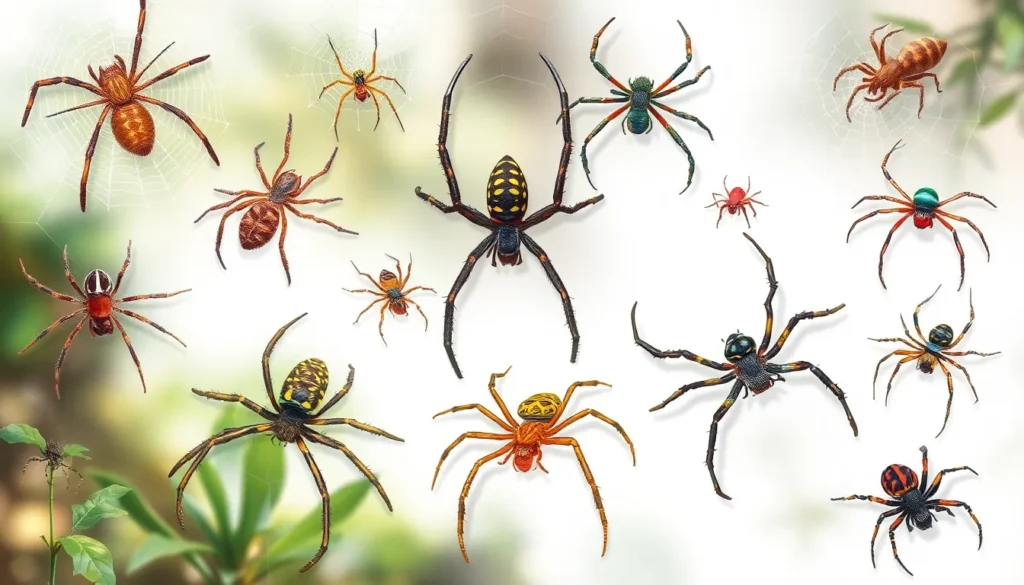
- Spiders are arachnids, not insects. They belong to the class Arachnida, characterized by having eight legs and two main body segments.
- There are over 48,000 known species of spiders worldwide. They inhabit nearly every continent except Antarctica.
- Spiders produce silk from spinnerets located at the rear of their abdomen. This silk is used for webs, egg sacs, and other purposes.
- Not all spiders spin webs. Some are active hunters that chase or ambush prey rather than using webs to catch them.
- Spider venom is primarily used to immobilize prey. Most spider venoms are harmless to humans, though a few species have medically significant bites.
- The largest spider by leg span is the giant huntsman spider, reaching up to 30 cm (12 inches).
- Spiders have multiple eyes, usually eight, arranged in patterns specific to each family. However, some species have fewer eyes.
- Spider silk is one of the strongest natural fibers relative to its thickness. It is highly elastic and tough, enabling various survival functions.
- Some spiders use their silk to balloon through the air. Young spiders release silk threads that catch the wind, allowing them to disperse to new locations.
- Spiders have book lungs or tracheae for respiration. These specialized structures enable efficient gas exchange.
- Spiders exhibit sexual dimorphism, with females often larger than males. Mating behaviors vary greatly among species.
- Many spiders demonstrate complex courtship rituals to avoid being mistaken for prey. These can include specific dances, vibrations, or visual signals.
- Spider diets mainly consist of insects and other small arthropods. Some larger species may prey on small vertebrates.
- Spiders are generally solitary creatures. While some species tolerate group living, most prefer solitary hunting and web-building.
- Molting is necessary for spiders to grow. They shed their exoskeleton periodically during development.
- Some spiders can regenerate lost limbs after molting. Limb regeneration helps maintain mobility and hunting efficiency.
- Spiders play an important role in controlling insect populations. They act as natural pest control agents in many ecosystems.
- Silk from some spider species has been studied for its potential use in medicine and industry. Its properties inspire biomimetic materials.
- Spider fossils date back to at least 380 million years ago. This long evolutionary history reflects their adaptability.
- Spiders display diverse lifestyles, including ground-dwelling, web-building, and burrowing habits.
- Despite their fearsome reputation, spiders rarely bite humans unless provoked. Most bites result in minor symptoms.
Habitat and Behavior
Spiders occupy a broad range of habitats, from tropical rainforests and deserts to urban environments and caves. They adapt to virtually every terrestrial habitat except marine ecosystems. Their behaviors vary widely depending on species and ecological niche. Some build intricate webs to capture flying insects, while others actively hunt prey on the ground or vegetation. Many spiders are nocturnal, reducing predation risk and increasing hunting success during the night. Spiders utilize silk not only for webs but also for lining burrows, wrapping prey, and protecting eggs. Their survival depends on their ability to efficiently capture prey, avoid predators, and reproduce. Some species demonstrate territoriality, while others tolerate conspecifics during mating or communal living.
Why This Animal Matters
Spiders are vital components of ecosystems due to their role as predators of insects and other arthropods. By regulating insect populations, they contribute to agricultural pest control and help maintain ecological balance. Their silk has attracted scientific interest for applications in materials science and medicine due to its strength and biocompatibility. Culturally, spiders appear in myths, folklore, and symbolism worldwide, reflecting human fascination and sometimes fear of these animals. Conservation of spiders is important as habitat loss and environmental changes threaten some species, which could disrupt ecosystem functionality.
Common Misconceptions
Misconception: All spiders are dangerous to humans.
Correction: While some spiders possess venom that can affect humans, most species are harmless and bites rarely cause serious harm.
Misconception: Spiders are insects.
Correction: Spiders are arachnids, a distinct class of arthropods that differ from insects by having eight legs and two main body segments.
Misconception: Spiders intentionally invade homes to bite people.
Correction: Spiders generally enter buildings seeking shelter or prey and do not seek to bite humans unless threatened.
Misconception: Spider webs serve only to catch prey.
Correction: Webs also provide shelter, egg protection, and sometimes serve as communication tools among spiders.
FAQ
Are all spiders dangerous to humans?
No, most spiders are harmless to humans. Only a few species have venom capable of causing significant medical issues.
Why do spiders spin webs?
Spiders spin webs primarily to catch prey, but webs also serve functions such as shelter, egg protection, and dispersal.
How do spiders breathe?
Spiders breathe through specialized organs called book lungs or tracheae, which allow gas exchange to occur.
Leave a Reply