
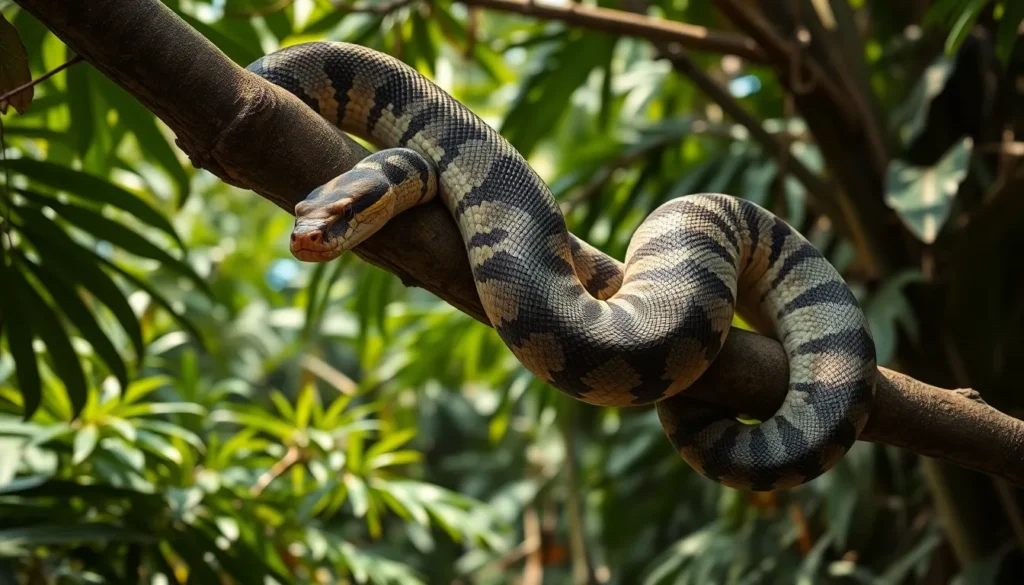
Short Answer
21 Facts About Pythons
- Non-venomous constrictors: Pythons kill their prey by constriction, coiling tightly around it to suffocate before consumption.
- Diverse size range: Pythons vary greatly in size, with the reticulated python being one of the longest snakes in the world, reaching lengths over 6 meters (20 feet).
- Wide distribution: Pythons are native to Africa, Asia, and Australia, inhabiting diverse environments from rainforests to grasslands.
- Heat-sensing pits: Many pythons possess infrared-sensitive pits along their jaws that help detect warm-blooded prey even in darkness.
- Egg layers: Unlike many snakes that give birth to live young, pythons lay eggs and some species exhibit maternal care by incubating eggs through muscle contractions.
- Ambush predators: Pythons often lie in wait for prey rather than actively pursuing it, relying on camouflage and patience.
- Varied diet: Their diet includes mammals, birds, and sometimes reptiles, depending on their size and habitat.
- Impressive longevity: In the wild, some pythons can live over 20 years, with longer lifespans recorded in captivity.
- Slow metabolism: Pythons can survive weeks or months between meals due to their efficient metabolism.
- Important ecological role: As apex or mesopredators, pythons help regulate populations of rodents and other animals, maintaining ecosystem balance.
- Distinct scales: Their scales can be smooth or keeled depending on the species, aiding in identification.
- Solitary animals: Pythons are generally solitary except during breeding season.
- Variable coloration: Depending on species and environment, python patterns can range from blotches to stripes, aiding in camouflage.
- Muscular build: Their strong muscles support constriction and movement through varied terrain.
- Slow movers: Pythons are not fast but use stealth and power to capture prey.
- Human interaction: While generally not aggressive, large pythons can pose danger to humans and livestock in rare cases.
- Popular in captivity: Some species are kept as pets, though they require specialized care due to size and behavior.
- Threats from habitat loss: Deforestation and human encroachment have impacted some python species’ populations.
- Cultural significance: Pythons appear in various myths and traditions, symbolizing power or fertility in some cultures.
- Scientific research subjects: Their unique physiology aids studies in muscle biology and sensory perception.
- Conservation status varies: While some python species are common, others face vulnerability or endangerment depending on region and threats.
Habitat and Behavior
Pythons inhabit a broad range of environments including tropical rainforests, savannas, woodlands, and sometimes semi-arid areas. They are often found near water sources, as many species are proficient swimmers. Pythons are primarily nocturnal or crepuscular hunters, using their heat-sensing pits to detect warm-blooded prey in low light conditions. Their hunting strategy typically involves ambush predation, relying on camouflaged coloration to remain undetected. They constrict their prey, killing it by suffocation before swallowing it whole, often consuming animals larger than their head diameter due to their highly flexible jaws. During the breeding season, males seek out females and may engage in combat with rivals. Females lay clutches of eggs in hidden locations and may coil around them to regulate temperature through muscular contractions. Pythons are generally reclusive and solitary outside of mating periods, spending much of their time resting or hiding.
Why This Animal Matters
Pythons play a crucial ecological role as predators controlling populations of rodents and other small to medium-sized animals, which helps prevent overpopulation and the spread of disease. Their presence contributes to the balance of food webs in their ecosystems. Additionally, pythons have cultural and symbolic significance in many societies, often representing strength or spiritual power. From a conservation perspective, understanding pythons helps preserve biodiversity in regions where habitat loss threatens many species. Furthermore, scientific research on pythons advances knowledge in areas such as muscle function, sensory biology, and reptilian physiology. Responsible management and conservation help maintain healthy python populations while reducing human-wildlife conflicts.
Common Misconceptions
Misconception: Pythons are aggressive man-eaters.
Correction: While large pythons can be dangerous, they typically avoid humans and attacks are extremely rare. Most pythons rely on stealth and prefer to flee rather than confront people.
Misconception: All pythons lay eggs.
Correction: Although most python species are oviparous (egg-laying), reproductive strategies can vary slightly among species, but live birth is not characteristic of pythons.
Misconception: Pythons are venomous snakes.
Correction: Pythons are non-venomous constrictors and kill prey by suffocation rather than venom injection.
Misconception: Pythons can swallow humans.
Correction: While extremely large pythons have the physical capability to consume large prey, documented attacks on humans are exceedingly rare and typically involve smaller prey.
Misconception: Pythons are solitary and never interact.
Correction: Pythons are mostly solitary but do interact during breeding seasons and occasionally in overlapping territories.
FAQ
Are all pythons large snakes?
Not all pythons are extremely large; species size varies significantly. While some, like the reticulated python, can exceed 6 meters, others may only reach around 1 meter in length.
Do pythons pose a threat to humans?
Pythons generally avoid human contact and are not aggressive. Attacks on humans are very rare and usually occur when the snake is threatened or provoked.
How do pythons kill their prey?
Pythons kill prey by constriction, wrapping their muscular bodies around the animal and tightening until it suffocates.





Leave a Reply