
Short Answer
21 Facts About Bearded Dragons
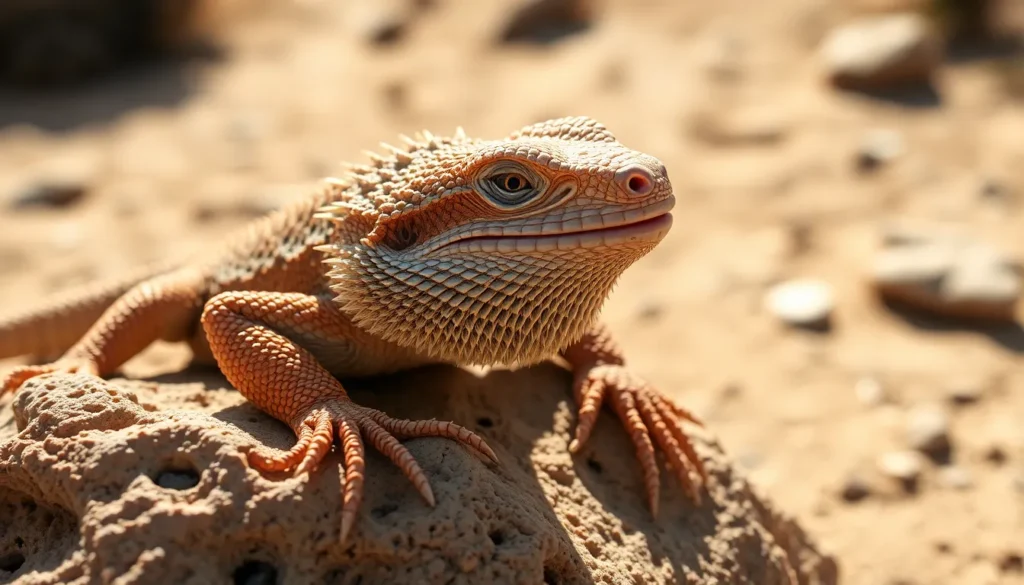
- Scientific Classification: Bearded dragons belong to the genus Pogona, with the central bearded dragon (Pogona vitticeps) being the most commonly known species.
- Origin: They are native to arid and semi-arid regions of Australia.
- Distinctive Beard: Their name comes from the spiny ‘beard’ under their throat, which can puff up and darken when threatened or displaying dominance.
- Size: Adult bearded dragons typically grow to about 18-24 inches (45-61 cm) in length, including their tail.
- Diet: They are omnivores, eating a variety of insects, small animals, fruits, and vegetables.
- Temperature Regulation: As ectotherms, bearded dragons rely on external heat sources to regulate their body temperature.
- Communication: They use body language such as head bobbing, arm waving, and beard puffing to communicate with others.
- Lifespan: In captivity, they often live between 8 to 12 years with proper care.
- Reproduction: Females lay clutches of eggs, often between 15 to 30 eggs, which incubate for about 60 to 80 days.
- Activity Cycle: Bearded dragons are diurnal, meaning they are active during the day and rest at night.
- Habitat Adaptations: Their coloration and spiny scales help with camouflage and defense in their natural environment.
- Social Behavior: While generally solitary in the wild, they display social behaviors such as dominance hierarchies.
- Pet Popularity: They are widely kept as pets due to their generally docile nature and ease of care compared to other reptiles.
- UVB Light Requirement: In captivity, they need UVB lighting to synthesize vitamin D3, essential for calcium metabolism.
- Thermoregulation Behavior: They often bask on rocks or branches to absorb heat and regulate their body temperature.
- Defense Mechanisms: Apart from puffing their beard, they can flatten their bodies and darken their color to appear larger and more intimidating.
- Tail Autotomy: Unlike some lizards, bearded dragons generally cannot detach their tails to escape predators.
- Growth Rate: Young bearded dragons grow rapidly during their first year of life.
- Intelligence: They have been observed recognizing their owners and exhibiting learning behaviors.
- Conservation Status: Most bearded dragon species are not currently threatened, but habitat loss can affect wild populations.
- Thermal Gradient: They require a temperature gradient in their enclosure to move between warmer and cooler areas as needed.
Habitat and Behavior
Bearded dragons are native to the dry forests, deserts, and scrublands of Australia. They thrive in arid environments where they can bask in sunlight to regulate their body temperature. These lizards are primarily ground dwellers but are also skilled climbers, often perching on rocks or branches to bask. Being diurnal, they are active during daylight hours, hunting for insects and vegetation. Their social interactions include head bobbing and arm waving, which serve as communication signals to other dragons. To defend themselves, they exhibit behaviors such as puffing out their beards, darkening their colors, and flattening their bodies to appear larger to potential threats.
Why This Animal Matters
Bearded dragons play a significant ecological role as both predators and prey within their ecosystems. By controlling insect populations and serving as prey for larger animals, they contribute to the balance of their habitats. Culturally, they have become popular in the pet trade and serve as accessible ambassadors for reptile education and conservation awareness. Understanding their needs and behaviors helps promote responsible pet ownership and highlights the importance of habitat preservation in Australia.
Common Misconceptions
Misconception: Bearded dragons do not require UVB lighting.
Correction: UVB lighting is essential for their health in captivity, as it enables vitamin D3 synthesis, critical for calcium absorption and bone health.
Misconception: Bearded dragons can live without a temperature gradient.
Correction: They need a thermal gradient to regulate their body temperature effectively by moving between warmer and cooler areas.
Misconception: Bearded dragons can detach their tails to escape predators.
Correction: Unlike some lizards, bearded dragons generally do not have the ability to autotomize (drop) their tails.
FAQ
What do bearded dragons eat?
Bearded dragons are omnivores and eat a varied diet that includes insects such as crickets and mealworms, as well as vegetables, fruits, and leafy greens.
How long do bearded dragons live?
In captivity, with proper care, bearded dragons typically live between 8 and 12 years, although some may live longer.
Do bearded dragons need special lighting?
Yes, they require UVB lighting in captivity to help them produce vitamin D3, which is essential for calcium absorption and overall health.


Leave a Reply