
Short Answer
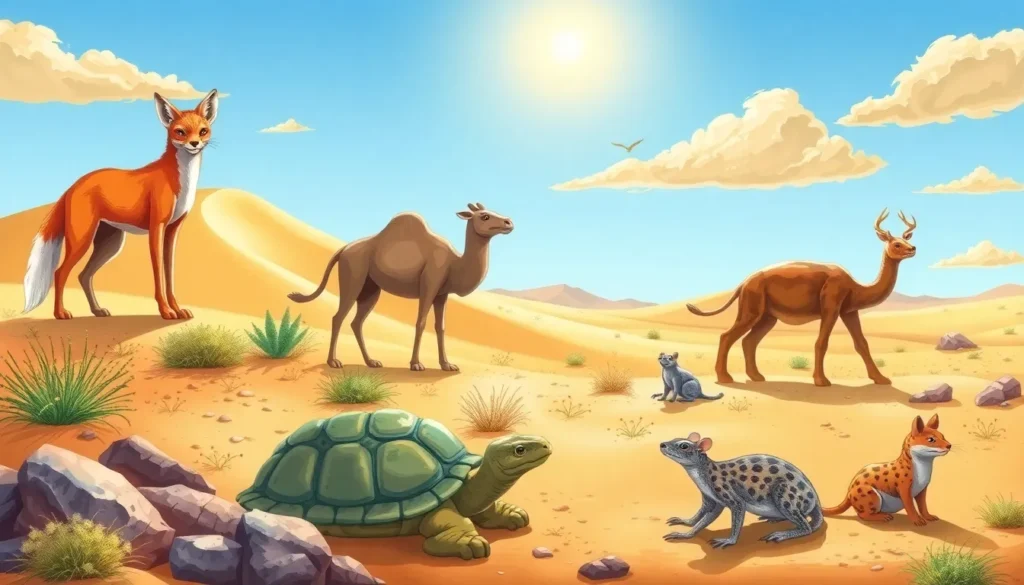
21 Facts About Desert Animals
- Adaptations for Water Conservation
Many desert animals have evolved to minimize water loss. For example, the kangaroo rat can survive without drinking water by metabolizing water from the seeds it eats. - Nocturnal Behavior
To avoid daytime heat, many desert animals such as the fennec fox and desert scorpion are nocturnal, becoming active at night when temperatures are cooler. - Burrowing Habits
Animals like desert tortoises and certain lizards dig burrows to escape extreme temperatures and predators. - Specialized Body Coverings
Thick fur, scales, or reflective body surfaces help desert animals regulate temperature and reduce water loss. - Efficient Kidneys
Some desert mammals, such as camels, have highly efficient kidneys that concentrate urine to conserve water. - Temperature Tolerance
Desert animals can often tolerate body temperatures that would be lethal to other species, allowing survival through heat spikes. - Camouflage
Many desert animals have coloration that blends with sand or rocks for protection from predators and to aid hunting. - Dietary Adaptations
Desert herbivores often consume moisture-rich plants, while carnivores may eat prey with high water content. - Salt Tolerance
Some desert animals tolerate higher salt levels in their diet and water sources, enabling survival on saline plants or water. - Seasonal Dormancy
Some species enter a state of torpor or estivation during the hottest and driest periods to conserve energy and water. - Long Limbs and Ears
Animals like the fennec fox have large ears which help dissipate heat. - Specialized Locomotion
The sidewinder rattlesnake moves in a unique way to minimize contact with hot sand. - Use of Shade
Many desert animals seek shade during the day to avoid overheating. - Reproductive Timing
Reproduction is often timed to coincide with rare rainfall events to ensure offspring survival. - Mutualistic Relationships
Some desert species form relationships, such as ants that protect certain plants in exchange for food. - Salt Glands
Species like the desert iguana have salt glands to excrete excess salts from their bodies. - Behavioral Thermoregulation
Desert animals regulate body temperature by changing posture, activity times, or location. - Efficient Foraging
Many desert animals have keen senses to locate scarce food resources efficiently. - Low Metabolic Rates
Some desert species reduce metabolic rates to conserve energy and water. - Use of Fat Reserves
Camels store fat in their humps, which can be metabolized to release water and energy. - Unique Reproductive Strategies
Some desert animals produce fewer offspring with higher survival rates adapted to harsh conditions.
Habitat and Behavior
Desert animals inhabit arid regions characterized by extreme temperature fluctuations, limited water availability, and sparse vegetation. These animals have adapted behaviors such as nocturnality and burrowing to survive high daytime temperatures and conserve moisture. Many desert species are opportunistic feeders, exploiting seasonal availability of food and water. Burrows provide refuge from predators and climatic extremes, while physiological adaptations enable efficient water use and temperature regulation. Behavioral strategies such as estivation and seasonal reproduction align with environmental conditions to maximize survival chances.
Why This Animal Matters
Desert animals play vital roles in their ecosystems, including seed dispersal, pollination, and controlling insect populations. They contribute to nutrient cycling and serve as prey for larger predators. Culturally, many desert species hold significance in indigenous traditions and folklore. Conservation of desert fauna is crucial as these animals are indicators of ecosystem health and biodiversity. Threats such as habitat loss, climate change, and human interference jeopardize their survival, making their study and protection an ecological priority.
Common Misconceptions
Misconception: Desert animals do not need water to survive.
Correction: While some desert animals can survive long periods without direct water intake by deriving moisture from food or metabolic processes, they still require water to live and have adaptations to conserve it.
Misconception: All desert animals are reptiles.
Correction: Deserts host a diverse range of animals including mammals, birds, insects, and amphibians, in addition to reptiles.
FAQ
How do desert animals conserve water?
Desert animals conserve water through physiological adaptations like concentrated urine, behavioral strategies such as nocturnal activity, and by obtaining moisture from their food.
Why are many desert animals nocturnal?
Nocturnal behavior helps desert animals avoid the intense heat of the day, reducing water loss and overheating, thereby increasing their chances of survival.
What types of animals live in deserts?
Deserts host a variety of animals including mammals (e.g., camels, foxes), reptiles (e.g., lizards, snakes), birds, insects, and amphibians, all adapted to survive in harsh conditions.


Leave a Reply