
Short Answer
21 Facts About Domesticated Animals
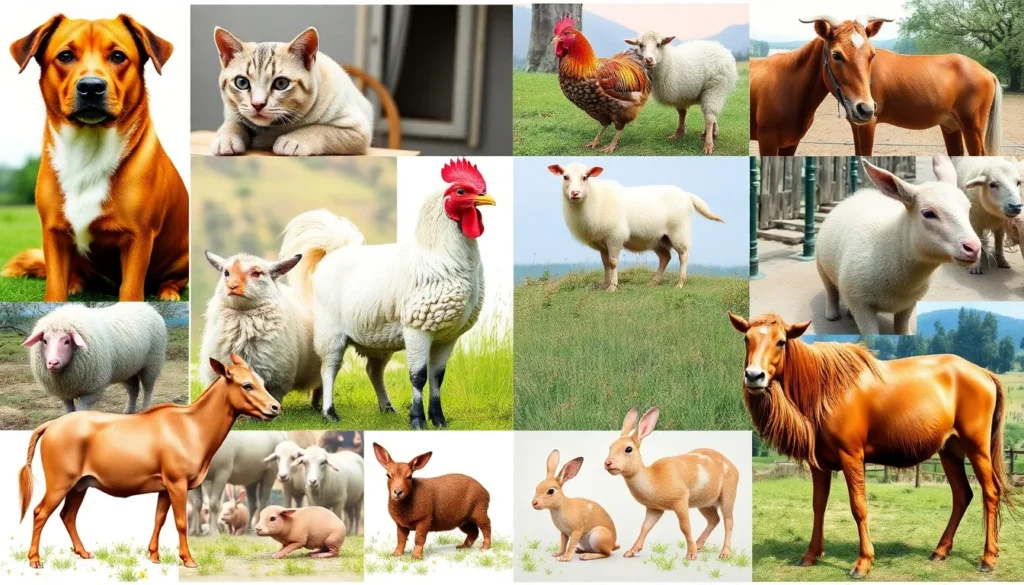
- Dogs were the first domesticated animals. Archaeological evidence suggests dogs were domesticated from wolves over 15,000 years ago, making them the earliest animals to join human societies.
- Cats were domesticated primarily for pest control. Unlike dogs, cats were likely domesticated around 9,000 years ago to help humans control rodent populations in agricultural settlements.
- Cattle have been bred for multiple purposes. Beyond providing meat and milk, cattle have historically been used for labor, such as plowing fields and pulling carts.
- Sheep were among the first animals domesticated for fibers. Early humans raised sheep not only for meat but also for wool, which became a vital textile resource.
- Chickens were domesticated from wild junglefowl. Originating in Southeast Asia, domesticated chickens have been selectively bred for eggs, meat, and ornamental purposes.
- Domesticated horses transformed human transport and warfare. Horses were domesticated around 5,500 years ago, revolutionizing communication, agriculture, and military strategies.
- Goats are adaptable to diverse environments. They can thrive in rugged landscapes and provide milk, meat, and even hides in many cultures worldwide.
- Pigs have a versatile diet and rapid reproduction. These traits made pigs valuable livestock for efficient food production in various societies.
- Rabbits were domesticated later for meat and fur. Domestication of rabbits primarily occurred in Europe during the Middle Ages.
- Camels are essential in arid regions. Domesticated camels provide transport, milk, and wool in desert environments, particularly in the Middle East and parts of Africa.
- Domesticated animals often retain instincts from their wild ancestors. For example, dogs still display pack behaviors, and cats exhibit hunting skills despite domestication.
- Selective breeding has produced diverse breeds within species. For example, dog breeds vary greatly in size and temperament, reflecting human preferences over millennia.
- Domestication has affected animal genetics. Traits such as docility, size, and productivity have been enhanced compared to wild counterparts.
- Some domesticated animals can interbreed with wild relatives. For instance, domestic dogs can mate with wolves, and domestic cats can interbreed with wildcats.
- Domesticated animals contribute to human economies globally. They provide food, clothing, labor, and companionship, impacting livelihoods worldwide.
- Domesticated animals require care and ethical treatment. Proper nutrition, shelter, and health management are essential to ensure animal welfare.
- Domestication has led to unintended ecological impacts. Escaped domesticated animals can become invasive species, affecting native ecosystems.
- Domesticated animals have cultural and symbolic significance. Many societies revere certain animals, which appear in art, religion, and folklore.
- Domesticated animals have been used in scientific research. For example, laboratory mice and rats have advanced understanding of genetics and medicine.
- Domesticated animals can form strong bonds with humans. This interspecies relationship influences behavior and emotional well-being for both parties.
- Conservation efforts sometimes involve domesticated breeds. Preserving rare or heritage breeds helps maintain genetic diversity and cultural heritage.
Habitat and Behavior
Domesticated animals live in environments shaped by human care, including farms, homes, and ranches. Their habitats are often controlled to provide shelter, food, and protection from predators. Behaviorally, these animals have adapted to coexist closely with humans, often displaying reduced fear of people and increased sociability. Many domesticated species retain behaviors essential for survival, such as foraging and social communication, but these may be modified by selective breeding. For example, dogs demonstrate varied behaviors depending on breed and training, while cats maintain hunting instincts despite living indoors. The adaptability of domesticated animals to different climates and human management practices has allowed them to thrive worldwide.
Why This Animal Matters
Domesticated animals are vital to human societies for numerous reasons. Ecologically, they contribute to nutrient cycling and landscape management through grazing and manure. Culturally, they often hold symbolic value and are integral to traditions and ceremonies. Economically, they provide food products such as meat, milk, eggs, wool, and leather, supporting livelihoods and food security. Additionally, domesticated animals serve as companions and working partners, enhancing human quality of life. From agriculture to transportation and scientific research, their roles have been essential in shaping civilizations. Conservation of domesticated breeds also helps preserve biodiversity and genetic resources important for future challenges such as climate change.
Common Misconceptions
Misconception: Domesticated animals are completely different from their wild ancestors.
Correction: While domestication has altered many traits, domesticated animals still share much genetic and behavioral similarity with their wild counterparts and can often interbreed with them.

Misconception: All domesticated animals are tame and safe.
Correction: Domestication reduces aggression but does not eliminate natural instincts. Some animals may still exhibit defensive or unpredictable behaviors.
Misconception: Domesticated animals do not need exercise or mental stimulation.
Correction: Proper physical activity and enrichment are important for the health and welfare of domesticated species, especially pets like dogs and cats.
Misconception: Domesticated animals evolved solely through human intervention.
Correction: Domestication is a complex process involving both human selection and the animals’ own adaptations to living alongside humans.
FAQ
What is the difference between domestication and taming?
Domestication is a genetic process involving selective breeding over many generations to adapt animals to live with humans, while taming refers to conditioning an individual wild animal to tolerate human presence without genetic changes.
How long does it take to domesticate an animal?
Domestication typically occurs over thousands of years, involving selective breeding and adaptation to human environments. Some traits can be influenced more quickly, but full domestication is a long-term process.
Are all domesticated animals descended from wild species?
Yes. All domesticated animals originate from wild ancestors that were gradually adapted through human intervention and natural selection to live alongside people.

Leave a Reply