
Short Answer
21 Facts About Animal Hibernation
- Hibernation is a state of metabolic depression. Animals reduce their metabolic rate significantly to conserve energy during periods of scarce food and extreme cold.
- Not all animals hibernate in the same way. Some enter deep torpor with body temperatures near freezing, while others have lighter dormancy periods.
- Hibernation can last from days to months. Depending on the species and environmental conditions, hibernation duration varies widely.
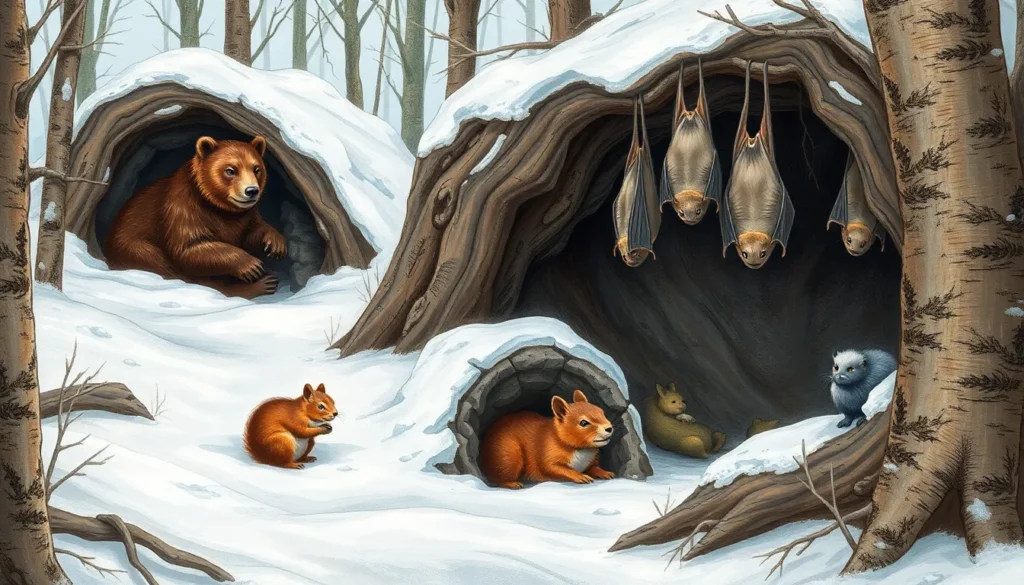
- Only certain mammals are true hibernators. These include ground squirrels, bats, hedgehogs, and some species of bears, although bears exhibit a lighter form of hibernation.
- Hibernating animals experience lowered heart rates and breathing. Heart rates can drop to just a few beats per minute, and breathing slows considerably.
- Some animals periodically wake from hibernation. During these arousals, they may briefly increase their body temperature and activity before returning to dormancy.
- Hibernation is triggered by environmental cues. Changes in daylight, temperature, and food availability signal animals to prepare for hibernation.
- Animals build fat reserves beforehand. Fat provides the primary energy source during months of inactivity.
- Hibernation helps animals avoid predators and harsh weather. Staying inactive in sheltered dens reduces exposure to threats.
- Some amphibians and reptiles undergo brumation. This is a hibernation-like state specific to cold-blooded animals, involving slowed metabolism and inactivity.
- Bears’ hibernation is unique. They reduce metabolic rates but maintain higher body temperatures compared to smaller hibernators.
- Certain species can alter hibernation patterns. Climate change and habitat disruption may affect timing and duration.
- Hibernators recycle nitrogen waste. To survive without eating or drinking, some can convert waste products into usable proteins.
- Hibernation is not just for winter. Some tropical species use it to survive dry seasons or food shortages.
- Hibernating animals rely on specialized tissues. Their cells tolerate low oxygen and reduced blood flow without damage.
- Hibernation has inspired medical research. Scientists study it to improve organ preservation and human metabolic control.
- Slow-wave brain activity dominates during hibernation. This differs from sleep patterns seen in awake animals.
- Some insects also hibernate. For example, ladybugs cluster together in sheltered areas to overwinter.
- Hibernation timing can be disrupted by artificial light. Urbanization may confuse animals’ natural cycles.
- Not all dormancy is true hibernation. Torpor and estivation are related states with different triggers and physiological changes.
- Hibernation is an evolutionary adaptation. It evolved independently in multiple animal groups as a survival mechanism.
Habitat and Behavior
Animals that hibernate typically inhabit regions with distinct seasonal changes, including temperate and arctic zones where winter conditions limit food availability. They seek out protected environments such as burrows, caves, hollow trees, or dens for their hibernacula (hibernation sites). Behaviorally, these animals prepare by increasing food intake to build fat reserves. As temperatures drop and daylight shortens, they enter a state of torpor, significantly slowing physiological processes. During hibernation, animals remain largely inactive, though some species experience periodic arousals. The timing and duration of hibernation are closely linked to environmental conditions, and animals emerge when conditions improve, often in spring.
Why This Animal Matters
Hibernating animals play vital ecological roles by influencing food webs and nutrient cycles. Their dormancy periods reduce predation pressure and competition during scarce months, stabilizing ecosystems. Culturally, various species symbolize endurance and survival in human folklore and traditions. From a conservation perspective, many hibernators face threats from habitat loss, climate change, and human disturbances that alter hibernation patterns. Understanding hibernation aids in protecting these species and can inform medical science through studies on metabolic regulation and organ preservation.
Common Misconceptions
Misconception: All animals that sleep during winter are hibernating.
Correction: Many animals enter different states such as torpor or estivation, which differ in duration and physiological changes from true hibernation.
Misconception: Bears truly hibernate like small mammals.
Correction: Bears enter a lighter form of hibernation, maintaining a higher body temperature and can wake more easily than small mammal hibernators.
Misconception: Animals do not eat or drink at all during hibernation.
Correction: While hibernating animals do not consume food, some species periodically awaken to drink water or manage physiological needs.
FAQ
What is the difference between hibernation and torpor?
Hibernation is a prolonged state of metabolic depression lasting for weeks or months, typically seasonal, while torpor is a shorter, often daily, reduction in metabolic activity to conserve energy.
Do all bears hibernate?
Most bear species enter a form of hibernation during winter, but their body temperature does not drop as drastically as in smaller hibernators, making their state less profound.
Can climate change affect hibernation?
Yes, changes in temperature and seasonal patterns can disrupt hibernation timing and duration, potentially impacting animal survival and ecosystem balance.

Leave a Reply