
Short Answer
21 Facts About Cuscus
- Taxonomic Classification: Cuscuses belong to the family Phalangeridae within the order Diprotodontia, which includes other marsupials like possums and kangaroos.
- Species Diversity: There are around 7 recognized species of cuscus, with some taxonomic debate due to their similar appearances.
- Geographic Range: Cuscuses are native primarily to New Guinea, surrounding islands, and parts of northern Australia.
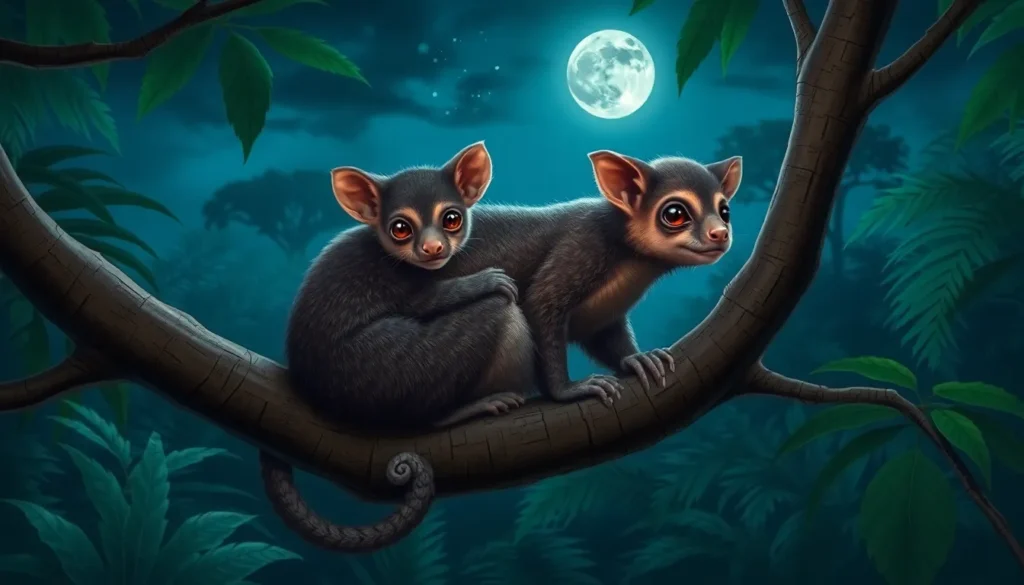
- Arboreal Lifestyle: They are mostly tree-dwelling animals, spending the majority of their time in forest canopies.
- Nocturnal Activity: Cuscuses are generally nocturnal, foraging and moving mainly during the night to avoid predators.
- Diet: They are primarily herbivorous, feeding on leaves, fruits, flowers, and occasionally small insects.
- Physical Appearance: Cuscuses have thick, soft fur that helps camouflage them amongst the foliage, with colors ranging from white to dark brown.
- Prehensile Tail: Their long, curled tail is prehensile, allowing them to grasp branches and maintain stability in the trees.
- Reproduction: Female cuscuses have a pouch where the young develop after birth, a characteristic feature of marsupials.
- Longevity: In the wild, cuscuses can live up to 7-10 years, though exact lifespan varies by species.
- Communication: They communicate through vocalizations such as grunts, hisses, and clicks, especially during mating or territorial disputes.
- Predators: Natural predators include large birds of prey, pythons, and introduced species like feral cats and dogs.
- Conservation Status: Some cuscus species are considered vulnerable or near threatened due to habitat loss and hunting pressures.
- Ecological Role: As seed dispersers and herbivores, they help maintain forest health and plant diversity.
- Adaptations: Sharp claws and strong limbs assist in climbing, while their slow movements help avoid detection.
- Solitary Nature: Cuscuses are mostly solitary except during mating or mother-offspring interactions.
- Slow Metabolism: Their slow metabolic rate suits their leaf-based diet and arboreal lifestyle.
- Limited Range: Some species have very restricted distributions, making them more susceptible to environmental changes.
- Cultural Importance: In some indigenous cultures, cuscuses are hunted for food and traditional uses.
- Scientific Interest: They provide insight into marsupial evolution and arboreal adaptations.
- Research Challenges: Their nocturnal and elusive habits make studying them in the wild difficult.
Habitat and Behavior
Cuscuses inhabit tropical rainforests and dense woodlands primarily in New Guinea, nearby islands, and parts of northern Australia. They prefer dense canopies where they can find shelter and food. Being arboreal, they rarely descend to the ground, relying on their prehensile tails and strong limbs for climbing and gripping branches.
Behaviorally, cuscuses are mostly nocturnal and solitary animals. They spend nights foraging for leaves, fruits, and flowers, using their keen senses to locate food while avoiding predators. Their slow and deliberate movements help them remain inconspicuous. During the day, they rest in tree hollows or dense foliage. Communication is limited and primarily used for mating or territorial defense.
Why This Animal Matters
Cuscuses play a vital ecological role as herbivores and seed dispersers, contributing to forest regeneration and plant diversity. Their feeding habits help shape vegetation structure, influencing ecosystem dynamics. Additionally, cuscuses serve as prey for native predators, forming an integral part of the food web.
From a cultural perspective, certain indigenous communities regard cuscuses as an important food source and may use their fur or body parts in traditional practices. Conservation-wise, some cuscus species face threats from deforestation, hunting, and habitat fragmentation, highlighting the need for habitat protection and sustainable management.
Common Misconceptions
Misconception: All cuscus species are closely related to possums.
Correction: While cuscuses are part of the same family (Phalangeridae) as possums, they belong to distinct genera and exhibit different ecological and behavioral traits.
Misconception: Cuscuses are fast-moving animals.
Correction: Cuscuses generally move slowly and deliberately, an adaptation that helps them avoid detection by predators in the dense forest canopy.
Misconception: Cuscuses are carnivores.
Correction: Cuscuses are primarily herbivores, feeding on leaves, fruits, and flowers, though they may occasionally consume small insects.
Misconception: Cuscuses are widespread and abundant everywhere.
Correction: Some cuscus species have very limited geographic ranges and face threats that make their populations vulnerable.
FAQ
What is a cuscus?
A cuscus is a type of arboreal marsupial native to New Guinea, nearby islands, and parts of northern Australia, known for its prehensile tail and nocturnal habits.
Are cuscuses related to possums?
Yes, cuscuses and possums belong to the same family Phalangeridae but are classified into different genera with distinct characteristics.
Why are cuscuses important to their ecosystem?
Cuscuses contribute to their ecosystems by dispersing seeds and controlling vegetation through their herbivorous feeding, supporting forest health and biodiversity.



Leave a Reply