
Short Answer
21 Facts About Gaur (Indian bison)
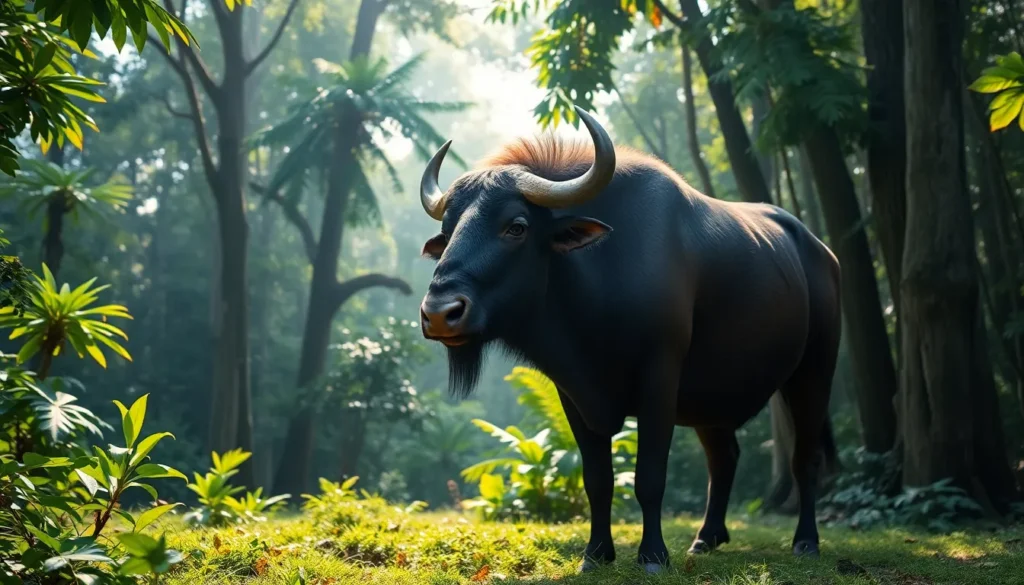
- Largest extant bovine: The gaur is the largest living wild cattle species, with males reaching up to 1,500 kilograms in weight.
- Scientific classification: The gaur’s scientific name is Bos gaurus, belonging to the family Bovidae.
- Distinctive appearance: It has a muscular body, a prominent ridge on its back, and large curved horns that can span up to 80 centimeters.
- Native range: Gaurs are found primarily in India, Nepal, Bhutan, Bangladesh, and parts of Southeast Asia, including Thailand and Cambodia.
- Habitat preference: They inhabit evergreen forests, moist deciduous forests, and sometimes grasslands near forest edges.
- Diet: Gaurs are herbivores, feeding mainly on grasses, leaves, shoots, and fruits.
- Social structure: They generally live in small herds consisting of females and their offspring, while mature males are often solitary or form bachelor groups.
- Activity pattern: Gaurs are primarily crepuscular, active during dawn and dusk, to avoid the heat of the day.
- Strength and speed: Despite their heavy build, gaurs are known for their agility and can run at speeds up to 35 miles per hour (56 km/h).
- Conservation status: The International Union for Conservation of Nature (IUCN) lists the gaur as Vulnerable due to habitat loss and poaching.
- Role in ecosystem: As large herbivores, gaurs help shape vegetation structure and serve as prey for large predators like tigers.
- Reproduction: Females have a gestation period of about 270 days and typically give birth to a single calf.
- Longevity: In the wild, gaurs can live up to 20 years or more.
- Communication: They use vocalizations, body postures, and scent marking to communicate within herds.
- Economic importance: Gaurs contribute to ecotourism and are sometimes revered in local cultures.
- Threats: Habitat fragmentation, hunting for meat and trophies, and competition with livestock are major threats.
- Physical adaptations: Their large hooves help them navigate rugged terrain, and their muscular physique aids in defense.
- Behavioral traits: Gaurs are generally shy but can become aggressive if threatened, especially females protecting calves.
- Genetic diversity: Populations vary genetically across regions, affecting conservation strategies.
- Captive breeding: Some zoos and reserves have programs to breed gaurs to support population numbers.
- Historical significance: Gaurs have been depicted in ancient Indian art and folklore, symbolizing strength and resilience.
Habitat and Behavior
The gaur primarily inhabits forested regions of South and Southeast Asia, favoring evergreen and moist deciduous forests where water sources are readily available. They prefer areas with dense undergrowth for cover but also venture into open grasslands for grazing. Gaurs are crepuscular, being most active during early morning and late evening, which helps them avoid the daytime heat. Socially, they form herds typically composed of females and their young, while mature males tend to be solitary or form small bachelor groups. These large bovines depend on their strength and agility to navigate hilly or forested terrain and can display defensive aggression when threatened, particularly mothers protecting their calves.
Why This Animal Matters
The gaur plays a crucial ecological role as a mega-herbivore, influencing plant community dynamics by grazing and browsing, which helps maintain habitat diversity. They also serve as prey for apex predators such as tigers, thus contributing to the food chain balance. Beyond their ecological importance, gaurs hold cultural and symbolic significance in several Asian societies, often associated with power and endurance. Conservation of gaur populations is important not only for biodiversity but also for maintaining the health of forest ecosystems. Their vulnerability to habitat loss and poaching highlights the need for continued protection efforts.
Common Misconceptions
Misconception: Gaurs are domesticated cattle.
Correction: Gaurs are wild bovines and are not domesticated; they differ significantly from domestic cattle in behavior, size, and habitat requirements.
Misconception: Gaurs are aggressive towards humans by nature.
Correction: While gaurs can be defensive if provoked, they are generally shy and avoid human contact.
Misconception: The gaur is the same as the American bison.
Correction: Despite the common name “Indian bison,” the gaur is a distinct species native to Asia and is different from the American bison found in North America.
FAQ
What is the gaur's natural habitat?
Gaurs naturally inhabit evergreen and moist deciduous forests across South and Southeast Asia, favoring areas with ample vegetation and water sources.
How large can a gaur grow?
Male gaurs can weigh up to 1,500 kilograms and stand up to 1.7 to 2.2 meters tall at the shoulder, making them the largest wild cattle species.
Are gaurs endangered?
The gaur is classified as Vulnerable by the IUCN due to threats from habitat loss, hunting, and competition with livestock, although some populations remain stable.



Leave a Reply