
Short Answer
21 Facts About Yabby (Freshwater Crayfish)
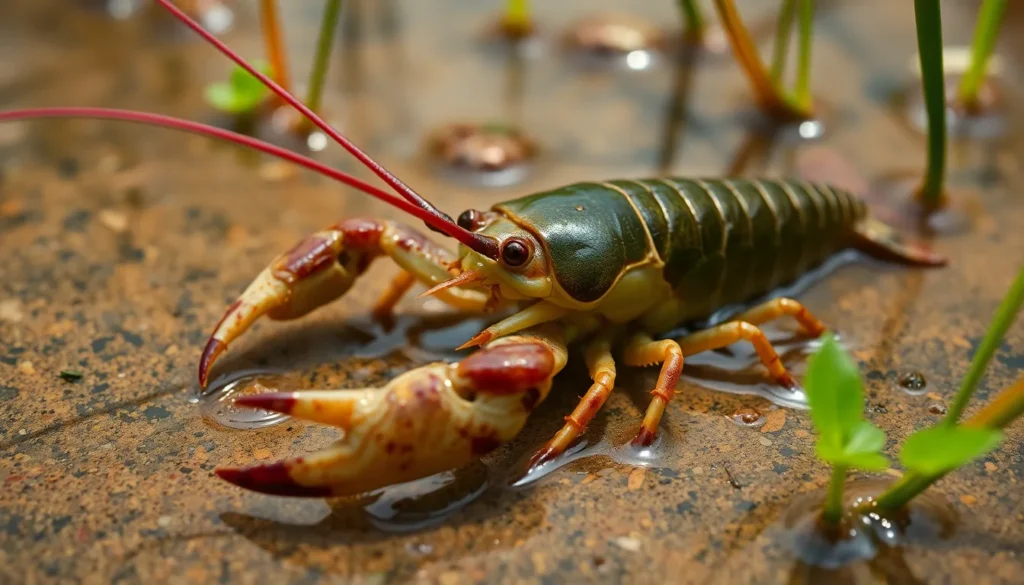
- Yabbies are freshwater crayfish native to Australia. They belong to the family Parastacidae and are commonly found in the eastern parts of the country.
- The most widely known species is Cherax destructor. This species is often referred to simply as the yabby and is popular for both fishing and aquaculture.
- Yabbies have a hard exoskeleton. This shell provides protection and must be periodically shed through molting to allow growth.
- They are omnivorous scavengers. Yabbies feed on plant material, small aquatic animals, and detritus.
- Yabbies can survive in low-oxygen environments. They are adapted to survive droughts by burrowing into mud and entering a state of dormancy.
- They exhibit sexual dimorphism. Male yabbies typically have larger claws compared to females, especially during breeding seasons.
- Breeding usually occurs in warmer months. Females carry fertilized eggs under their tails until they hatch into free-swimming larvae.
- Yabbies can grow up to 12 cm in length. Their size depends on species, environmental conditions, and availability of food.
- They play an important role in freshwater ecosystems. By feeding on organic matter, yabbies contribute to nutrient cycling and sediment turnover.
- Yabbies are popular in recreational fishing. They are caught using baited traps or hand nets.
- Their burrowing behavior can impact water bodies. Burrows can influence sediment structure and water flow in wetlands and ponds.
- Yabbies are sometimes used in aquaculture. They are farmed for food in Australia and other countries with suitable freshwater habitats.
- They have a relatively fast growth rate. Under favorable conditions, yabbies can reach maturity within a year.
- Yabbies are opportunistic feeders. Their diet can vary widely depending on availability of food resources.
- They are mostly nocturnal. Yabbies tend to be more active at night to reduce predation risk.
- Yabbies have a pair of large pincers. These are used for defense, capturing prey, and competing with other yabbies.
- They can regenerate lost limbs. Like other crayfish, yabbies are capable of regenerating claws or legs over successive molts.
- Yabbies can tolerate a wide range of water temperatures. They survive in waters between 10°C and 30°C, although extremes can be harmful.
- Some species of yabbies have been introduced outside their native range. This has sometimes led to ecological concerns due to competition with native fauna.
- Yabbies contribute to Indigenous Australian diets and culture. They have been traditionally caught and consumed by Aboriginal communities.
- They are an indicator species for freshwater health. Their presence and abundance can reflect water quality and habitat conditions.
Habitat and Behavior
Yabbies predominantly inhabit freshwater environments such as rivers, creeks, lakes, dams, and wetlands across eastern Australia. They favor slow-moving or still waters with muddy or sandy bottoms that allow burrowing. During dry periods, yabbies can survive by digging deep burrows into moist substrate, sometimes reaching below the water table to maintain moisture. This behavior helps them endure drought conditions and seasonal water fluctuations.
Behaviorally, yabbies are mostly nocturnal, emerging at night to forage and avoid predators. They are territorial animals, often defending burrows and resources aggressively, particularly males during the breeding season. Their diet is omnivorous and opportunistic, enabling them to adapt to varying food availability. Molting is an essential process for growth, during which the yabby sheds its exoskeleton and is vulnerable until the new shell hardens.
Why This Animal Matters
Ecologically, yabbies play a key role in freshwater ecosystems by contributing to nutrient recycling through their scavenging activities. Their burrowing can influence sediment dynamics and water aeration, which affects other aquatic life. Culturally, yabbies have significance for Indigenous Australian communities as a traditional food source. Economically, they are important in recreational fishing and aquaculture, providing a source of income and food. Furthermore, yabbies serve as bioindicators, with their health reflecting the quality of freshwater habitats, thus aiding in environmental monitoring and conservation efforts.
Common Misconceptions
Misconception: Yabbies are the same as marine lobsters.
Correction: Yabbies are freshwater crayfish and are distinct from marine lobsters both taxonomically and ecologically.
Misconception: Yabbies can only live in permanent water bodies.
Correction: Yabbies can survive in temporary water bodies and drought conditions by burrowing and entering dormancy.
Misconception: All yabbies are aggressive towards humans.
Correction: While yabbies may pinch if handled, they are generally not aggressive and use their pincers primarily for defense and competition.
Misconception: Yabbies are invasive everywhere they are found.
Correction: Although some species have been introduced outside their native range and can impact local ecosystems, within their native habitats yabbies are a natural and important part of the ecosystem.
FAQ
What is a yabby?
A yabby is a type of freshwater crayfish native to Australia, known for its hard exoskeleton, pincers, and burrowing habits.
Where do yabbies live?
Yabbies live in freshwater environments such as rivers, lakes, dams, and wetlands, often burrowing into muddy or sandy substrates.
Are yabbies dangerous to humans?
Yabbies are generally not dangerous to humans. They may pinch if handled roughly, but they are primarily defensive and not aggressive.




Leave a Reply