
Short Answer
21 Facts About Manta Rays
- Large Size: Manta rays are among the largest rays in the ocean, with wingspans that can exceed 7 meters (23 feet).
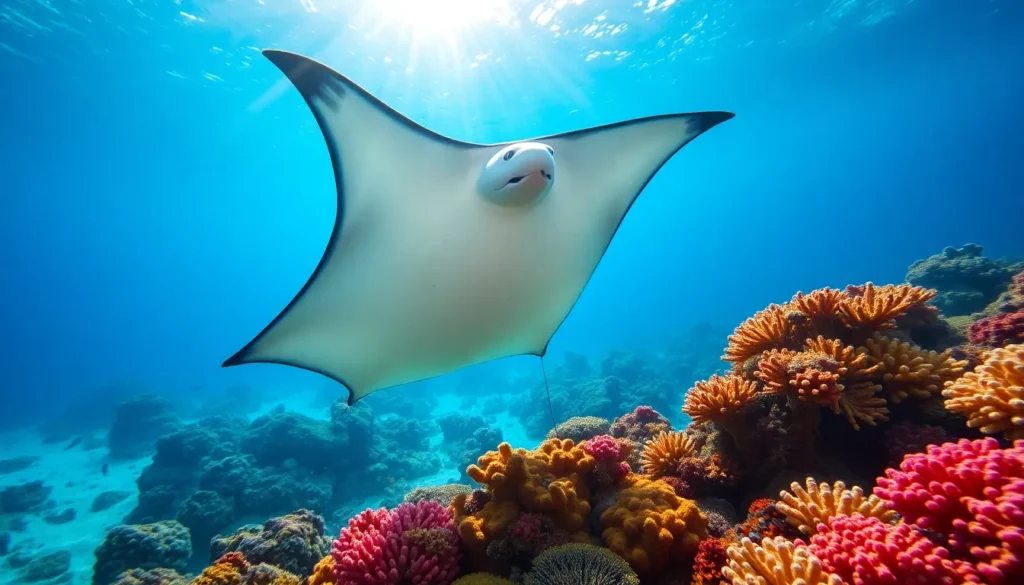
- Distinctive Body Shape: They have a flat, diamond-shaped body with triangular pectoral fins that resemble wings.
- Cephalic Lobes: Manta rays possess cephalic lobes on either side of their head, which they use to funnel plankton into their mouths while feeding.
- Filter Feeders: These rays feed primarily on plankton, filtering large volumes of water through their gill rakers to extract tiny organisms.
- Intelligence: Manta rays are considered one of the most intelligent species of fish, exhibiting complex behaviors and large brain-to-body size ratios.
- Social Behavior: They often form aggregations, sometimes gathering in groups for feeding or cleaning at cleaning stations.
- Cleaning Stations: Manta rays visit specific sites on coral reefs to have parasites removed by cleaner fish.
- Reproduction: Manta rays are ovoviviparous, meaning their young develop inside eggs that hatch within the mother’s body before birth.
- Low Reproductive Rate: Females typically give birth to one pup every two to three years, making population recovery slow.
- Wide Distribution: They are found in tropical and subtropical waters worldwide, including the Atlantic, Pacific, and Indian Oceans.
- Migration Patterns: Manta rays undertake seasonal migrations linked to food availability and water temperature.
- Unique Skin Patterns: Each manta ray has a distinct pattern of spots on its underside, which researchers use for individual identification.
- Long Lifespan: Manta rays may live up to 40 years or more in the wild.
- Slow Swimmers: Despite their large size, manta rays swim gracefully and slowly, using their pectoral fins to glide through the water.
- Protected Species: Several manta ray species are listed as vulnerable or endangered due to fishing pressures and habitat loss.
- Threats: They face threats from bycatch, targeted fishing for their gill plates, and habitat degradation.
- Cultural Significance: In some cultures, manta rays symbolize grace and freedom and feature in traditional art and folklore.
- Scientific Research: Ongoing studies focus on their behavior, migration, and conservation needs.
- Ecological Role: As filter feeders, manta rays help maintain the balance of plankton populations in marine ecosystems.
- Human Interaction: Manta rays are popular subjects for ecotourism, particularly in diving and snorkeling communities.
- Unique Defense: Manta rays do not have stingers like some other rays and rely on their size and speed to avoid predators.
Habitat and Behavior
Manta rays inhabit tropical and subtropical ocean waters globally, often frequenting coral reefs, coastal areas, and open ocean environments. They prefer warmer waters but are capable of wide-ranging movements across different marine zones. Their behavior is characterized by slow, graceful swimming using their large pectoral fins, which resemble wings. Manta rays are filter feeders, consuming large amounts of plankton by filtering water through specialized gill rakers. They often gather at cleaning stations where small fish remove parasites from their skin. Socially, manta rays can be solitary or form groups, especially when feeding or mating. Their reproductive strategy involves internal fertilization, and females give birth to live young after a gestation period. Migration patterns are linked to seasonal changes in plankton abundance and water temperature, allowing them to exploit food-rich areas efficiently.
Why This Animal Matters
Manta rays play a critical role in marine ecosystems as filter feeders, helping regulate plankton populations and contributing to oceanic nutrient cycles. Their presence indicates healthy coral reef systems and rich marine biodiversity. Beyond ecology, manta rays have economic importance through ecotourism, attracting divers and snorkelers worldwide. Conservation of manta rays is vital due to their vulnerability to overfishing and habitat degradation. Protecting manta rays helps preserve marine biodiversity and supports sustainable ocean use. Their cultural significance in various societies also underscores the importance of maintaining their populations for future generations.
Common Misconceptions
Misconception: Manta rays are dangerous and aggressive to humans.
Correction: Manta rays are gentle creatures and pose no threat to humans; they lack stingers and typically avoid contact.
Misconception: Manta rays are the same as stingrays.
Correction: While related, manta rays differ from stingrays by lacking venomous stingers and having distinct feeding and behavioral patterns.
Misconception: Manta rays can breathe air like marine mammals.
Correction: Manta rays are fish and breathe through gills, requiring water to extract oxygen.
Misconception: Manta rays are solitary and do not interact socially.
Correction: Manta rays often form groups and engage in social behaviors, especially around cleaning stations and during mating.
Misconception: Manta rays are fast swimmers that can outrun predators.
Correction: Manta rays swim slowly and gracefully, relying on size and agility rather than speed to evade threats.
FAQ
Are manta rays dangerous to humans?
No, manta rays are gentle and pose no threat to humans. They do not have stingers and are known for their calm behavior.
How do manta rays feed?
Manta rays feed by filter feeding, swimming with their mouths open to filter plankton and small fish from the water using specialized gill rakers.
Why are manta rays considered vulnerable?
Manta rays have slow reproductive rates and face threats from fishing, habitat loss, and bycatch, making their populations vulnerable to decline.



Leave a Reply