
Short Answer
Have you ever encountered a creature that leaves you both fascinated and squeamish? Meet the platyhelminthes, or flatworms, a phylum of soft-bodied invertebrates that comes packed with surprising characteristics. These intriguing organisms inhabit diverse environments, from the deepest ocean trenches to the damp soil of a garden. In this article, we will explore ten slimy and simple fun facts about platyhelminthes that may entice your curiosity while also challenging your perspective on the natural world. Are you ready to dive into the wonderfully weird realm of flatworms?
1. Flattened and Unique
Platyhelminthes, derived from the Greek words “platy” meaning flat and “helminth” meaning worm, are named for their distinctively flattened bodies. This shape enhances their surface area, allowing for greater efficiency in nutrient absorption. Ever wonder why this adaptation is crucial for survival? It improves gas exchange in their aquatic environment. Isn’t it remarkable how a simple shape can lead to a more effective life in the water?
2. Master Regenerators
One of the most astonishing abilities of flatworms is their remarkable regenerative capabilities. If a flatworm loses a segment of its body, it can regenerate the lost piece completely. What’s even more fascinating is that if you cut a planarian—an often-studied flatworm—into several pieces, each piece has the potential to develop into a fully functional worm. How would that change the way creatures adapt in their environments if every organism had this capacity?
3. Diverse Lifestyle Choices
In the platyhelminthes phylum, you can find a varied lifestyle ranging from free-living to parasitic lifestyles. Free-living species, such as planarians, thrive in freshwater or marine environments, while parasitic ones, like tapeworms, reside within the bodies of other organisms. How do you think these diverse lifestyles influence their evolutionary paths?
4. The Color Palette of Flatworms
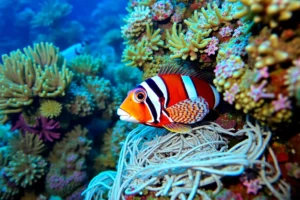
Flatworms boast a vibrant palette that rivals that of the most colorful coral reefs. They exhibit hues ranging from vivid reds and blues to striking patterns that can serve as camouflage or warning signals to predators. Consider this: what role might coloration play in the life of these creatures against their many enemies, including other marine animals?
5. Simple Nervous System
Despite their simple structure, platyhelminthes possess a fascinating nervous system. They have a pair of cerebral ganglia, often likened to a primitive brain, supplemented by nerve cords running throughout their bodies. This basic form of nervous organization channels their responses to stimuli in a coordinated manner. Could the simplicity of their nervous system actually offer advantages over more complex systems in certain environments?
6. Hermaphroditic Wonders
Many flatworms are hermaphroditic, containing both male and female reproductive organs. This adaptation heightens their chances of reproduction, as individuals can mate with any other flatworm they encounter. Interestingly enough, this reproductive strategy may lead to fascinating mating rituals as these organisms choose partners. How does this duality influence their social behavior in the wild?
7. A Gastrovascular Cavity
Platyhelminthes possess a unique gastrovascular cavity that serves as both a digestive and circulatory system. This central cavity facilitates the distribution of nutrients throughout their bodies. Why do you think this arrangement, instead of a more complex system, is advantageous for these organisms?
8. Complex Life Cycles of Parasites
Parasitic flatworms often have complex life cycles that involve multiple hosts. For instance, the life cycle of the liver fluke requires both a snail and a mammal to complete its development. This dual-host requirement complicates their biology in interesting ways and illustrates the delicate balance between host and parasite. What challenges arise in nature when such intricate relationships form?
9. A Clue to Evolutionary History
Flatworms hold significant evolutionary importance due to their status as one of the earliest multicellular organisms. Studying their anatomical and genetic characteristics can provide insights into the evolution of more complex life forms. What can this ancient lineage tell us about our own evolutionary journey and the interconnectedness of life?
10. Unseen Heroes in Ecosystems
Though often overlooked, flatworms play crucial roles in ecosystems. From soil health to aquatic environments, they help decompose organic matter and cycle nutrients back into the ecosystem. Have you ever considered how these slimy creatures contribute to the balance of life around us?
As we unveil the slimy and simple fun facts about platyhelminthes, it becomes clear that these creatures embody complexity within simplicity. From their remarkable regenerative powers to their diverse lifestyles, flatworms challenge our understanding of survival and adaptation. They serve as a reminder that even the most unassuming organisms contribute to the intricate tapestry of life on Earth. So, the next time you find yourself near a body of water or exploring your garden, take a moment to ponder: what secrets might the platyhelminthes be hiding beneath their soft, slimy exteriors?
FAQ
What are platyhelminthes?
Platyhelminthes are soft-bodied, flattened invertebrates known as flatworms, which include species living freely in water and those parasitic inside other animals.
How do flatworms regenerate lost body parts?
Flatworms possess remarkable regenerative abilities where cut pieces can regrow into whole organisms, especially notable in planarians.
What types of lifestyles do flatworms have?
Flatworms can be free-living or parasitic, with some species living independently in aquatic environments and others living inside hosts.
Why are flatworms considered important in evolutionary studies?
Flatworms are among the earliest multicellular organisms, providing insights into the evolution of complex life forms.
What role do flatworms play in ecosystems?
They aid in decomposing organic material and cycling nutrients, contributing to soil health and aquatic ecosystem balance.



Leave a Reply