
Short Answer
21 Facts About Indicator Species
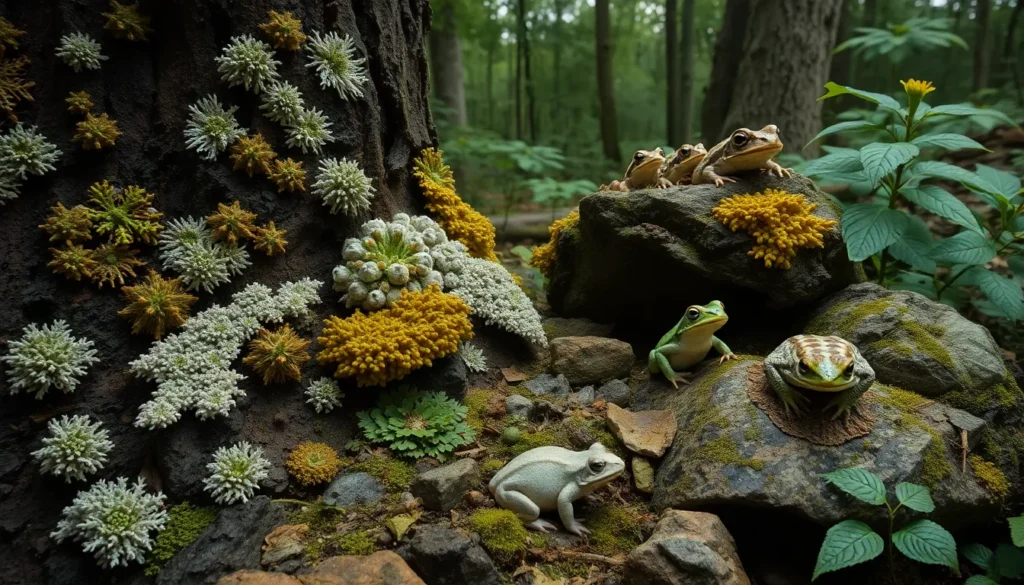
1. Indicator species are organisms used to assess environmental conditions.
They provide early warnings about ecosystem health by reacting to changes like pollution or habitat disturbance.
2. Lichens are common indicator species for air quality.
Lichens absorb nutrients and pollutants directly from the air, making them sensitive to airborne contaminants such as sulfur dioxide.
3. Amphibians are sensitive indicators of water quality and ecosystem integrity.
Their permeable skin and complex life cycles make amphibians vulnerable to pollutants, habitat loss, and climate change.
4. Lichens consist of a symbiotic relationship between fungi and algae or cyanobacteria.
This partnership enables lichens to thrive in diverse environments while reacting to environmental stressors.
5. Amphibians include frogs, toads, salamanders, and caecilians.
These species often require freshwater habitats for breeding and are sensitive to changes in aquatic ecosystems.
6. Lichens grow slowly and can live for decades or even centuries.
Their longevity makes them useful for studying long-term environmental changes.
7. Declines in amphibian populations have been linked to environmental degradation globally.
Amphibians are considered one of the most threatened groups of animals worldwide.
8. Lichens can be used to monitor heavy metal contamination.
They accumulate metals from the environment, allowing scientists to detect pollution levels.
9. Amphibians’ dual life stages (aquatic larvae and terrestrial adults) expose them to multiple environmental threats.
This makes them comprehensive indicators of both terrestrial and aquatic ecosystem health.
10. Some lichens are highly sensitive to nitrogen pollution.
Changes in nitrogen levels can alter lichen community composition, signaling nutrient imbalances.
11. Many amphibians have permeable skin that facilitates gas exchange but also increases vulnerability to toxins.
This physiological trait underlines their use as bioindicators.
12. Lichen diversity tends to decrease in areas with high air pollution.
This reduction can indicate deteriorating air quality in urban or industrial regions.
13. Amphibians are often the first vertebrates to respond to environmental stressors.
Population declines or deformities can serve as early warnings of ecosystem problems.
14. Lichens are important pioneers in soil formation and ecosystem development.
They colonize bare surfaces and contribute organic matter as they grow and decay.
15. Amphibians contribute to controlling insect populations as both larvae and adults.
This ecological role helps maintain balance within food webs.
16. Lichen sensitivity varies among species, with some tolerating higher pollution levels than others.
This variation allows for detailed assessments of environmental quality.
17. Amphibians are vulnerable to emerging diseases such as chytridiomycosis.
This fungal disease has caused severe declines in amphibian populations worldwide.
18. Lichens are used in biomonitoring programs globally due to their cost-effectiveness and ease of sampling.
They provide spatially extensive data on air pollution.
19. Habitat fragmentation poses a significant threat to amphibian populations.
Fragmented habitats can limit breeding opportunities and increase vulnerability to predators.
20. Some lichens produce unique secondary metabolites that have antimicrobial properties.
These compounds may protect lichens from pathogens and contribute to ecosystem dynamics.
21. Conservation efforts targeting amphibians often benefit broader environmental health.
Protecting amphibian habitats helps preserve water quality and biodiversity.
Habitat and Behavior
Lichens inhabit diverse environments, from arctic tundras to tropical rainforests, often growing on rocks, trees, and soil. They can endure extreme conditions such as drought, cold, and high UV radiation. Lichens grow slowly, relying on photosynthesis performed by their algal or cyanobacterial partners. Amphibians typically require moist habitats for survival, with many species dependent on freshwater bodies for reproduction. They exhibit varied behaviors including nocturnality, burrowing, and vocal communication. Amphibians’ life cycles often involve metamorphosis, transitioning from aquatic larvae to terrestrial adults, which exposes them to different ecological niches and threats.
Why This Animal Matters
Indicator species like lichens and amphibians are crucial for environmental monitoring and conservation. Lichens provide insights into air quality and can reveal the presence of pollutants that may harm other organisms, including humans. Amphibians serve as vital indicators of both terrestrial and aquatic ecosystem health due to their sensitivity to environmental changes. Their decline often signals broader ecological disturbances. Additionally, amphibians play important roles in controlling insect populations and supporting food webs. Conservation of these species supports biodiversity, helps maintain ecosystem services, and promotes sustainable environmental management.
Common Misconceptions
Misconception: All lichens are harmful to trees.
Correction: Lichens do not harm trees; they use them as substrates without extracting nutrients or causing damage.
Misconception: Amphibians can live anywhere as long as water is present.
Correction: Amphibians have specific habitat requirements, including suitable breeding sites, temperature ranges, and shelter, and cannot survive in all water-containing environments.
Misconception: Indicator species always show immediate responses to pollution.
Correction: Some indicator species may show delayed or subtle responses depending on the type and level of environmental stress.
Misconception: The presence of lichens always means good air quality.
Correction: While many lichens are sensitive to pollution, some species tolerate polluted conditions, so lichen diversity and species composition provide a more accurate assessment.
Misconception: Amphibians are not important for ecosystems because they are small and inconspicuous.
Correction: Amphibians play key roles in nutrient cycling, food webs, and pest control, making them ecologically significant.
FAQ
What makes lichens good indicators of air quality?
Lichens absorb nutrients and pollutants directly from the atmosphere through their surface, making them highly sensitive to airborne contaminants like sulfur dioxide and heavy metals.
Why are amphibians considered important bioindicators?
Amphibians have permeable skin and complex life cycles involving aquatic and terrestrial environments, making them sensitive to changes in water and land ecosystems, including pollution and habitat disturbance.
Can indicator species survive in polluted environments?
Some indicator species can tolerate certain pollution levels, but generally, sensitive species decline or disappear in degraded environments, which signals ecological problems.




Leave a Reply