
Short Answer
21 Facts About Animal Emotions
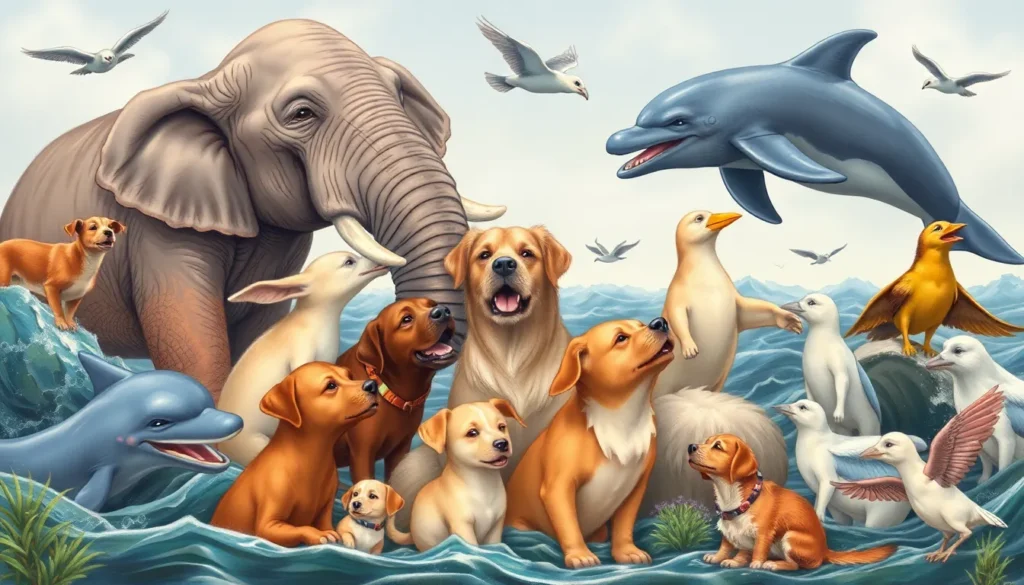
- Animals Experience Grief: Many species, including elephants and primates, show behaviors consistent with mourning the loss of group members, demonstrating prolonged sadness and changes in social behavior.
- Joyful Play Indicates Positive Emotion: Play behaviors observed in animals such as dolphins and dogs often coincide with expressions interpreted as joy, suggesting animals experience pleasure and happiness.
- Dogs Can Exhibit Empathy: Research has shown that dogs respond to human emotional cues, sometimes showing comforting behaviors when their owners are upset.
- Elephants Hold Vigils: Elephants have been documented returning to the bones of deceased companions, touching and staying near them, which may indicate a form of grief or remembrance.
- Birds Experience Complex Social Emotions: Some bird species, such as corvids, demonstrate behaviors that suggest mourning and bonding, including gathering around deceased individuals.
- Primates Display Consolation Behavior: After conflicts, some primates engage in reconciliation and comforting gestures, indicating awareness of others’ distress.
- Rats Show Empathic Responses: Laboratory studies reveal that rats will free trapped companions, suggesting a capacity for empathy and concern for others.
- Whales Sing in Response to Loss: Certain whale species produce unique vocalizations near deceased individuals, possibly reflecting emotional responses to loss.
- Animal Emotions Influence Survival: Emotional bonding can enhance cooperation and social cohesion, which are critical for survival in many species.
- Oxytocin Plays a Role in Animal Emotions: This hormone, associated with bonding and attachment, has been found to increase in animals during positive social interactions.
- Facial Expressions Can Convey Emotions: Some animals, especially primates and dogs, use facial expressions to communicate emotional states to others.
- Grief Can Alter Animal Behavior: After a loss, animals may show changes such as reduced appetite, lethargy, or altered social interactions, similar to grief symptoms in humans.
- Joy Exhibits Through Vocalizations: Many animals emit specific sounds during play or mating, which researchers interpret as expressions of happiness or excitement.
- Emotional Contagion Occurs Among Animals: Emotions such as stress or calmness can spread through groups, influencing collective behavior.
- Animals Form Long-Term Bonds: Species like wolves and birds often maintain lifelong pair bonds, reflecting emotional attachment.
- Certain Animals React to Human Emotions: Domesticated animals, particularly dogs and horses, can detect and respond to human emotional states.
- Emotions in Animals Are Studied Through Behavior and Physiology: Researchers use behavioral observations and physiological markers, such as heart rate and hormone levels, to infer emotional states.
- Animal Emotions Challenge Human-Animal Boundaries: Evidence of complex emotions suggests cognitive and emotional continuities between humans and other animals.
- Emotional Responses Vary by Species: The expression and complexity of emotions differ widely among animals, influenced by neurological and social factors.
- Studying Animal Emotions Helps Improve Welfare: Understanding emotions in animals informs better care practices in captivity and conservation efforts.
- Animal Emotions Remain a Subject of Scientific Debate: While growing evidence supports animal emotions, interpretations and definitions continue to evolve within the scientific community.
Habitat and Behavior
Animals exhibiting complex emotions inhabit diverse environments worldwide, from terrestrial habitats like forests and savannas to aquatic ecosystems such as oceans and rivers. Social animals, including elephants, primates, cetaceans, and many bird species, often live in groups where emotional bonds facilitate cooperation, protection, and reproduction. Behavioral expressions of emotions may include vocalizations, body language, and social interactions like grooming and play. These behaviors serve survival functions by reinforcing social bonds and enabling group cohesion.
Why This Animal Matters
Understanding animal emotions has ecological, cultural, and conservation significance. Ecologically, emotional behaviors influence social structures, mating systems, and group dynamics, affecting species survival and ecosystem balance. Culturally, recognizing emotions in animals fosters empathy and ethical considerations in human-animal relationships. Conservation efforts increasingly consider emotional well-being as part of species management, particularly for endangered and captive animals, promoting welfare and enhancing reintroduction success.
Common Misconceptions
Misconception: Animals do not experience emotions because they lack human-like consciousness.
Correction: Scientific studies indicate many animals possess neurological and behavioral capacities for emotions, although their experiences may differ from human consciousness.
Misconception: Animal emotions are simple and purely instinctual.
Correction: Evidence shows animals can experience complex emotions such as grief, empathy, and joy, involving cognitive processing beyond mere instinct.
Misconception: Only mammals and birds have emotions.
Correction: While most research focuses on mammals and birds, some studies suggest other groups, including certain fish and invertebrates, may also exhibit emotional-like states.
Misconception: Emotional displays in animals are always reliable indicators of their internal states.
Correction: Emotional expressions can vary by context and species; interpreting them requires careful scientific analysis.
FAQ
Do animals really feel grief?
Yes, many animals exhibit behaviors associated with grief, such as mourning the loss of a companion through changes in behavior, vocalizations, and social withdrawal, particularly in species with complex social bonds like elephants and primates.
How do scientists study emotions in animals?
Scientists study animal emotions by observing behavior, measuring physiological responses like hormone levels and heart rate, and using neurological imaging or experiments designed to assess emotional reactions.
Are animal emotions similar to human emotions?
Animal emotions share some similarities with human emotions, especially in species with advanced brains and social structures, but the experiences and expressions can differ in complexity and form due to differences in cognition and communication.



Leave a Reply