
Short Answer
21 Facts About Loaches
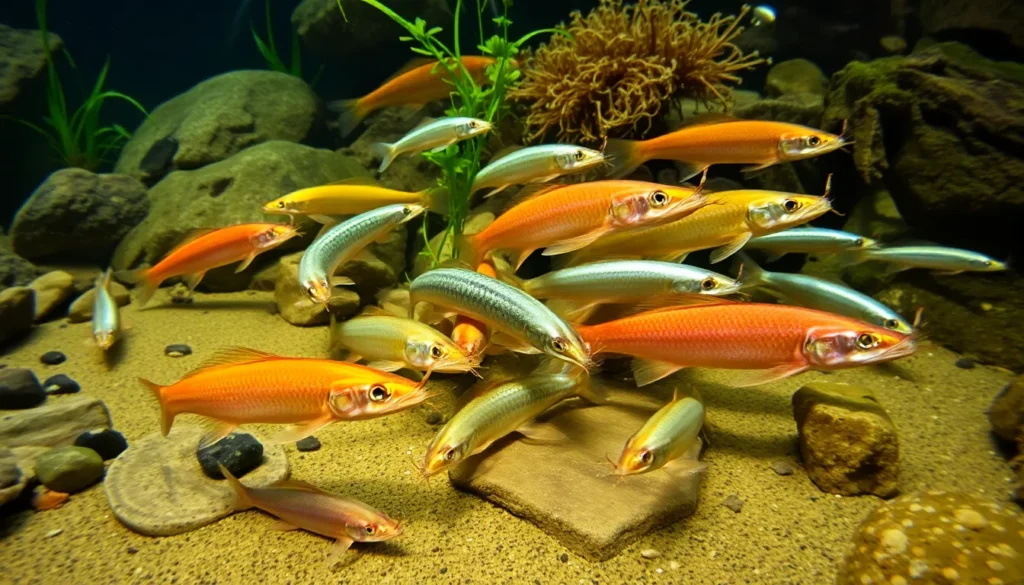
- Loaches belong to the family Cobitidae. They are small to medium-sized freshwater fish primarily found in Eurasia.
- Loaches have elongated bodies. Their streamlined shape helps them navigate bottom substrates and crevices in streams and rivers.
- Many loaches possess barbels around their mouths. These sensory organs assist in detecting food in murky waters.
- Loaches are bottom-dwelling fish. They typically inhabit the benthic zones of rivers, streams, and lakes.
- Some species, like the clown loach, are popular in aquariums. They are appreciated for their vibrant colors and social behavior.
- Loaches exhibit a variety of feeding habits. They are generally omnivorous, consuming small invertebrates, detritus, and plant matter.
- Many loaches have the ability to produce sounds. They can create clicking or squeaking noises, often by grinding their pharyngeal teeth.
- Loaches are known for their burrowing behavior. Some species dig into substrate or hide under rocks for protection.
- Loaches display diverse reproductive strategies. While detailed breeding behaviors vary, many scatter eggs onto substrate or plants.
- Loaches are adapted to low-oxygen environments. Some species can gulp air from the surface or survive in stagnant waters.
- The family Cobitidae includes over 200 species. This diversity reflects adaptations to a wide range of freshwater habitats.
- Loaches generally have small scales or are scaleless. This trait allows for greater flexibility and maneuverability.
- Loaches often have a subterminal mouth. This mouth placement suits their bottom-feeding habits.
- Many loaches are nocturnal or crepuscular. They are most active during low-light conditions to avoid predators.
- Loaches can live in a variety of freshwater habitats. These range from fast-flowing streams to calm ponds and rice paddies.
- The weather loach (Misgurnus anguillicaudatus) can survive freezing temperatures. It enters a state of torpor under ice in winter.
- Loaches play an important role in aquatic ecosystems. They act as scavengers, helping to clean detritus and control insect populations.
- Loaches have cultural significance in some regions. For example, the clown loach is valued in Southeast Asian cultures.
- Some loaches are considered indicators of water quality. Their presence or absence can reflect environmental health.
- Loaches are susceptible to habitat degradation. Pollution, damming, and habitat loss threaten many species.
- Despite their popularity, captive breeding of many loach species remains challenging. Their specialized needs require careful husbandry.
Habitat and Behavior
Loaches are predominantly freshwater fish inhabiting diverse aquatic environments across Asia and parts of Europe. They are commonly found in slow to moderately flowing rivers, streams, ponds, and wetlands. Their preference for benthic zones means they often dwell near the substrate, where they forage for food and seek shelter. Behavioral adaptations such as burrowing and nocturnal activity help loaches avoid predators and optimize feeding. Many species use their barbels to locate food in sediment, feeding on small invertebrates, organic detritus, and sometimes algae. Some loaches can survive in oxygen-poor waters by gulping air or entering low metabolic states during adverse conditions.
Why This Animal Matters
Loaches contribute significantly to freshwater ecosystems by recycling nutrients and controlling populations of aquatic invertebrates. Their scavenging habits help maintain water quality and substrate health. Ecologically, they serve as prey for larger fish and birds, integrating into complex food webs. Culturally, species like the clown loach have symbolic and economic importance, particularly in the aquarium trade and in traditional fisheries. From a conservation perspective, loaches can act as bioindicators, with their populations reflecting the status of freshwater habitats. Protecting loaches and their environments is therefore critical for maintaining aquatic biodiversity and ecosystem services.
Common Misconceptions
Misconception: Loaches are saltwater fish.
Correction: Loaches are strictly freshwater fish and do not inhabit marine environments.
Misconception: All loaches are small and dull-colored.
Correction: While many loaches are small and cryptically colored, some species like the clown loach are brightly patterned and can grow relatively large.
Misconception: Loaches are easy to breed in captivity.
Correction: Many loach species have complex breeding requirements that are difficult to replicate outside their natural habitats.
FAQ
What are loaches?
Loaches are freshwater fish belonging to the family Cobitidae, characterized by elongated bodies, barbels, and bottom-dwelling habits.
Where do loaches live?
Loaches primarily inhabit freshwater environments such as rivers, streams, ponds, and wetlands across Eurasia.
Are loaches good for aquariums?
Some loach species, like the clown loach, are popular in aquariums due to their vibrant colors and social behavior, but many species require specific care and conditions.

Leave a Reply