
Short Answer
21 Facts About Xenopus (African Clawed Frogs)
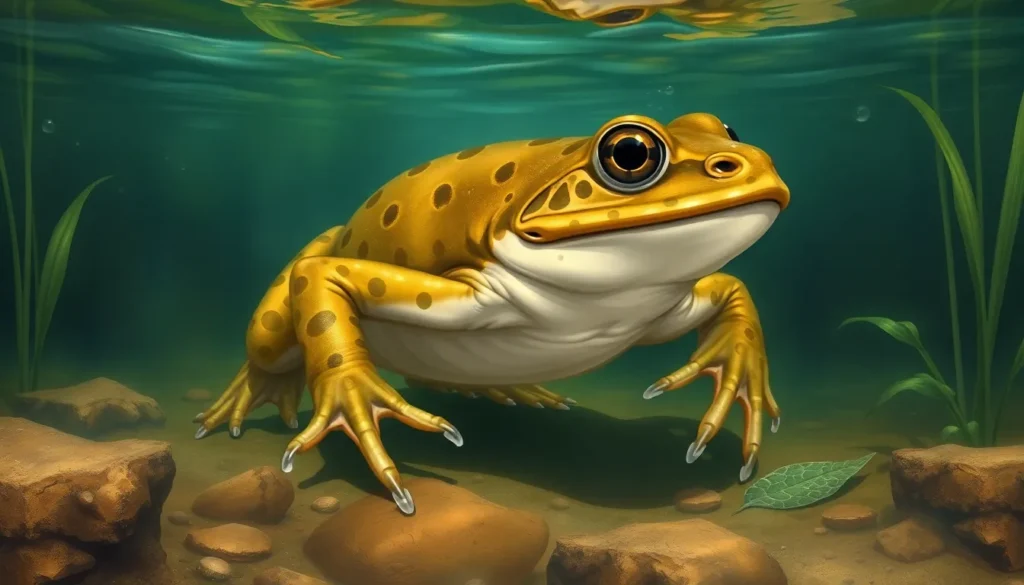
- Scientific Classification: Xenopus is a genus of aquatic frogs native to sub-Saharan Africa, belonging to the family Pipidae.
- Distinctive Claws: They are named African clawed frogs due to the presence of small claws on their hind feet, which they use for digging and defense.
- Fully Aquatic Lifestyle: Unlike many other frogs, Xenopus species are fully aquatic and rarely leave the water.
- Webbed Feet: Their hind feet are fully webbed, aiding in efficient swimming.
- Flattened Body Shape: These frogs have a flattened, streamlined body that facilitates movement in water.
- Unique Vocalizations: Male Xenopus produce underwater calls using laryngeal vocal sacs, which differ from typical frog croaks.
- Reproductive Method: They lay eggs in water, and fertilization is external, with males clasping females in amplexus during mating.
- Egg Characteristics: Xenopus eggs are large, transparent, and develop rapidly, making them valuable in developmental biology studies.
- Regenerative Abilities: These frogs demonstrate some capacity to regenerate tissues, including parts of their limbs and organs.
- Model Organism in Research: Xenopus laevis, in particular, is widely used in biological research due to its ease of care and experimental manipulation.
- Role in Developmental Biology: Studies on Xenopus embryos have contributed significantly to understanding vertebrate development and gene function.
- Invasive Species Potential: Introduced populations outside Africa have become invasive, impacting local ecosystems.
- Environmental Indicator: Xenopus species are sensitive to pollutants and have been used to monitor aquatic environmental health.
- Absence of Tongue: Unlike many frogs, Xenopus lacks a tongue and captures food using their forelimbs and suction.
- Diet: They are carnivorous, feeding on small aquatic invertebrates, fish, and other amphibians.
- Longevity: In captivity, African clawed frogs can live up to 15 years or more.
- Cold Tolerance: These frogs can survive in a range of temperatures, though they prefer temperate freshwater habitats.
- Coloration: Their color varies from olive to brownish with mottled patterns, aiding in camouflage.
- Historical Medical Use: Xenopus were once used in human pregnancy testing due to their sensitivity to the hormone hCG.
- Communication: Besides vocalizations, they use visual signals and body postures during social interactions.
- Conservation Status: Some Xenopus species are common, but habitat loss and pollution threaten others.
Habitat and Behavior
Xenopus species are native to freshwater habitats across sub-Saharan Africa, including ponds, lakes, rivers, and swamps. They prefer still or slow-moving water with muddy or sandy bottoms. These frogs are fully aquatic and rarely leave the water, spending most of their lives submerged. They are nocturnal, becoming more active at night when they hunt for food. Xenopus frogs use their clawed hind legs for digging into the substrate to hide or search for food. Despite being aquatic, they surface periodically to breathe air through their lungs. They reproduce by releasing eggs and sperm into the water, where fertilization occurs externally. Their tadpoles develop rapidly in aquatic environments before metamorphosing into adult frogs. Xenopus species communicate through vocal calls, body movements, and tactile signals, especially during breeding seasons.
Why This Animal Matters
Xenopus frogs hold significant ecological and scientific importance. Ecologically, they serve as both predators and prey in freshwater ecosystems, helping to maintain insect and invertebrate populations. Their sensitivity to environmental pollutants makes them valuable bioindicators for water quality assessment. Scientifically, Xenopus laevis is one of the most important model organisms in developmental biology, genetics, and physiology research. Studies on Xenopus embryos have provided insights into vertebrate development, gene regulation, and cellular processes. Historically, Xenopus frogs were used in human pregnancy tests before modern methods became available. Their invasive potential when introduced to non-native environments highlights the need for careful ecological management. Overall, Xenopus contributes to both biodiversity and biomedical advancement.
Common Misconceptions
Misconception: Xenopus frogs are dangerous to humans.
Correction: African clawed frogs are generally harmless to humans and do not bite aggressively. They are more likely to retreat when disturbed.
Misconception: Xenopus frogs are terrestrial and live on land.
Correction: They are fully aquatic and spend almost their entire lives in water, rarely venturing onto land.
Misconception: All species of Xenopus are invasive everywhere.
Correction: While some Xenopus populations introduced outside Africa have become invasive, native populations are part of their natural ecosystems and are not invasive there.
Misconception: Xenopus frogs have tongues like most other frogs.
Correction: Unlike many frogs, Xenopus species lack tongues and instead use their forelimbs and suction to capture prey.
FAQ
Are African clawed frogs dangerous to humans?
No, African clawed frogs are not dangerous to humans. They are generally shy and avoid contact. Though they have claws, they do not pose a significant threat and rarely bite.
Why are Xenopus frogs used in scientific research?
Xenopus frogs, especially Xenopus laevis, are used because their embryos develop externally and are large and transparent. This makes them ideal for studying early development, genetics, and cellular biology.
Can African clawed frogs live outside water?
Xenopus frogs are fully aquatic and prefer living underwater. They occasionally surface to breathe air but do not typically leave the water for extended periods.




Leave a Reply