
Short Answer
When you think of ancient civilizations, the Mayans often stand out due to their remarkable advancements and captivating myths. Have you ever pondered what snippets of knowledge still linger about these incredible people? Prepare yourself for a journey through time as we unveil a plethora of fun facts about the Mayans—an ancient genius with enduring legends that continue to fascinate. Can you rise to the challenge of expanding your understanding of this captivating culture? Let’s dive in!
1. A Calendar Beyond Compare
The Mayans are perhaps best known for their astronomical prowess, including a calendar system that is unparalleled in its sophistication. They created the Tzolk’in, a 260-day ritual calendar, alongside the Haab’, a 365-day solar calendar. But what’s truly remarkable is the Long Count calendar, which tracks time from a mythical creation date. Have you ever encountered a civilization that managed such precise calculations—one that marked significant astronomical events with remarkable accuracy?
2. Mathematical Marvels
While many ancient cultures relied on basic counting systems, the Mayans developed an intricate mathematical framework, embracing the concept of zero long before its widespread acceptance in Europe. They employed a vigesimal (base-20) numeral system and could perform complex calculations, including those necessary for large-scale architectural projects. Isn’t it fascinating that this numerical sophistication allowed them to build their grand cities and monuments?
3. Architectural Excellence
Step into cities like Tikal and Chichen Itza, and you encounter a celebration of architecture and engineering. The Mayans constructed awe-inspiring pyramids and temples using limestone and other materials, which not only served religious purposes but also reflected their astronomical observations. The El Caracol observatory, for instance, demonstrates their acute understanding of celestial movements. Can you visualize how these monumental structures were aligned with the cosmos?
4. Diverse Diet and Agriculture
The Mayans were ingenious agriculturalists, employing techniques such as slash-and-burn agriculture, terracing, and raised-field farming. Their diet was varied, consisting of maize, beans, squash, and cocoa, which held significant socio-political importance. They even cultivated chocolate from cacao beans, integral to their rituals and economy. Can you imagine a civilization that revered food not just for sustenance but as a means of connecting with the divine?
5. Hieroglyphics: A Complex Writing System
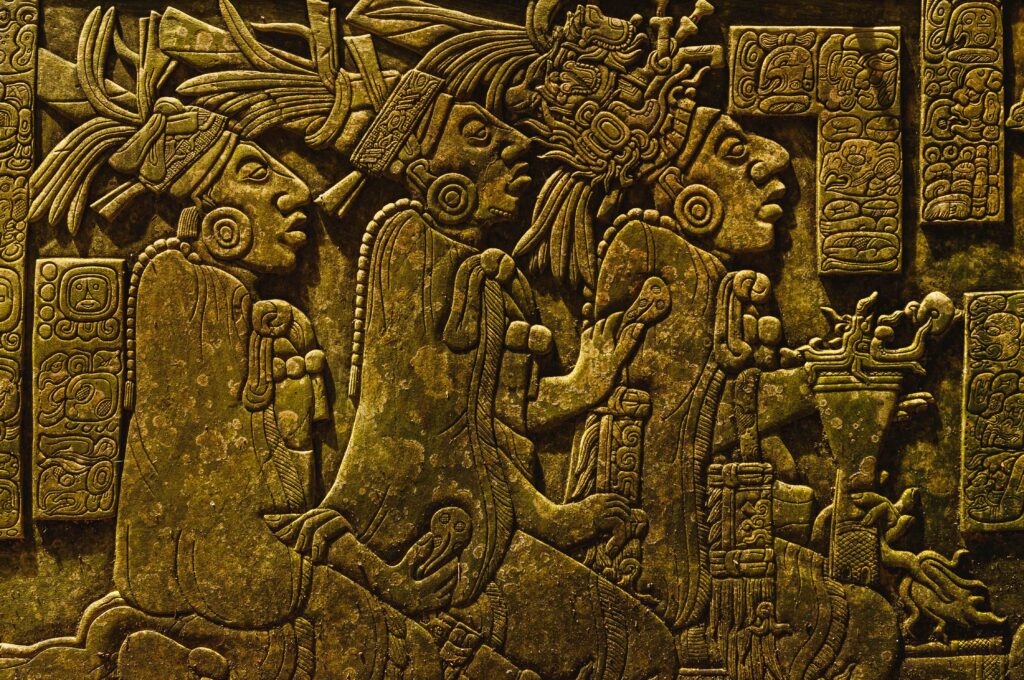
Unlike many other ancient cultures whose writing systems have remained elusive, the Mayans developed a unique script composed of around 800 hieroglyphic characters. This intricate system was capable of expressing complex ideas and was utilized in codices, monuments, and ceramics. The deciphering of these glyphs has revealed insights into Mayan society, history, and culture. How might understanding their language reshape our perception of their civilization?
6. Rich Mythology and Religion
The Mayans possessed a rich tapestry of mythology that infused their daily lives and spiritual practices. Their pantheon of deities was multifaceted, representing various aspects of nature and human existence. One intriguing story involves the Hero Twins, Hunahpú and Xbalanqué, who descended to the underworld to defeat the lords of Xibalba. Have you ever contemplated how these legends served as moral tales, guiding the moral compass of a civilization?
7. The Ball Game: More Than Just a Sport
Integral to Mayan culture was the Mesoamerican ballgame, known as pok-a-tok. This ritualistic sport was laden with symbolism, serving not only as entertainment but also as a representation of life, death, and rebirth. The stakes were often high, sometimes involving human sacrifice. Imagine how a simple game could evolve into a cosmic battle of sorts—where the outcome was believed to affect the very fabric of existence!
8. The Decline: Mystery and Speculation
Despite their achievements, the Mayan civilization experienced a notable decline around the 9th century, with many cities being abandoned. Various theories abound regarding this phenomenon, from environmental factors and drought to warfare and social upheaval. It invites speculation on how a seemingly invincible culture could face collapse. What lessons can modern societies glean from such a remarkable yet frail civilization?
9. Legacy and Influence
Even in contemporary times, the legacy of the Mayans persists. Their descendants still inhabit the Yucatán Peninsula, preserving traditions, languages, and customs passed down through generations. Their profound understandings of astronomy and agriculture influence modern practices and philosophies. Have you ever wondered how the lessons of the past can continue to inspire future generations?
10. Modern Interpretations and Artistic Expression
The allure of the Mayan civilization continues to captivate artists, writers, and filmmakers. From novels to documentaries, interpretations of their history and mythology have allowed new audiences to engage with these ancient stories. Consider how popular media shapes our understanding of the past. What added layers of complexity do modern representations contribute to the narrative of an ancient culture?
In conclusion, the Mayans were indeed a civilization marked by ingenuity, creativity, and profound understanding. Their achievements resonate through time, inviting us to explore their legacy while challenging us to think critically about our own existence and advancements. Are you ready to delve deeper into these ancient enigmas and perhaps discover facets you had never considered before?
FAQ
What were the main achievements of the Mayans?
The Mayans made significant advancements in astronomy, mathematics, architecture, agriculture, writing, and mythology.
Why is the Mayan calendar famous?
The Mayan calendar is renowned for its complexity and precision, featuring the Tzolk'in and Haab' calendars, as well as the Long Count calendar.




Leave a Reply