
Short Answer
The Aztecs, a pre-Columbian civilization that flourished in central Mexico from the 14th to the 16th century, were a remarkable society characterized by their monumental achievements in various domains. Exploring this enigmatic culture reveals a captivating tapestry woven with power, art, religion, and intriguing secrets that continue to pique curiosity and inspire modern scholarship. Below, we delve into several riveting aspects of the Aztec civilization that underscore their complexity and sophistication.
1. The Formation of the Empire
The Aztec Empire emerged from a blend of migratory tribes known as the Mexica who settled on the marshy islands of Lake Texcoco. According to legend, they established Tenochtitlan, their capital city, in 1325 AD, after spotting an eagle perched atop a cactus. This site eventually became a grand metropolis, notable not just for its architectural brilliance but also for its commercial and military prowess. The empire expanded rapidly, dominated by military conquests and strategic alliances, ultimately extending from the Gulf of Mexico to the Pacific Ocean.
2. A Complex Social Structure
The Aztec society was intricately hierarchical. At the pinnacle stood the Emperor or ‘Huey Tlatoani,’ who wielded absolute power, regarded almost as a divine figure. Below him, the nobility held significant sway, comprising priests, military leaders, and high officials who were instrumental in governance and religious affairs. Commoners, artisans, and farmers constituted the bulk of the population, while the enslaved individuals, often war captives, occupied the lowest stratum. This stratified social order facilitated a broad array of labor specialization, essential for the empire’s agrarian and urban economy.
3. Architectural Wonders
The architectural accomplishments of the Aztecs are monumental. Tenochtitlan was characterized by its awe-inspiring temples, such as the Templo Mayor, dedicated to the gods Tlaloc and Huitzilopochtli. This edifice served as both a center of worship and a statement of imperial power. The city itself was an engineering marvel, complete with sophisticated aqueducts, causeways, and chinampas — floating gardens that maximized agricultural yield on the lake’s waters. The meticulous urban planning facilitated trade and reinforced social cohesion.
4. A Unique Calendar System
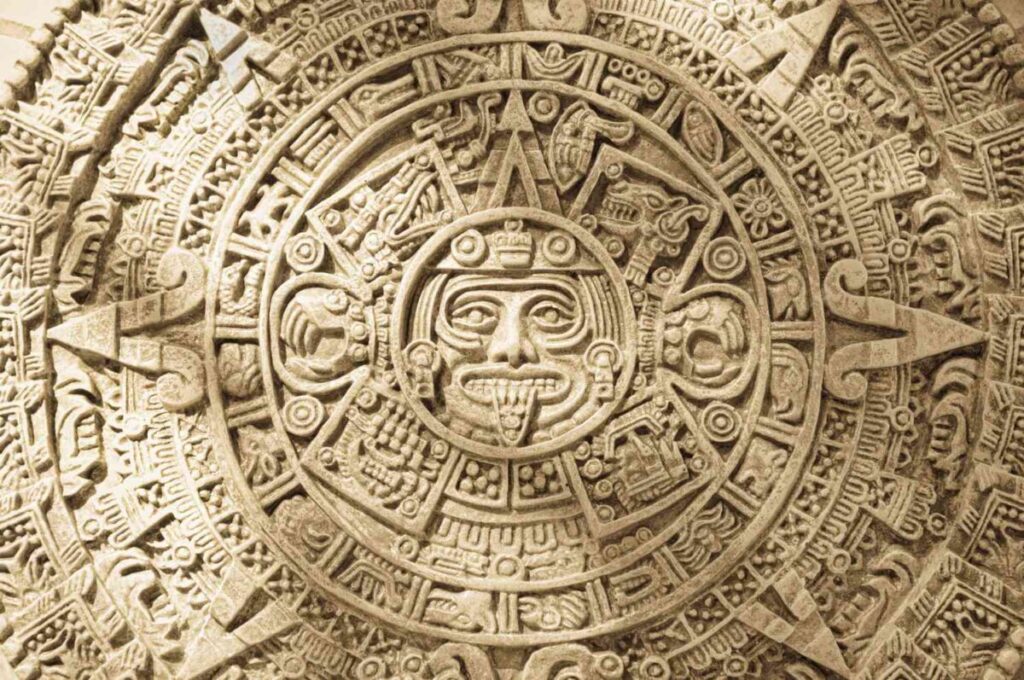
The Aztecs utilized a complex calendrical system composed of two cycles: the tonalpohualli, which lasted 260 days, and the xiuhpohualli, a solar calendar of 365 days. This dual system corresponded to their agricultural practices and religious ceremonies. Their ability to track celestial events played a crucial role in their agronomy, allowing for precise planting and harvesting schedules, which contributed to societal prosperity.
5. Religious Rituals and Human Sacrifice
Central to Aztec culture was their polytheistic religion, replete with gods associated with various aspects of life and nature. Rituals often included offerings, songs, and, unsettlingly, human sacrifices. It was believed that such acts were essential to appease the deities and ensure the continuation of the world. While ethically perplexing to modern sensibilities, this practice reflected their worldview that life was a balance of sacrifice and rebirth, essential for cosmic harmony.
6. Advanced Agriculture and Economy
The Aztec agricultural system was ingeniously developed, incorporating methods such as terrace farming and irrigation. They cultivated maize, beans, and chilies, underpinning their diet and economic strength. The famous chinampas also allowed for increased yields and sustainability, as they created arable land on water. Trade flourished with the establishment of marketplaces, like Tlatelolco, which saw the exchange of goods ranging from textiles to cacao beans — a significant form of currency.
7. Language and Literature
The Aztecs spoke Nahuatl, a language that not only facilitated communication but also housed a rich literary tradition. Codices, which were accordion-folded books made from bark paper or leather, contained pictorial representations of history, religion, and poetry. This artistic expression provided insights into their belief systems and societal norms, reinforcing the value placed on oral history and storytelling within the civilization.
8. The Legacy of the Aztecs
Though the Spanish conquest in the early 16th century led to the fall of the Aztec Empire, their legacy endures, influencing contemporary Mexican culture. Elements of their language, cuisine, and traditions persist, showcasing the resilience of their heritage. Festivals such as Dia de los Muertos echo the Aztec reverence for life and death, rather than merely being a Christian adaptation.
9. The Enigmatic Collapse
The decline of the Aztec Empire remains a subject of intrigue among historians. Contributing factors included internal strife, overextension, and the devastating impact of European diseases introduced by the Spanish. It serves as a stark reminder of the fragility of civilizations and the profound effects of contact between disparate cultures.
10. Mysteries Yet to Unfold
Despite widespread scholarship, many aspects of the Aztec civilization remain enigmatic. Archaeological discoveries consistently unearth new insights, such as the potential purpose of various temple constructs or the significance of lesser-known deities. These mysteries fuel ongoing research and wonder, promising that the legacy of the Aztecs will continue to captivate the imaginations of future generations.
In conclusion, the Aztec civilization encapsulates the intertwined threads of power, culture, and ancient secrets, offering a profound narrative that transcends time. By embracing the complexity of their society, we gain a deeper understanding of the human experience, illuminating the shared quest for meaning and significance that permeates all cultures across history.
FAQ
What were the main achievements of the Aztecs?
The Aztecs excelled in architecture, agriculture, and developed a complex social structure and calendar system.
What led to the decline of the Aztec Empire?
The decline of the Aztec Empire was due to factors such as internal strife, overextension, and diseases brought by the Spanish.





Leave a Reply