
Short Answer
The Moon has fascinated humanity for millennia, beguiling stargazers and scientists alike with its transient beauty and enigmatic presence in our night sky. Its profound influence extends far beyond mere aesthetics; it has guided navigators, inspired mythologies, and ignited scientific inquiry. In this exploration of the Moon’s mysteries, we delve into 30 astonishing and often overlooked facts that promise to shift your perspective and awaken your curiosity.
1. The Moon’s Composition: The Moon is largely made up of silicate rocks, primarily anorthosite, which gives it a white, reflective surface. Its mineral composition reveals much about its formation and the early solar system.
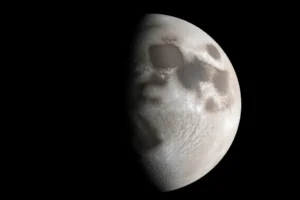
2. Lunar Maria: The dark plains visible on the Moon’s surface, known as “maria,” are ancient volcanic basalt flows. These areas account for about 16% of the Moon’s surface and contrast strikingly with the lighter highlands.
3. The Moon’s Atmosphere: Lacking a significant atmosphere, the Moon is exposed to harsh solar radiation and extreme temperature fluctuations, which can swing from -280°F (-173°C) at night to 260°F (127°C) during the day.
4. The ‘Near Side’ and ‘Far Side’: The Moon is tidally locked to Earth, meaning one hemisphere always faces our planet. The far side, often inaccurately dubbed the “dark side,” remained an enigma until the Soviet Luna 3 mission unveiled its visage in 1959.
5. Water on the Moon: In recent years, evidence of water ice in permanently shadowed craters near the lunar poles has surfaced, suggesting potential resources for future moon missions and even habitation.
6. Lunar Eclipses: A lunar eclipse occurs when Earth casts its shadow on the Moon, transforming it into a reddish hue, known as a “blood moon.” This celestial phenomenon captivates observers around the globe.
7. The Moon’s Orbital Period: The Moon takes approximately 27.3 days to complete one orbit around Earth, yet we observe a full cycle of phases every 29.5 days due to the simultaneous motion of Earth around the Sun.
8. Size Comparison: The Moon is the fifth largest natural satellite in the solar system and is about one-fourth the diameter of Earth, making it unusually large in proportion to the planet it orbits.
9. Tidal Forces: The gravitational pull of the Moon causes ocean tides, creating a rhythmic ebb and flow that has profound effects on Earth’s ecosystems and geological processes.
10. The Moon’s Cratered Surface: Bombarded by asteroids and comets over billions of years, the Moon’s surface is pockmarked with craters. The largest, the Aitken Basin, is over 1,500 kilometers in diameter.
11. Lunar Regolith: The surface layer of the Moon, known as regolith, is composed of fine dust and rocky debris, created by countless impacts. It poses challenges for landing and mobility for lunar missions.
12. The Synchronous Rotation: The Moon’s synchronous rotation means it rotates on its axis in the exact time it takes to orbit Earth. This peculiar phenomenon is caused by gravitational forces that have slowed its rotation over time.
13. Moonquakes: Just as earthquakes occur on Earth, the Moon experiences moonquakes—shallow tremors that can register up to 5.5 on the Richter scale, caused by tidal forces and thermal expansion.
14. Historical Significance: The Moon has played a significant role in various cultures, from ancient civilizations that used it for farming calendars to modern scientific advancements in astronomy and space exploration.
15. Lunar phases and their meanings: Different lunar phases have been associated with a plethora of cultural beliefs and rituals, marking times for planting, harvesting, and even spiritual reflection.
16. Exploration Milestones: The Apollo missions from 1969 to 1972 marked the first human footprint on the Moon, allowing for unprecedented scientific exploration and leaving behind artifacts, some of which still await discovery.
17. The Moon’s Gravity: The Moon’s gravity is only about 1/6th that of Earth’s, which means that an object weighing 180 pounds on Earth would weigh only 30 pounds on the Moon—a factor that would significantly influence lunar activities.
18. The Moon’s Age: Estimates suggest the Moon is about 4.5 billion years old, formed shortly after the solar system began. Its age offers clues to the history of the solar system itself.
19. The Moon’s Distance: The average distance from the Earth to the Moon is about 238,855 miles (384,400 kilometers). However, this distance is not constant, as the Moon’s orbit is elliptical.
20. The Moon’s Role in Eclipses: Solar eclipses occur when the Moon passes directly between the Earth and the Sun, casting a shadow on Earth. These celestial events have inspired awe and fear across cultures.
21. Lunar Mining Possibilities: The Moon’s regolith contains precious resources like helium-3, a potential fuel for nuclear fusion, igniting discussions about the future of lunar mining.
22. Space Weathering: The Moon’s surface experiences space weathering due to micrometeorite impacts and solar wind, leading to changes in its appearance and composition over time.
23. The Moon’s Influence on Earth: Beyond tides, the Moon stabilizes Earth’s axial tilt, influencing the climate and creating a more stable environment conducive to life.
24. Cultural Myths and Legends: The Moon has inspired a myriad of myths and legends across cultures, often symbolizing femininity, mystery, and the passage of time.
25. Lunar Gravity and Time Dilation: The Moon’s lower gravity affects time dilation, which means if you spent a long period on the Moon, your perception of time would differ from that on Earth.
26. The Moon and Animals: Research suggests that animal behavior can be influenced by the Moon’s phases, with certain species exhibiting altered mating and migration patterns in relation to lunar cycles.
27. Special Events: The rare “supermoon,” when the Moon appears larger and brighter than usual, occurs when it’s at its closest approach to Earth in its orbit, capturing the attention of skywatchers worldwide.
28. The Moon in Popular Culture: Art, literature, and music have all drawn inspiration from the Moon, serving as a muse that transcends genres and captivates the human imagination.
29. Future Colonization: As space exploration progresses, discussions surrounding the colonization of the Moon gain traction, envisioning lunar bases that could serve as stepping stones for Mars exploration.
30. The Moon’s Silent Witness: Throughout history, the Moon has silently witnessed the evolution of Earth and humanity’s journey, its presence a constant reminder of the mysteries yet to be unraveled.
In conclusion, the Moon remains an awe-inspiring body, a cosmic sentinel that continues to intrigue and inspire. With every discovery, our understanding of this celestial neighbor deepens, reflecting not only on the lunar landscape but also on our place in the universe. As we move forward into an era of renewed interest in lunar exploration, these facts serve as a springboard to cultivate a greater appreciation for our enigmatic companion in the cosmos.
FAQ
What is the Moon's atmosphere like?
The Moon lacks a significant atmosphere, exposing its surface to harsh solar radiation and extreme temperature variations.
Why does the Moon always show the same face to Earth?
Because the Moon is tidally locked to Earth, it rotates on its axis in the same amount of time it takes to orbit Earth.
What causes moonquakes?
Moonquakes are caused by tidal forces from Earth and thermal expansion due to temperature swings on the lunar surface.
How does the Moon affect Earth's climate?
The Moon stabilizes Earth's axial tilt, contributing to a stable climate conducive to life.
What is the significance of lunar water ice?
Water ice in shadowed craters could be a vital resource for future lunar missions and potential colonization.



Leave a Reply