
Short Answer
Gravity—an invisible force that governs the dance of celestial bodies and dictates our everyday experiences—often goes unnoticed. Yet, its omnipresence weaves an intricate tapestry of intriguing phenomena that challenge our understanding of physics. This article embarks on a journey through ten gravity-defying facts that promise to shift your perspective and pique your curiosity about this fundamental force of nature.
1. The Weakness of Gravity
When juxtaposed with other fundamental forces, gravity emerges as a timid giant. It is remarkably weaker than electromagnetism, the strong nuclear force, and the weak nuclear force. To illustrate, the gravitational force between two 1-kilogram objects is minuscule compared to the electromagnetic repulsion between two protons. This weakness allows quantum mechanics to prevail at the subatomic level, creating a world where gravity plays a negligible role, leading to puzzles that have intrigued physicists for decades.
2. Gravity and Time Dilation
One of the most astounding effects of gravity is its influence on time itself. According to Einstein’s General Theory of Relativity, time runs slower in stronger gravitational fields. Imagine two identical clocks—one on the surface of the Earth and another in a satellite in orbit. The clock on Earth, being deeper within a gravitational well, ticks slightly slower than its counterpart in space. This astonishing revelation hints at the intricate interconnectedness of space and time, challenging our intuitive understanding of both.
3. The Cosmic Dance of Dark Matter
Gravity does more than keep us anchored to the Earth; it orchestrates the movements of galaxies and galaxy clusters across the cosmos. However, a significant amount of the universe’s mass is shrouded in mystery—dark matter. This enigmatic substance does not emit, absorb, or reflect light, making it virtually invisible. Yet, its gravitational pull shapes the structure of the universe, influencing the rotation of galaxies. In fact, without dark matter, galaxies would fly apart due to the insufficient gravitational attraction of visible matter alone.
4. The Effects of Weightlessness
When astronauts venture into space, they experience a state of weightlessness, which is often misinterpreted as a lack of gravity. In reality, gravity still exert its influence in orbit, albeit in a different manner. The sensation of floating emerges from the state of free fall that astronauts experience as they orbit the Earth, perpetually falling toward it yet maintaining a forward motion. This phenomenon, known as microgravity, alters physical processes, allowing for unique scientific experiments and insights into human physiology.
5. Gravitational Waves: Ripples in Spacetime
In 2015, scientists made history by detecting gravitational waves for the first time, confirming a prediction made by Einstein a century earlier. These minute ripples in spacetime are generated by cataclysmic astrophysical events, such as the merging of black holes. When two massive bodies collide, they send shockwaves through the fabric of the universe, similar to the ripples created by dropping a stone into a pond. The discovery of gravitational waves opens a new frontier in astrophysics, offering profound insights into the dynamics of the universe.
6. The Influence of Gravity on Biological Processes
Gravity’s impact extends beyond celestial mechanics; it intricately shapes biological processes on Earth. For instance, plants exhibit gravitropism, where roots grow downward in response to gravity while stems grow upward. This alignment with gravitational force is crucial for maintaining stability and ensuring optimal access to nutrients and sunlight. Additionally, the human body adapts to gravitational influences—our muscles, bones, and even cardiovascular systems respond to the constant tug of Earth, morphing over time due to gravitational forces.
7. Gravity Anomalies
Earth is not a uniform sphere; its gravitational field varies across the globe due to factors such as topography, density, and rotational dynamics. This phenomenon leads to gravity anomalies, where regions may experience slightly stronger or weaker gravitational pulls. Notably, the Great Lakes region in North America has been identified as an area with a noticeably weaker gravitational field, a quirk that exemplifies the complexities of Earth’s gravitational landscape.
8. Black Holes: The Ultimate Gravity Wells
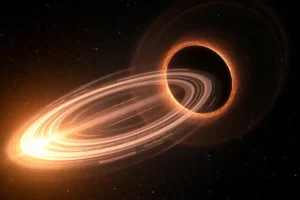
Black holes represent the quintessence of gravitational forces taken to their extreme. Formed from the remnants of massive stars that have collapsed under their own gravity, black holes possess gravitational fields so intense that nothing—neither matter nor light—can escape their grasp once crossed within their event horizon. As they consume surrounding material, black holes warp spacetime and exhibit bizarre phenomena, offering a tantalizing glimpse into the nature of gravity under extreme conditions.
9. Floating Islands of Gravity: The Mystery of Antigravity
Antigravity, often relegated to the realm of science fiction, ponders the notion of negating gravitational pull. While conventional physics currently holds that gravity cannot be countered, theoretical concepts such as negative mass suggest the tantalizing possibility of creating ‘floating islands’ in gravitational fields. These hypothetical constructs challenge our scientific paradigms and inspire innovative thinking in the pursuit of understanding gravity’s fundamental nature.
10. The Unification of Forces
At the forefront of theoretical physics lies the elusive quest for a Grand Unified Theory, an equation that reconciles gravity with the other fundamental forces of nature. Researchers pursue this ambition to bridge the gap between general relativity and quantum mechanics, striving to unveil a comprehensive understanding of the universe. Such a breakthrough could transform our perception of gravity, perhaps revealing new dimensions or forces that have eluded discovery.
In contemplating these gravity-defying facts, we find ourselves at the intersection of science and wonder. Gravity, with its myriad complexities and paradoxes, extends far beyond a mere force; it invites us to explore the very fabric of our existence. As you continue to ponder the enigmatic nature of gravity, let your curiosity be your guide, unearthing the mysteries that lie within the universe’s gravitational embrace.
FAQ
What is gravity?
Gravity is a fundamental force that attracts two bodies towards each other, influencing the motion of celestial bodies and everyday objects.
How does gravity affect time?
According to Einstein’s General Theory of Relativity, time runs slower in stronger gravitational fields, illustrating the connection between gravity and time.

Leave a Reply