
Short Answer
When one thinks of cockroaches, it often conjures images of grimy corners and bustling kitchens—a veritable canvas of disgust. However, beneath the veneer of their unsightly reputation lies a world of astonishing resilience and adaptability. These insects, often referred to as the unsung survivors of the animal kingdom, offer a trove of fascinating insights that beckon us to look beyond our aversions. This article reveals a multitude of fun facts about cockroaches that may just change the way you perceive these remarkable creatures.
1. The Ultimate Survivors
Cockroaches have been traversing the Earth for approximately 350 million years, far predating the dinosaurs. Their remarkable adaptability has allowed them to thrive in diverse environments, from lush rainforests to urban landscapes. In an evolutionary metaphor, they are akin to ancient sages, weathering the test of time while their contemporaries have long since vanished.
2. Lifespan and Reproduction
Despite their somewhat unsettling presence, cockroaches possess an impressive lifespan, with some species living up to three years. They are prolific reproducers, with a single female capable of laying up to 400 eggs in her lifetime. Each egg case, known as an ootheca, can contain as many as 50 embryos. In a sense, each cockroach is a tiny engine of life, tirelessly churning out legions of descendants.
3. Superlative Sensory Perception
Cockroaches are not just mindless creatures scuttling about; they are equipped with a sophisticated array of sensory organs. Their compound eyes grant a panoramic view of their surroundings, while finely tuned antennae are capable of detecting pheromones, humidity, and even the faintest vibrations. In many ways, these antennae serve as their very own symphony of information, allowing them to navigate the world with graceful precision.
4. An Incredible Speedster
Ever tried to catch a cockroach? If so, you may have marveled at their lightning-fast movements. Some species can scurry at speeds up to three miles per hour—equivalent to a human sprinting at over 200 miles per hour! This swiftness is not just for show; it serves as a crucial survival mechanism, allowing them to escape potential predators with deft agility.
5. The Cryptic Communicators
Cockroaches engage in a form of communication that is often overlooked: they use chemical signals and physical movements to relay information to one another. Their social behavior is akin to a bustling city where residents share critical updates through subtle cues rather than loud proclamations. In essence, they are silent storytellers weaving intricate tales of survival within the hidden tapestry of human habitats.
6. Remarkable Resilience to Radiation
Cockroaches have garnered a reputation as creatures that could withstand a post-apocalyptic world. Studies have shown that they are remarkably resilient to radiation, with some species capable of surviving doses that would be lethal to humans. This resistance can be likened to armor forged in the furnace of existence—an extraordinary legacy of evolution that speaks to their formidable nature.
7. Culinary Status in Various Cultures
Contrary to their feared image in Western cultures, cockroaches have been consumed in certain parts of the world. In regions where culinary boundaries yield to necessity, these insects are prized for their protein content and are even considered delicacies. Their presence on dinner plates embodies a rich tapestry of survival, transforming them from pests to sustenance amid challenging environments.
8. Coping Mechanisms for Temperature Extremes
Adaptability is perhaps the most defining trait of cockroaches. These determined insects can thrive in both extreme heat and frigid conditions, exhibiting behaviors that ensure survival. For instance, when facing excessive heat, they often seek refuge in dark, humid spaces akin to retreating into a cool sanctuary on a blistering summer day. Such adaptations showcase their intuitive understanding of environmental needs.
9. A Unique Heart
While humans have a central heart to circulate blood, cockroaches possess a long, tube-like heart that pumps a fluid known as hemolymph throughout their bodies. This circulatory system is remarkably efficient and mirrors a highway system, facilitating the quick delivery of nutrients and oxygen to all body parts. It emphasizes the unique evolution that has rendered them, paradoxically, one of the most basic yet anatomically complex creatures on the planet.
10. A Place in the Ecosystem
In the grand scheme of the ecosystem, cockroaches are unsung heroes. They play an essential role in decomposition, breaking down organic materials and recycling nutrients back into the soil. By doing so, they not only help maintain a balanced environment, but they also contribute to the sustenance of a myriad of other species, creating a web of interdependence that is vital for ecological health.
11. The Myriad of Species
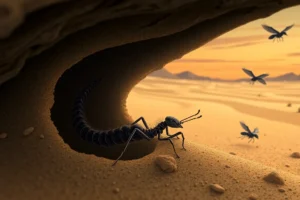
There are over 4,500 known species of cockroaches, although only a handful are associated with human habitats. Their variety is astonishing, ranging from the diminutive, yet surprisingly cute, Madagascar hissing cockroach to the fearsome giant Burrowing cockroach. Each species boasts its own unique attributes and adaptations, akin to a family tree that branches out into an impressive array of life forms.
Conclusion
In conclusion, cockroaches are far more than mere pests lurking in the shadows of our everyday lives. These remarkable creatures embody survival, adaptability, and resilience, weaving an intricate narrative that challenges our preconceived notions. Embracing the complexity and diversity of cockroaches not only adds layers to our understanding of the natural world but also invites us to appreciate even the most undervalued inhabitants of our ecosystems. The next time you encounter a cockroach, consider the extraordinary life it leads—a testament to the enduring spirit of life, no matter how small or unassuming.
FAQ
How long do cockroaches live?
Some species of cockroaches can live up to three years.
Are cockroaches good for the environment?
Yes, cockroaches play an essential role in decomposition and nutrient recycling in ecosystems.
Can cockroaches survive radiation?
Cockroaches are remarkably resilient to radiation and can survive doses that would be lethal to humans.


Leave a Reply