
Short Answer
Gravity is a fundamental force that binds the universe together, shaping the very fabric of reality as we know it. It influences everything from the majestic orbits of celestial bodies to the mundane act of dropping a pen. But how well do we truly understand this force? Prepare to embark on a fascinating journey through 20 incredible gravity facts that might just bend your mind and challenge your perceptions of this enigmatic force!
1. Gravity Defines Time
Have you ever pondered how gravity can affect time? Thanks to Einstein’s theory of general relativity, we know that time flows more slowly in stronger gravitational fields. This means that time is not just a constant, but rather a fluid construct shaped by gravity itself. In a way, the deeper you dive into the Earth’s crust, the slower time ticks for you compared to those at sea level!
2. The Earth is Not a Perfect Sphere
When you think of Earth, a perfect sphere often comes to mind. However, due to its rotation and gravitational forces, the planet is actually an oblate spheroid, bulging slightly at the equator. This distortion means gravity isn’t the same everywhere. Picture yourself on a scale in different regions; you’d weigh a tad less at the equator than at the poles!
3. Gravitational Waves: Ripples in Spacetime
Imagine dropping a stone into a pond; the ripples that expand outward symbolize gravitational waves, which are generated by cataclysmic cosmic events like colliding black holes. These waves travel at the speed of light and were first detected in 2015, opening a new frontier in gravitational research.
4. Gravity Affects Light
Did you know that light can be influenced by gravity? The phenomenon known as gravitational lensing occurs when light from distant stars bends around massive objects, like galaxies. This bending not only reveals hidden cosmic phenomena but also aids astronomers in mapping dark matter.
5. The Weightlessness of Space
If gravity is a constant force, how is it that astronauts experience weightlessness in space? The answer lies in the concept of free fall. While spacecraft orbit Earth, they are essentially in free fall, continually falling towards the Earth but missing it due to their horizontal velocity. This creates a sensation of weightlessness!
6. The Moon’s Pull
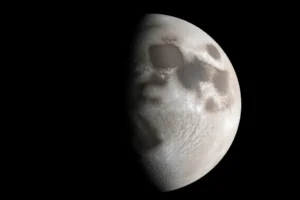
The Moon may be 238,855 miles away, yet its gravity exerts a profound influence on Earth, most notably causing ocean tides. The gravitational tug from the Moon distorts Earth’s water bodies, creating bulges that result in high and low tides. Next time you watch the waves, remember the Moon’s pivotal role!
7. The Power of Mass
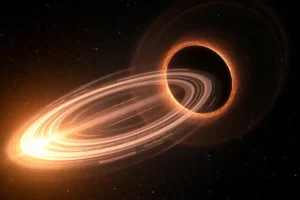
Gravity is not just about distance; mass plays a critical role as well. The greater the mass of an object, the stronger its gravitational pull. This explains why a neutron star, with its immense density, has gravity so strong that even light cannot escape it, creating a black hole.
8. The Center of Earth’s Gravity
Gravity is not uniform throughout Earth, with its center, known as the “Center of Mass,” playing a pivotal role. This center is located within the Earth, causing objects to be drawn toward it. However, as you rise in altitude, the pull of gravity progressively weakens, highlighting the planet’s complex gravitational field.
9. Antigravity Phenomena
If gravity is such a robust force, is it possible to counteract it? Antigravity mechanisms are theoretical constructions that aim to negate gravitational pull. While still largely in the realm of science fiction, researchers are exploring concepts that could eventually lead to technologies that counteract gravity.
10. The Inverse Square Law
The strength of gravity diminishes with distance according to the inverse square law. As you move away from a massive object, gravity decreases exponentially. This means, for instance, if you double your distance from Earth, the gravitational force diminishes to a quarter of its previous strength.
11. Tidal Locking
Tidal locking is the phenomenon where a celestial body, such as our Moon, rotates in sync with its orbit around a more massive object, allowing only one face to be visible. This synchronization occurs due to the gravitational forces exerted over time, a captivating ballet of celestial mechanics!
12. Weight on Different Planets
Your weight changes based on where you are in the universe. For example, if you were to stand on Jupiter, your weight would be more than twice what it is on Earth due to its significant gravitational force. Conversely, on Mars, you would weigh substantially less, showcasing the diversity of gravitational strength across celestial bodies.
13. Gravitational Equivalence
According to the principle of equivalence, the effects of gravity are indistinguishable from acceleration. If you’re in a sealed elevator accelerating upwards, you would feel an increase in weight akin to being in a gravitational field. This intriguing concept has far-reaching implications, particularly in understanding how gravity operates.
14. The Cosmic Soup of Gravity
Gravity governs not just solid bodies but the very fabric of the cosmos. It defines the structure of galaxies, influences star formation, and maintains the delicate equilibrium of galaxy clusters. This cosmic orchestration is a testament to gravity’s omnipresence in the universe.
15. Gravity Anomalies
Certain regions on Earth exhibit gravity anomalies, where the gravitational pull is unexpectedly stronger or weaker. These phenomena can be attributed to geological formations, mineral deposits, or even the varying density of Earth materials, illustrating how complex and variable gravity can be across different terrains.
16. Supergravity in Theoretical Physics
Supergravity is a proposed theory in which gravity is unified with other fundamental interactions. This ambitious avenue of physics seeks to unite quantum mechanics with gravity, potentially laying the groundwork for a grand unification theory and reshaping our understanding of the universe.
17. The Great Attractor
A mysterious gravitational anomaly in intergalactic space, the Great Attractor pulls galaxies toward it, exhibiting immense mass that defies clear visibility. While its exact nature remains elusive, it highlights the cosmic influence of gravitational forces on a grand scale.
18. Gravity in the Quantum Realm
In the quantum realm, gravity behaves in ways that defy traditional understanding. At this microscopic scale, gravity’s effects are generally overshadowed by electromagnetism and nuclear forces, leading scientists to grapple with how gravity fits into the quantum framework.
19. Personal Gravitational Field
On a smaller scale, every object produces a gravitational field, including you! The gravitational pull exerted by your body might be negligible in terms of influence, but every single mass has its own gravitational force, reminding us that the universe’s dance is ongoing, even on a personal level.
20. The Future of Gravity Research
As technology advances, so too does our understanding of gravity. Researchers are continuously exploring the force’s mysteries, from gravitational waves to the potential of antigravity phenomena. Who knows what enigmas will unravel in the years to come, further bending our minds with the intricacies of gravity?
As we’ve seen, gravity is a multifaceted phenomenon that challenges our understanding of the universe. These 20 facts offer just a glimpse into the complexities of this fundamental force. So, the next time you find yourself contemplating the simple act of dropping an object, consider the profound implications of gravity and the wealth of mysteries it still holds. Can you imagine what other secrets gravity is hiding, just waiting to be discovered?


Leave a Reply