
Short Answer
Have you ever gazed up at the night sky and wondered about the vast expanse of the Milky Way? This magnificent spiral galaxy is our cosmic home, teeming with mysteries and wonders. With around 100 to 400 billion stars, the Milky Way holds secrets that have intrigued astronomers and stargazers alike. But how well do you really know this stellar marvel? Let’s embark on a journey to uncover ten fascinating facts about the Milky Way, each one promising to enrich your understanding of the galaxy we inhabit.
1. **Spiral Structure**
The Milky Way is classified as a barred spiral galaxy, characterized by its distinct spiral arms that radiate outward from a central bulge. The bar-shaped center is composed of stars, dust, and gas, which play a pivotal role in star formation. This unique structure allows the galaxy to rotate in a dynamic and often chaotic manner, where stars and solar systems ebb and flow, creating a celestial dance unique to our home.
2. **Cosmic Size**
Did you know that the Milky Way is approximately 100,000 light-years in diameter? That’s a staggering distance, hinting at how small we are in the cosmic tapestry. To put this in perspective, light travels at roughly 186,282 miles per second, meaning it takes light 100,000 years to traverse our galaxy. The enormity of the Milky Way challenges our perceptions of space and time, inviting contemplation of our place within it.
3. **Stars Galore**
Home to billions of stars, the Milky Way is not only vast but also diverse. Types of stars range from massive, short-lived blue giants to dim red dwarfs, each contributing to the galaxy’s overall luminosity. It’s estimated that there are about 100 billion stars in our galaxy alone, but counting them all is akin to finding a needle in a cosmic haystack. This abundance raises an intriguing question: how many of those stars may host planets capable of supporting life?
4. **Galactic Center**
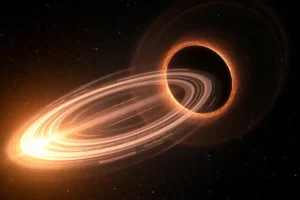
At the heart of the Milky Way lies a supermassive black hole known as Sagittarius A*. This enigmatic entity is believed to have a mass equivalent to about 4.1 million suns. The gravity exerted by Sagittarius A* governs the motions of stars in the vicinity, giving scientists a glimpse into the powerful forces that shape our galaxy. How does this black hole influence the formation and evolution of the surrounding stars and solar systems?
5. **Hidden Arms**
The Milky Way possesses several spiral arms, including the well-known Orion Arm, which is where our solar system resides. However, two of these arms, the Perseus Arm and the Scutum-Centaurus Arm, are less prominent and often overlooked. Recent studies suggest that these arms may be more complex than initially thought, leading researchers to explore how they can impact star formation and galactic events. Can we unravel the secrets these hidden arms hold?
6. **Dark Matter Dominance**
Approximately 85% of the total mass of the Milky Way consists of dark matter, an elusive substance that neither emits nor absorbs light. Its presence is inferred through gravitational effects on visible matter. This enigmatic material significantly alters our understanding of the universe. The quest to understand dark matter raises tantalizing questions about the very fabric of reality: can we ever truly know what it is, and how does it influence galactic behavior?
7. **Galactic Neighbors**
The Milky Way is not a solitary island in the vast cosmos; it has a number of companion galaxies. The most prominent are the Andromeda Galaxy and the Triangulum Galaxy, both of which are part of the Local Group. These neighboring galaxies are on a collision course with the Milky Way, predicted to merge in about 4.5 billion years. How might this cosmic collision reshape the starry skies and the structure of our own galaxy?
8. **Star Formation Regions**
Regions within the Milky Way, such as molecular clouds, are stellar nurseries where new stars are born. Conditions within these dense clouds trigger nuclear fusion, illuminating the darkness with the birth of new celestial bodies. Famous regions like the Orion Nebula showcase this phenomenon in striking detail. Imagine standing in one of these stellar nurseries; what sights and sounds might you experience as new stars ignite into life?
9. **Cosmic Timekeeper**
The Milky Way plays a crucial role as a cosmic timekeeper. The movement and interaction of stars, as well as the effects of dark matter, create a complex web of dynamics that scientists can study to understand the history of not just our galaxy, but the universe itself. Stellar life cycles, from their birth to death, serve as a timeline for cosmic events. How can we better utilize these celestial records to deepen our knowledge of cosmic evolution?
10. **Cultural Significance**
Throughout history, the Milky Way has held profound significance across many cultures. From ancient navigation to spiritual symbolism, it has inspired myths, legends, and scientific inquiry. The galaxy’s dense band of stars has served as a canvas upon which humanity has projected its hopes, fears, and curiosity. As we continue to explore its depths, how will our cultural relationship with the Milky Way evolve?
In conclusion, the Milky Way is not merely a collection of stars; it’s a vast, intricate masterpiece filled with awe-inspiring phenomena that beckon for exploration. Each fact we uncover adds a layer of understanding to our galactic home, enriching both our scientific knowledge and our philosophical inquiries. So, the next time you look up at the night sky, consider the myriad wonders of the Milky Way and what they reveal about the universe and our place within it. Isn’t it an exhilarating challenge to keep exploring this cosmic enigma?
FAQ
What is the Milky Way?
The Milky Way is a barred spiral galaxy that contains our solar system, composed of billions of stars, gas, and dust.
How large is the Milky Way?
The Milky Way is approximately 100,000 light-years in diameter.
What is at the center of the Milky Way?
The center of the Milky Way contains a supermassive black hole known as Sagittarius A*.




Leave a Reply