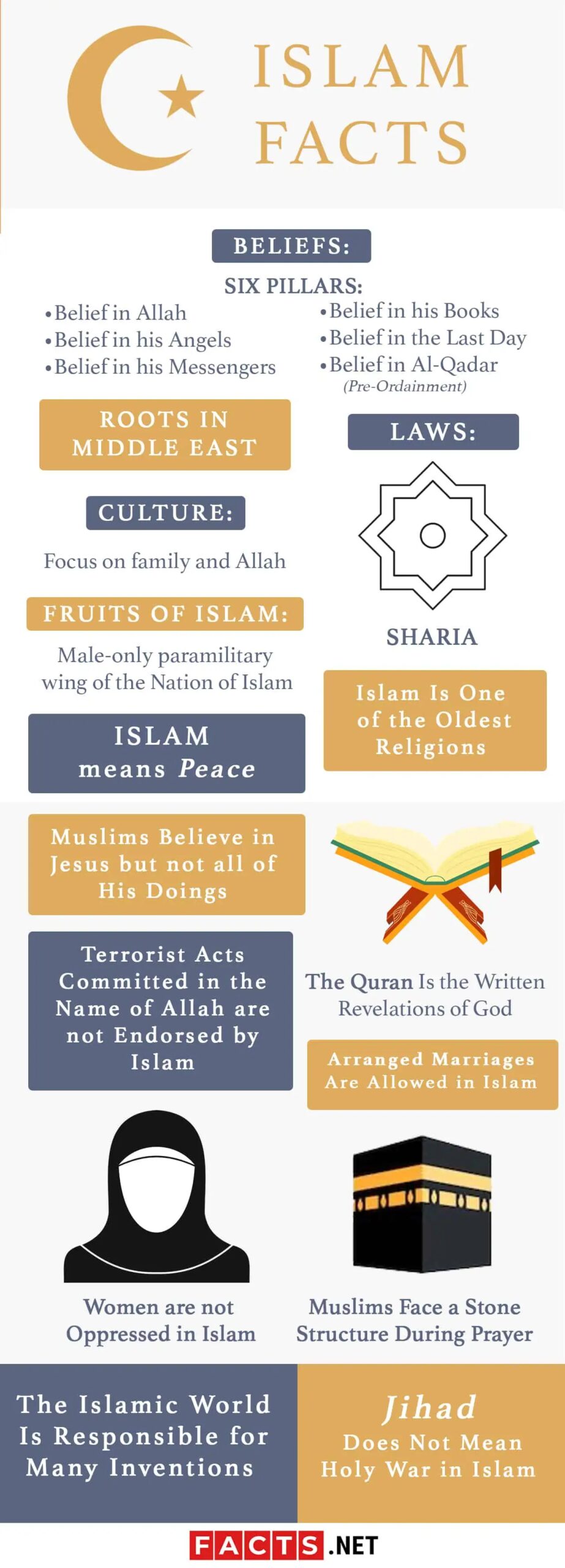
Islam, one of the world’s major religions, is often enveloped in layers of misunderstanding and intrigue. While some misconceptions stem from cultural differences, others arise from historical events and media portrayals. This list will explore strange yet fascinating facts about Islam, revealing the complexities of a faith that is often misrepresented.
1. The Origins of the Word ‘Islam’
The term ‘Islam’ comes from the Arabic root ‘s-l-m,’ which means peace or submission. However, many associate the word solely with the idea of subjugation. This duality highlights the core tenet of the religion: to find peace through submission to the will of Allah. This conceptual juxtaposition often sparks curiosity regarding the true essence of faith and its teachings.
2. The concept of Jihad is Misconstrued
In popular culture, jihad is frequently translated as “holy war,” but this interpretation painfully oversimplifies a multifaceted concept. The Arabic word ‘jihad’ literally means “struggle” or “striving.” It encompasses a wide range of struggles, including personal development, combatting social injustice, and striving for spiritual growth. The focus on physical conflict obscures the internal and societal dimensions that are equally significant.
3. The Role of Women in Islam
A prevalent misconception is that Islam is universally oppressive to women. In reality, the Quran emphasizes the spiritual equality of men and women. Women can own property, initiate divorce, and receive an education. Historical contexts, local customs, and cultural practices often shape the treatment of women more than religious principles themselves, suggesting that cultural interpretation can drastically alter the perception of a religion’s teachings.
4. The Diversity of Islamic Practices
Islam is not monolithic; it is composed of various sects and practices. The two largest branches, Sunni and Shia, have divergent beliefs, rituals, and traditions. Additionally, there are countless indigenous practices among Muslim communities worldwide. This diversity presents a rich tapestry of customs that defy singular characterizations, showcasing a religious practice that adapts to different cultural environments.
5. The Significance of the Hijab
The hijab, often viewed as a symbol of oppression, is also regarded as an emblem of empowerment and identity by many Muslim women. The decision to wear a hijab can embody personal agency, expression of faith, and cultural pride. The interpretations vary considerably; some see it as a form of liberation from societal beauty standards. Recognizing this complexity challenges the stereotypical view often portrayed in the media.
6. The Concept of Time in Islamic Tradition
In Islam, time is considered cyclical rather than linear. This viewpoint can be traced back to the religious observances and rituals that recur annually, such as Ramadan. The sacred months are not merely times of worship but periods for renewal and reflection. This cyclical nature instills a different appreciation for the passage of time, contrasting sharply with more Western linear perceptions.
7. The Architectural Marvel of Mosques
Mosques are known for their stunning architectural designs that often incorporate local styles and histories. The famous Alhambra in Spain and the white marble grandeur of the Taj Mahal in India reflect how the Islamic architecture movement adapted to its environment. The intricate tile work and calligraphy serve not only aesthetic purposes but also convey religious messages, inviting deeper contemplation for visitors.
8. Islamic Art and its Restrictions
Islamic art is intentionally non-representational, with an emphasis on geometric patterns and arabesques. This artistic philosophy stems from a prohibition on depicting living beings, to prevent idolatry. This restriction promotes creativity, resulting in ornate designs that embody spirituality and metaphysical ideas. The beauty of Islamic art lies in its capacity to invoke spirituality without direct representation.
9. Fasting Beyond Ramadan
While Ramadan is the most recognized period of fasting in Islam, it isn’t the only occasion. Muslims may also observe fasts on the 13th, 14th, and 15th days of each lunar month, known as Ayyam al-Bid, and on certain days after Ramadan. Fasting serves not only as an act of devotion but also as a means to cultivate self-discipline and empathy for those who are less fortunate.
10. The Day of Ashura
Ashura is a significant day for both Sunni and Shia Muslims, yet its meaning diverges. For Sunnis, it commemorates the day Moses and the Israelites were freed from Pharaoh’s tyranny. Conversely, for Shia Muslims, it’s a day of mourning to remember the martyrdom of Imam Hussein, the grandson of the Prophet Muhammad. This dual significance underscores the fabric of Islamic history and its events’ impact on contemporary beliefs.
11. The Universality of the Call to Prayer
The Adhan, or call to prayer, is a deeply revered ritual, resonating through the streets of Muslim-majority cities. It serves as a powerful reminder of faith and community, beckoning believers to momentarily set aside their daily activities. The universal nature of the call emphasizes the collective identity and shared spiritual experience that transcends geographic and cultural boundaries.
12. The Pilgrimage to Mecca
The Hajj is one of the largest annual gatherings of people on Earth, demonstrating unparalleled unity among Muslims. Each year, millions undertake this pilgrimage, representing an obligation for those who can afford it. The ritual embodies profound symbolism, from standing in prayer at Arafat to symbolically stoning the devil at Mina, providing insight into shared spiritual aspirations and communal ties.
These strange yet remarkable facts about Islam reveal a complex and richly woven tapestry. Each thread represents a misunderstood aspect of a faith that fosters peace, contemplation, and profound history. Understanding these elements contributes to deeper intercultural appreciation, dispelling misconceptions and fostering dialogue. Through exploration and education, we can cultivate a more nuanced understanding of Islam and the diverse experiences of its followers across the globe.