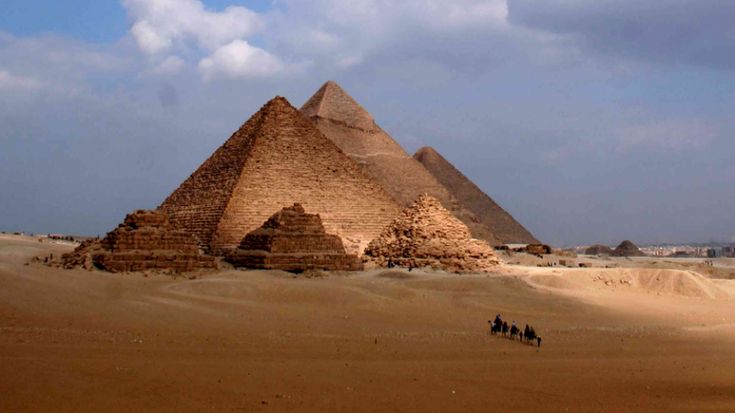
The Pyramids of Giza, resplendent remnants of an ancient civilization, stand as monumental testimonies to human ingenuity and ambition. As one gazes upon these grand structures, they evoke a sense of timelessness, beckoning us to explore the mysteries enshrined within their massive stone blocks. Here are ten fascinating facts that illuminate the enigma of these iconic edifices.
1. The Great Pyramid is an Astronomical Marvel
The Great Pyramid of Giza, also known as the Pyramid of Khufu, is not merely an architectural feat; it is an astronomical wonder. Precisely aligned with the cardinal points, this pyramid’s sides are oriented towards true north with remarkable accuracy. This alignment suggests that the ancient Egyptians possessed advanced knowledge of astronomy, enabling them to incorporate celestial orientation into their construction methodologies.
2. A Testament to Labor and Organization
Built during a period of unparalleled prosperity, the pyramids required an extensive workforce. Estimates suggest that tens of thousands of skilled laborers, craftsmen, and support workers were mobilized for the construction. Contrary to the popular myth of slave labor, these workers were likely well-fed and housed, forming a semi-permanent settlement around the site. This organization sheds light on the social structure of ancient Egypt and demonstrates their proficiency in handling massive projects.
3. The Mystery of the Missing Capstone
The capstone, or pyramidion, which crowned the Great Pyramid, has long since vanished. This missing piece, which was likely made of gold or electrum, served as a focal point reflecting sunlight, making the pyramid shimmer like a beacon. Speculations suggest it may have been looted or destroyed through time, leaving behind a void that adds to the pyramids’ mystique and allure. Its absence symbolizes the impermanence of even the most monumental achievements of mankind.
4. The Ingenious Internal Structure
Within the towering façade of the Great Pyramid lies a labyrinth of chambers and passageways. The most significant of these is the King’s Chamber, which houses a sarcophagus made of alabaster. This chamber is devoid of any inscriptions, leading to widespread intrigue about its purpose. The design incorporates an apex that reduces pressure, showcasing the Egyptians’ understanding of engineering principles, centuries ahead of their time.
5. A Mathematical Marvel
The Great Pyramid’s dimensions exemplify an extraordinary grasp of mathematics. The ratio of the pyramid’s perimeter to its height approximates the value of π (pi), an astonishing feat considering the historical context in which it was constructed. This correlation suggests that the ancient Egyptians were not only skilled architects but also mathematicians, capable of integrating complex calculations into their designs. Their ability to harmonize numerical precision with practical engineering is nothing short of extraordinary.
6. The Pyramids and the River Nile
The proximity of the Pyramids to the Nile River is no mere coincidence. This vital waterway served as a crucial resource for transporting limestone blocks and other materials necessary for construction. Furthermore, the river’s annual flooding enriched the surrounding soil, allowing agriculture to flourish, which in turn funded and supported the vast labor force. This interdependence illustrates the symbiotic relationship between natural resources and monumental architecture.
7. A Celestial Connection
The ancient Egyptians viewed the pyramids as gateways to the afterlife, and their alignment suggests a celestial connection. The three main pyramids of Giza are said to align with the three stars in Orion’s Belt, linking the pharaohs to the divine. This cosmic association reflects the deeply spiritual and religious beliefs of the time, whereby the pyramids served as conduits for the pharaohs’ souls to ascend to the heavens, thereby intertwining the realms of the earthly and the ethereal.
8. Engineering Through Trial and Error
The construction of these monumental structures was not devoid of challenges. Archaeological evidence indicates that the engineering techniques evolved over the years, showcasing a narrative of trial and error. Initially, step pyramids like the Pyramid of Djoser served as prototypes, gradually leading to the smooth-sided marvels we admire today. This evolution exemplifies the innovative spirit of the ancient Egyptians, who continually refined their craft.
9. The Sphinx: A Guardian of Secrets
Guarding the Giza Plateau is the Great Sphinx, a colossal limestone statue with the body of a lion and the head of a pharaoh. This enigmatic figure is not merely ornamental; it is believed to serve as a protective sentinel for the pyramids, embodying royal courage and strength. The Sphinx’s weathered visage and inscrutable expression add layers of mystery, compelling observers to ponder the age-old secrets it may hold.
10. The Pyramids in Modern Culture
Throughout the centuries, the Pyramids of Giza have transcended their historical context, becoming symbols of ancient wisdom and human achievement. They have inspired countless narratives in literature, film, and art, asserting their influence in modern culture. Their enigmatic presence invites endless inquiry and reflection, reminding humanity of the towering aspirations etched in stone, a timeless call to understand the complexities of our own existence.
In conclusion, the Pyramids of Giza embody a confluence of history, mathematics, and spirituality, each fact revealing layers of cultural significance that continue to provoke thought and admiration. They are not merely edifices of stone; they are monumental narratives, whispering tales of an extraordinary civilization that sought to etch its story against the heavens themselves.