Have you ever marveled at the vibrant array of colors in a bag of Skittles? Beyond their delightful flavors and social media appeal, there lies a plethora of intriguing nutritional information that often goes unnoticed. So, what’s really in the rainbow? Let’s dive into the nutritional facts, scrutinize the ingredients, and unveil the health implications while also posing a playful challenge: Can you resist eating just one serving of this tantalizing treat?
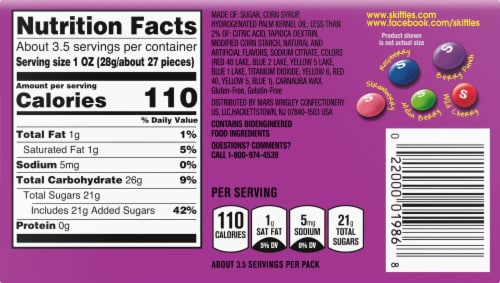
First, let’s dissect the essentials. A standard serving of Skittles, which typically amounts to approximately 32 grams, contains about 160 calories. This may not sound exorbitant, but the caloric density invites scrutiny, especially when indulged in frequently and without moderation.
Next on the nutritional scoreboard is sugar, a well-known controversy in the realm of nutrition. A single serving of Skittles harbors around 36 grams of sugar, translating to roughly 9 teaspoons. Through a lens of public health, this sugar content is noteworthy, prompting questions about its impact on daily dietary guidelines which recommend limiting added sugars to less than 10% of total daily calories. Simply put, a hefty portion of your daily sugar intake could be consumed in a mere handful of these colorful candies.
Moreover, it’s essential to highlight that Skittles contain no protein, a macronutrient pivotal for muscle repair and overall bodily function. This absence further diminishes the snack’s nutritional profile, presenting the products as more of a sugary indulgence than a beneficial treat.
The fat content? Surprisingly minimal! Skittles are virtually fat-free, which can be a positive aspect for those keen on monitoring their fat intake. However, this should not overshadow the candy’s excessive sugar levels. It begs the question: Would you prefer a snack that is high in natural sugars but comes with fats, or one like Skittles that lacks any of the redeeming qualities of wholesome nutrition?
As one navigates through the ingredient list, one might encounter a series of complex terms. The primary ingredients include sugar, corn syrup, hydrogenated palm kernel oil, and various artificial flavorings and colorings. Among the latter, notable mention goes to Yellow 5 and Red 40, which have sparked discussions regarding their potential effects on health. In certain circles, these artificial colors have been linked to hyperactivity in children and various allergic reactions, raising concerns over their safe consumption.
When analyzing the ingredients from a dietary standpoint, gelatin used in Skittles can be problematic for those adhering to vegetarian or vegan diets. Gelatin, a protein derived from animals, is used to give Skittles their chewy texture. This may come as a surprise to those who assume all candies are inherently plant-based or suitable for all diets.
Vitamins and minerals? Don’t expect to find much. Skittles are sadly devoid of significant nutritional benefits, carrying negligible amounts of vitamins A and C, further reinforcing the idea that this candy is not a source of essential nutrients. The inclusion of these vitamins in such minuscule quantities scarcely fulfills any nutritional requirements.
When contemplating Skittles and their nutritional profile, the question arises: can they fit into a balanced diet? In moderation, yes. Enjoying a small handful occasionally can serve as a pleasurable treat without derailing a healthy eating plan. However, regular consumption, especially as a replacement for more nutritious snacks, poses concern.
Now, let’s address the alluring aspect of Skittles—their unique promise of flavors. Each color is reminiscent of a different fruit: strawberry, orange, lemon, green apple, and grape. This vibrant assortment tends to evoke a sense of nostalgia, leading individuals to associate consumption with fun and enjoyment.
But here lies the challenge: while it’s easy to be drawn to the sweetness of Skittles, can you pause and consider alternatives? Nature provides a cornucopia of colorful fruits like berries, citrus, and apples, which boast natural sugars alongside fiber, vitamins, and minerals. Trying to resist the siren song of Skittles in favor of whole fruits can certainly enhance one’s overall health.
Skittles also present a contemplative case study in cravings and emotional eating. Their marketing strategy often ties the experience of eating Skittles to happiness, fun, and nostalgia. This psychological aspect can lead individuals to indulge mindlessly. Therefore, creating a mindful eating plan could challenge even the most devoted candy lovers to rethink their choices, considering not just immediate gratification but long-term wellness.
In conclusion, while Skittles may tantalize the taste buds with their rainbow of flavors and eye-catching colors, they come with a nutrition profile that is less than stellar. High in sugar, lacking in essential nutrients, and containing ingredients that may not fit everyone’s dietary preferences or health concerns, it’s vital to approach these treats with a sense of moderation. So, the next time you reach for a bag of Skittles, ponder the colorful concoction within, and consider the challenge: can you enjoy Skittles without losing sight of your nutritional goals?