Stephen, a prominent figure in Christian tradition, holds the distinction of being the first martyr in the history of the Church. His narrative, detailed primarily in the Book of Acts, unfolds a story of faith, conviction, and bravery that continues to resonate with believers and scholars alike. This article aims to illuminate the multifaceted dimensions of Stephen’s life, his martyrdom, and the enduring legacy he left behind.
1. The Historical Context of Stephen’s Life
Stephen lived during the formative years of the early Christian Church, around the first century CE. This period was marked by significant sociopolitical upheaval, with the Jewish community grappling with the implications of Jesus’ teachings and the burgeoning Christian movement. The tension between the Jewish religious authorities and the followers of Christ set the stage for the events that would lead to Stephen’s martyrdom.
2. A Man of Distinction
Acts 6:5 describes Stephen as “a man full of faith and of the Holy Spirit.” He was one of the seven deacons appointed to oversee the distribution of food and resources to the needy within the early Christian community. This role not only attests to his character but also highlights the need for structured leadership within a growing church. Stephen’s responsibilities indicated a profound trust by the apostles, reflecting his integrity and devotion to the tenets of Christianity.
3. The Role of Miracles
In addition to his deaconship, Stephen performed “great wonders and signs among the people” (Acts 6:8). His ability to perform miracles attracted attention, leading to a mounting conflict with certain members of the synagogue. This aspect of his ministry underscores the divine approval of his efforts, positioning him as a chief advocate for the burgeoning faith amidst skepticism.
4. Confrontation with the Authorities
Stephen’s confrontations with the religious leaders are emblematic of the challenges faced by early Christians. He passionately defended his beliefs before the Sanhedrin, the Jewish council responsible for maintaining religious law. During his defense, recorded in Acts 7, Stephen recounted Israel’s historical rejection of God’s messengers, culminating in a powerful indictment of the religious authorities for their role in the crucifixion of Jesus. His eloquence and boldness, however, only fueled the ire of his accusers.
5. The Vision of Glory
As Stephen faced his impending death, he received a vision that fortified his resolve. In Acts 7:55-56, he described seeing “the heavens opened, and the Son of Man standing at the right hand of God.” This transcendent experience exemplifies the profound spiritual depth of Stephen and highlights the belief in an active, living connection between the divine and the faithful. His vision was a source of comfort as he confronted the hostility of the crowd.
6. The Martyrdom of Stephen
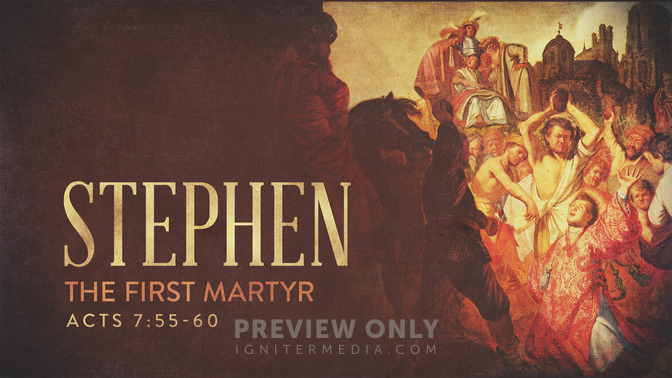
Stephen’s martyrdom is a pivotal moment in biblical history. Following his impassioned speech, the enraged assembly dragged him out of the city and stoned him. Stephen’s final words, reminiscent of Jesus’ own expression of forgiveness, “Lord, do not hold this sin against them,” signify the ultimate act of grace. In his death, Stephen not only embodied the principles of forgiveness and love but also established a powerful precedent for future martyrs.
7. Impact on Early Christianity
The ripple effect of Stephen’s martyrdom was immediate and profound. It catalyzed a wave of persecution against Christians, leading to the scattering of believers, as recorded in Acts 8:1. Paradoxically, this persecution fostered the spread of the Gospel, as scattered communities continued to share the faith. Stephen’s legacy, therefore, lay not only in his death but also in the subsequent exponential growth of Christianity across diverse geographical landscapes.
8. Theological Implications
Stephen’s story presents many theological themes that continue to be relevant today. His understanding of the law and prophetic fulfillment challenges the notion of rigid adherence to religious traditions devoid of deeper spiritual meaning. His defense serves as an early articulation of Christian theology, emphasizing that the Gospel transcends cultural and religious boundaries, thus laying a foundation for future theological discourse.
9. The Legacy of Faith and Forgiveness
Stephen’s unwavering faith and astounding capacity for forgiveness resonate deeply within the Christian narrative. His life and death exemplify the tenacity required to stand firm in one’s beliefs, even in the face of overwhelming opposition. As the first martyr, Stephen is revered as a symbol of courage and spiritual resolve, encouraging believers to embrace their faith without fear.
10. Institutional Recognition
Throughout Christian history, Stephen has been recognized and commemorated as a saint in various denominations, including the Roman Catholic Church, Eastern Orthodox Church, and Anglican Communion. His feast day, celebrated on December 26, serves as a reminder of his profound contributions to the faith and the power of conviction in the face of adversity.
Conclusion
In summation, Stephen’s life and martyrdom serve as a cornerstone of Christian identity and resilience. From his early days as a deacon to his final moments of extraordinary grace, Stephen represents the quintessence of faith in action. His legacy, marked by unwavering devotion and the transformative power of forgiveness, endures as an inspiration for generations, illuminating the path for those who strive to uphold the principles of their own faith amidst challenges.