
Short Answer
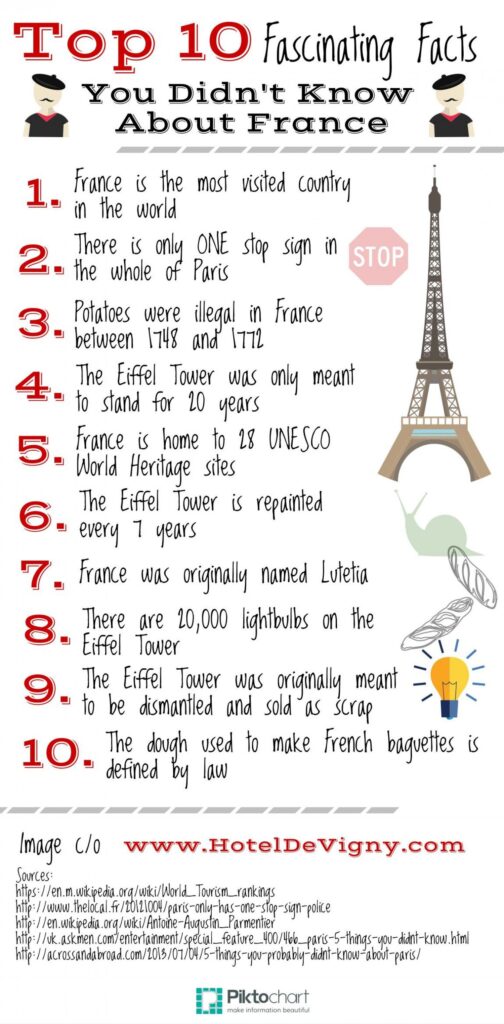
France is a land steeped in an ineffable charm, celebrated globally for its culinary traditions, avant-garde fashion, and a rich tapestry of history that stretches over millennia. Each facet of French culture offers a treasure chest of knowledge, surprising intricacies, and vivid experiences. Below are ten astonishing facts that illuminate the captivating essence of France: food, fashion, and its fascinating history.
1. Culinary Heritage: The Birthplace of Modern Gastronomy
France is often lauded as the epicenter of modern gastronomy, a testament to its profound influence on culinary arts worldwide. The French culinary tradition emphasizes technique and flavor, heralding the creation of what is known as haute cuisine. Rooted in a myriad of regional specialties, each dish tells a story of provenance. This commitment to quality and artistry has led to the establishment of culinary schools, such as Le Cordon Bleu, which have trained chefs from around the globe. Remarkably, in 2010, the “Mediterranean Diet,” including French influences, was recognized by UNESCO as an Intangible Cultural Heritage, highlighting its socio-cultural significance.
2. Fashion Capital: Home to Iconic Couture Houses
Paris, often regarded as the fashion capital of the world, is home to illustrious couture houses such as Chanel, Dior, and Yves Saint Laurent. The term “haute couture” is a legally protected designation, defining fashion created by skilled artisans who adhere to strict guidelines established by the Chambre de commerce et d’industrie de Paris. These fashion houses not only showcase seasonal collections at events like Paris Fashion Week but also exude historical gravitas. Expect more than just clothing; fashion in France is a dialogue with art, culture, and identity, offering a sublime aesthetic experience.
3. Revolutionary Ideals: A Turning Point in Global Politics
The French Revolution (1789-1799) was a seismic event whose reverberations influenced democratic movements worldwide. This period was marked by radical social and political upheaval, leading to the overthrow of monarchies and the rise of secular governance. Concepts such as liberty, equality, and fraternity were forged during this tumultuous time, laying the foundation for modern democracies. The Revolution not only transformed France but also sparked revolutions across continents, emphasizing the universality of the struggle for human rights and freedom.
4. Architectural Marvels: From Gothic to Art Deco
France’s architectural landscape is a testament to its evolution through various epochs. The iconic Gothic cathedrals, like Notre-Dame de Paris, stand alongside splendid châteaux, including the opulent Palace of Versailles. Transitioning into the industrial age, France embraced Art Deco, a style epitomized by the Palais de Chaillot and the Palais des Congrès. This architectural diversity not only serves aesthetic purposes but also encapsulates different historical narratives, making France a palimpsest of architectural innovation.
5. Language Nuances: The Evolution of Français
The French language, or Français, has a rich complexity that reflects its evolution from Vulgar Latin. It is a language woven with nuances, idioms, and expressions that reveal cultural intricacies. Unlike English, French is more formalized in its grammar and gender constructs, a linguistic touchstone that aids in preserving its historic integrity. Globally, French is spoken by over 300 million people, making it one of the most widely used languages, thereby enhancing its cultural significance and solidifying France’s place as a linguistic powerhouse.
6. Artistic Epicenter: A Historical Nexus for Art Movements
France has long held its position as a cradle for artistic movements, fostering the likes of Impressionism, Surrealism, and Cubism. Renowned artists such as Claude Monet, Edgar Degas, and Pablo Picasso found inspiration in the diverse landscapes and vibrant culture. The Louvre Museum, housing works such as the Mona Lisa and the Venus de Milo, attracts millions, solidifying France’s stature as an artistic sanctuary. This dynamic evolution of art is a reflection of the societal currents influencing and shaping creativity across centuries.
7. Wine and Terroir: A Love Story Through Vines
No discourse on France is complete without acknowledging the nation’s profound connection with viticulture. The concept of terroir—referring to the unique environmental factors influencing a wine’s characteristics—underscores the French dedication to preserving traditional methods. Renowned wine regions like Bordeaux and Burgundy yield distinct flavors that echo the geography and climate of their surroundings. As wine enthusiasts and connoisseurs know, enjoying French wine is not merely about taste; it is an encounter with a rich cultural heritage steeped in history.
8. Mesmerizing Festivals: A Celebration of Life and Tradition
France is synonymous with vibrant festivals that celebrate history, culture, and community. Events such as Bastille Day, held on July 14, commemorate the Revolution with grand parades and fireworks. The Cannes Film Festival, a beacon of cinematic excellence, showcases artistic contributions while fostering international dialogue around film. Each festival is a microcosm of local culture, engaging visitors in an immersive experience that glimmers with communal spirit and national pride.
9. The Mystery of the Catacombs: History Beneath the Streets
Deep beneath the bustling streets of Paris lie the Catacombs, an ossuary that houses the remains of over six million people. Established in the late 18th century to address the overflow of cemeteries, this subterranean labyrinth offers a poignant glimpse into the city’s history. Although often shrouded in mystery and intrigue, the Catacombs also serve as a reflective space, reminding visitors of mortality in stark contrast to the vibrancy of life above.
10. A Culinary Revolution: Farm-to-Table Philosophy
Today’s culinary landscape in France increasingly leans towards sustainability and local sourcing, embodied in the farm-to-table philosophy. Chefs are eschewing industrial-scale farming in favor of carefully cultivated produce that reflects the seasonal bounty. This movement not only honors culinary traditions but also promotes environmental stewardship, fostering a renewed appreciation for freshness and provenance. Culinary enthusiasts are invited to experience dishes crafted with care, highlighting the connection between the land and the plate.
In conclusion, France’s extraordinary tapestry of food, fashion, and history is a wellspring of curiosity and inspiration. By delving into these ten amazing facts, one can appreciate the depth and breadth of this captivating nation and its enduring impact on global culture. Whether savoring a meal, admiring a fashion statement, or exploring historical sites, France promises to shift perceptions and enrich experiences for all who venture into its embrace.





Leave a Reply