
Short Answer
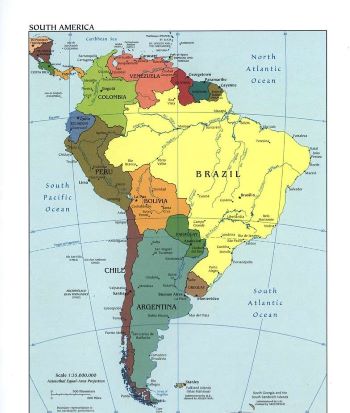
South America, a continent of breathtaking landscapes, vibrant cultures, and a storied past, invites curiosity and exploration. Its contrasts—between urban expanses and untouched wilderness, indigenous traditions and modern innovations—lead to a rich tapestry that captivates those who delve into its depths. Here are some intriguing facts about South America, each revealing fascinating aspects of its culture, nature, and astonishing history.
1. Cultural Mosaic
Home to over 400 million people, South America boasts a diverse cultural landscape. Indigenous communities, including the Quechua and Guarani, continue to preserve their languages and traditions amidst the encroachment of globalization. In countries like Bolivia and Peru, festivals such as Inti Raymi celebrate Incan heritage, revealing a profound reverence for ancestral roots.
2. The Amazon Rainforest: The Lungs of the Earth
The Amazon Rainforest, spanning across multiple nations, serves as a critical biosphere. More than 390 billion individual trees, belonging to around 16,000 species, create a unique ecological sanctuary. This immense jungle is home to an astonishing diversity of life—including over 2.5 million insect species, countless birds, and endangered mammals like the jaguar and pink river dolphin—accentuating its role as a planetary carbon sink.
3. Vast Geography: The Andes Mountains
The Andes, the longest continental mountain range in the world, stretches for about 4,300 miles along the western edge of South America. Towering peaks such as Aconcagua, the highest peak outside of Asia, reach staggering heights of over 22,800 feet. The Andes are not just a natural boundary; they shape climate patterns, biodiversity, and human settlement throughout the continent.
4. The Incas: Civilization of Ingenious Engineering
Regarded as one of the most advanced pre-Columbian civilizations, the Incas developed a network of roads spanning over 25,000 miles across treacherous terrains. Their architectural marvels, such as Machu Picchu, display sophisticated engineering techniques that incorporate seismic resistance—a testament to their understanding of the region’s geological instabilities.
5. Eclectic Gastronomy
South American cuisine is a reflection of its diverse cultures and landscapes. From the ceviche of Peru, made with fresh fish cured in citrus juices, to the succulent asado of Argentina, grilled to perfection, each dish tells a story. Ingredients like quinoa, native to the Andean regions, highlight the intersection of tradition and modern culinary practices. The continent’s gastronomic scene, illustrated by its ever-growing Michelin-starred restaurants, garners international acclaim, drawing food enthusiasts from across the globe.
6. Biodiversity Hotspot: Galápagos Islands
The Galápagos Islands, situated off the coast of Ecuador, are famed for their extraordinary biodiversity and unique species, many of which inspired Charles Darwin’s theory of evolution. Here, visitors can encounter giant tortoises, marine iguanas, and blue-footed boobies, all adapted to the archipelago’s distinct environments. The islands are a living laboratory of evolution, showcasing nature’s ability to adapt and evolve over time.
7. The Resilience of Languages
South America houses over 400 distinct languages, a reflection of its rich cultural heritage. While Spanish and Portuguese dominate, many indigenous languages, such as Quechua and Aymara, continue to thrive. Linguistic diversity indicates not only cultural variation but also a living history that connects contemporary societies to their ancestral roots and knowledge.
8. Festivals of Color and Life
Each country in South America has its own unique festivals, many of which are rooted in religious traditions. The Carnival of Rio de Janeiro exemplifies this fusion of culture and celebration, drawing millions to its parades replete with dazzling costumes and rhythmic samba music. Similarly, the Festa Junina in Brazil honors rural traditions, featuring traditional dances, tasty foods, and festive decorations, showcasing the continent’s rich cultural heritage.
9. El Dorado: The Age-Old Legend
The mythical city of El Dorado, once believed to be a place of immense wealth and gold, captivated European explorers for centuries. This legend was born from the customs of indigenous tribes who practiced ritualistic offerings of gold in Lake Guatavita. While El Dorado itself has never been found, its legend highlights the profound impact of colonialism and the intersection of myth and reality in the continent’s history.
10. The UNESCO World Heritage Sites
South America is home to 41 UNESCO World Heritage Sites, celebrating its cultural and natural treasures. From the architectural brilliance of the Jesuit Missions of the Guaranis in Paraguay and Brazil to the remarkable ruins of Chan Chan in Peru, these sites provide a glimpse into the continent’s multifaceted heritage. Each location tells a story, preserving the memory of ancient civilizations while showcasing the natural beauty of the diverse landscapes.
In conclusion, South America, with its rich culture, astounding nature, and deep-rooted history, continues to fascinate and inspire. The continent’s myriad stories, woven through indigenous traditions and modern vibrancy, captivate those eager to explore its depths. From the Amazon’s biodiversity to the Andes’ majesty and the enduring legacy of its people, South America is not merely a destination but an ever-evolving narrative worthy of exploration and understanding.





Leave a Reply