
Short Answer
Have you ever found yourself gazing at the vastness of the ocean and wondered what lies beneath the shimmering surface? The depths of our oceans are teeming with life that is as bizarre as it is beautiful, and many of these creatures possess strange adaptations that seem almost too wild to be true. From the intricate social structures of dolphins to the peculiar nature of bioluminescent organisms, the marine world is a treasure trove of fascinating facts waiting to be uncovered. So, are you ready to embark on an exploration of oceanic marvels? Here are 50 wild facts about ocean animals that will leave you in awe and maybe even pose a challenge in your next trivia game!
1. **The Immortal Jellyfish:** Turritopsis dohrnii, known as the “immortal jellyfish,” can essentially reverse its aging process, allowing it to revert to its juvenile form when faced with stress.
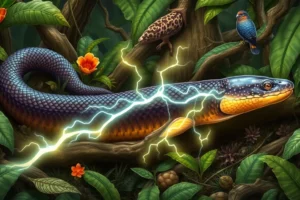
2. **Electric Eels:** These unique fish can generate electric shocks of up to 600 volts, using this ability for hunting and self-defense. Feeling zapped yet?
3. **Blue Whale’s Heart:** The heart of a blue whale weighs about as much as a small car, roughly 1,300 pounds. Imagine that beating in the ocean’s depths!
4. **Giant Squid:** These elusive creatures can grow to lengths of up to 43 feet and have eyes the size of basketballs, making them one of the largest animals on the planet.
5. **Clownfish and Sea Anemones:** Clownfish can live among the venomous tentacles of sea anemones due to a special mucus coating on their skin that provides protection.
6. **Pistol Shrimp:** This tiny shrimp can create a bubble that snaps shut, producing a sound reaching 218 decibels—a noise louder than a gunshot.
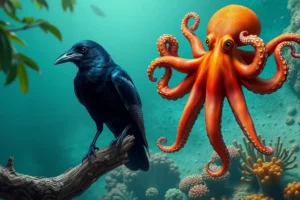
7. **Octopus Intelligence:** Octopuses are known for their remarkable problem-solving skills and can escape enclosures through small openings, showcasing their incredible intellect.
8. **Mantis Shrimp’s Vision:** With 16 types of color receptors, mantis shrimp can see ultraviolet light and polarized light, far surpassing human vision capabilities.
9. **Narwhal’s Unicorn Tusk:** The long, spiral tusk of the narwhal is actually an elongated tooth, often referred to as the ‘unicorn of the sea’ and can grow up to 10 feet long.
10. **Sea Otters’ Tool Use:** Sea otters use rocks to crack open shells, demonstrating remarkable tool use that is rarely seen in non-human species.
11. **Vampire Squid:** Living in deep-sea darkness, the vampire squid possesses bioluminescent capabilities that allow it to produce light to dazzle potential predators.
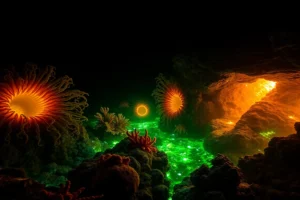
12. **Gorgonian Corals:** These corals can live for thousands of years and can grow tissue with a unique pattern, resembling fans or trees swaying in the current.
13. **Frogfish Camouflage:** Frogfish can change color to match their surroundings and possess a lure that attracts their prey, making them highly effective ambush predators.
14. **Horseshoe Crabs’ Blue Blood:** The blue blood of horseshoe crabs contains a chemical called hemocyanin that is crucial for detecting bacterial infections, making it valuable in medical research.
15. **Anemonefish Symbiosis:** The mutualistic relationship between anemonefish and sea anemones is a textbook example of symbiosis, wherein both species benefit from their association.
16. **Dolphin Communication:** Dolphins use a sophisticated system of clicks and whistles to communicate, boasting complex social structures similar to human societies.
17. **Anglerfish Lure:** The anglerfish’s bioluminescent lure attracts prey in the dark depths of the ocean, making it one of the most bizarre hunting adaptations.
18. **Basking Sharks’ Filter Feeding:** Basking sharks, the second-largest fish in the ocean, are filter feeders and consume plankton by gulping large amounts of water.
19. **Coral Reefs’ Biodiversity:** Coral reefs support about 25% of marine life, making these vibrant structures one of the most diverse ecosystems on the planet.
20. **Lampfish Light Show:** Lanternfish produce light via bioluminescence, which helps them camouflage in the ocean’s twilight zone.
21. **Sperm Whale’s Deep Diving:** Sperm whales can dive to depths exceeding 10,000 feet in search of squid, holding their breath for up to 90 minutes.
22. **Sea Slug Beauty:** Some sea slugs can incorporate chloroplasts from algae into their body, enabling them to photosynthesize like plants.
23. **Climbing Cods:** Some species of cod can briefly breathe air and navigate onto land, showcasing remarkable adaptability in their search for food.
24. **Orcas’ Complex Social Structures:** Orcas, or killer whales, live in matrilineal family groups and exhibit intricate hunting techniques passed down through generations.
25. **Seahorse Male Pregnancy:** In a fascinating twist of roles, male seahorses carry and give birth to young, making them one of the few male pregnancy instances in the animal kingdom.
26. **Blobfish’s Appearance:** The blobfish, often dubbed the world’s ugliest fish, is found at depths where pressure keeps its gelatinous body from collapsing throughout the water column.
27. **Turtle Navigation:** Sea turtles can navigate thousands of miles back to their nesting sites using the Earth’s magnetic field, showcasing their incredible homing abilities.
28. **Sea Cucumbers’ Defense:** Sea cucumbers can expel their internal organs when threatened, allowing them to escape while later regenerating their lost body parts.
29. **Chimaeras’ Adaptive Evolution:** Chimaeras, also known as ghost sharks, are a group of ancient fish that have remained largely unchanged for over 400 million years.
30. **Parrotfish Sleep:** Parrotfish create a mucous cocoon around themselves at night, which camouflages their scent from predators while they sleep.
31. **Echolocation in Whales:** Similar to bats, certain species of whales and dolphins use echolocation to navigate and hunt, emitting clicks that bounce off objects to create a mental map.
32. **Jellyfish and Immortality:** Some jellyfish can revert back to a juvenile stage, essentially undoing their life cycle and defying death in a perpetual cycle.
33. **Pygmy Sperm Whale’s Disguise:** Pygmy sperm whales can release a cloud of ink-like fluid to confuse predators, allowing them to escape unnoticed.
34. **Archerfish Accuracy:** Archerfish can accurately shoot jets of water to knock insects from overhanging branches, displaying remarkable precision and adaptability.
35. **Greenland Shark Longevity:** Greenland sharks are known for their incredible lifespan, living up to 400 years, making them the longest-living vertebrates known.
36. **Distant Starfish Regeneration:** Sea stars possess the ability to regenerate lost limbs, with some capable of regenerating an entire body from just a single arm.
37. **Nudibranchs’ Bright Colors:** Nudibranchs display bright colors to warn predators of their toxicity, showcasing nature’s palette in the most vibrant hues.
38. **Catfish Sensory Whiskers:** Catfish have thousands of sensory whiskers that allow them to detect even the slightest movements and chemical changes in the water.
39. **Penguins’ Unique Lifespan:** Emperor penguins can live up to 20 years in the wild, successfully enduring harsh polar climates through social bonding and teamwork.
40. **Rays and Skates:** While both belong to the same family, rays have a more flattened body, allowing them to thrive in sandy shallows, while skates have a more rigid body structure.
41. **Goblin Shark’s Unusual Jaw:** The goblin shark possesses a jaw that can extend outward to capture prey, making it one of the most unusual-looking sharks in existence.
42. **Beluga Whales’ Whistles:** Beluga whales are known as the “canaries of the sea” due to their wide range of vocalizations, which serve various social purposes.
43. **Fiddler Crabs’ Claw Display:** Male fiddler crabs wave their oversized claws to attract females, showcasing vibrant courtship behaviors within their habitat.
44. **Firefly Squid Illumination:** Found in Japan, firefly squid put on a breathtaking light show, illuminating the coasts with bioluminescence during their spawning season.
45. **Hammerhead Shark’s Unique Vision:** Hammerhead sharks have a unique, flattened head shape that allows for a wider field of vision, enhancing their ability to hunt.
46. **Angelfish Colors:** Angelfish exhibit a kaleidoscope of colors, often serving as a form of communication and protection from predators throughout coral reefs.
47. **Turtle’s Impressive Memory:** Turtles possess an incredible memory, allowing them to remember migration routes and feeding spots for years.
48. **Lobster’s Annual Molting:** Lobsters molt annually, shedding their exoskeleton to accommodate their growing bodies, and can regrow lost claws and legs.
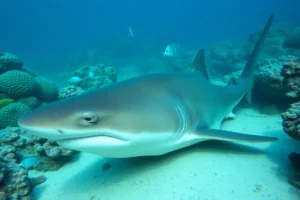
49. **Mako Shark’s Speed:** The shortfin mako shark is considered the fastest species of shark, able to reach speeds of up to 45 miles per hour, ideal for catching prey.
50. **Coral Bleaching:** Rising ocean temperatures lead to coral bleaching, a phenomenon where corals expel the algae providing them color and sustenance, ultimately threatening entire ecosystems.
As we reflect on these 50 wild facts about ocean animals, it’s clear that the wonders of the sea extend far beyond what we might initially perceive. The diverse adaptations and behaviors of these creatures offer a glimpse into the complexity of life beneath the waves. Perhaps the next time you visit the beach, you’ll carry with you a deeper appreciation for the vibrant ecosystems that thrive just below the surface. So, which of these fascinating facts surprised you the most? Challenge yourself to learn even more about these incredible animals and do your bit for ocean conservation!
FAQ
What is unique about the blue whale's heart?
The heart of a blue whale weighs about as much as a small car, roughly 1,300 pounds.
How do dolphins communicate?
Dolphins use a sophisticated system of clicks and whistles, exhibiting complex social structures.
Leave a Reply