
Short Answer
Have you ever gazed up at the night sky and wondered about the mysterious objects orbiting our planet? These celestial wonders, known as satellites, play a crucial role in our understanding of the universe and have spectacular impacts on our daily lives. From communication to weather forecasting, satellites are omnipresent, operating in a dance of precision and technological marvel. To elevate your appreciation of these orbital companions, here are eight captivating space facts about satellites that will not only intrigue you but also inspire a playful challenge to ponder: What would our world look like without them?
1. Types of Satellites: More than Meets the Eye
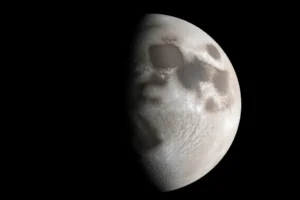
Satellites come in various forms, each serving a specific purpose. Generally, they can be categorized into three main types: natural, like the Moon, which orbits Earth; artificial, created by humans for tasks like communication; and scientific, used for exploration and research. Communication satellites facilitate global conversations by relaying signals around the globe. Earth observation satellites provide critical data for climate research and disaster management. Consider this: can you identify which type of satellite is most crucial to your daily life?
2. The Altitude Dilemma: Orbits Explained
Did you know that the altitude at which a satellite orbits determines its functionality? Satellites orbit Earth at varying distances, with low Earth orbit (LEO), medium Earth orbit (MEO), and geostationary orbit (GEO) being the most common. LEO satellites fly between 160 to 2,000 kilometers and are ideal for Earth observation and scientific research. MEO satellites, positioned at about 20,000 kilometers, are often used for navigation systems like GPS. GEO satellites, located approximately 35,786 kilometers above Earth, rotate with the planet, offering consistent communication channels. Here lies an interesting challenge: how would the absence of certain orbits impact specific technologies, such as navigation or weather forecasting?
3. The Speed of Communication: A Race Against Time
Satellites operate at remarkable velocities. For instance, a LEO satellite travels at speeds exceeding 28,000 kilometers per hour, completing an orbit around Earth in about 90 minutes. This rapid motion allows for near real-time communication and data retrieval. On the other hand, GEO satellites, moving at a slower pace, maintain a constant position relative to Earth. Imagine the implications if satellites were not engineered for such speeds; how much longer would it take for a message to reach a loved one overseas?
4. The Silent Sentinels: Monitoring Earth’s Health
One of the most impactful contributions of satellites is their role in environmental monitoring. Satellites equipped with advanced sensors can track deforestation, urban expansion, and natural disasters. For example, NASA’s Landsat program has been providing critical data about Earth’s surface since the 1970s, allowing scientists to monitor changes in land use and climate. Given this perspective, challenge yourself to think about how our planet’s health could deteriorate without satellite monitoring. Would humanity be as informed about climate change?
5. Space Junk: An Orbital Hazard
As integral as satellites are, they come with a caveat: space debris. Thousands of defunct satellites, spent rocket stages, and fragments from collisions orbit Earth, posing a significant risk to both active satellites and future missions. Space agencies are actively exploring methods to mitigate this “space junk” issue, including de-orbiting old satellites and developing technology to capture debris. Reflect on this: if we do not address the problem of space debris, what consequences might await future space exploration?
6. The Birth of Satellites: A Historical Perspective
The convolution of technology and exploration brought about the first artificial satellite, Sputnik 1, in 1957. This small spherical object fundamentally altered geopolitics and sparked the space race. Since then, satellite technology has evolved exponentially, leading to numerous advancements from simple transmission devices to sophisticated instruments capable of exploring our solar system. Consider how the initial spark of innovation influenced today’s interconnected world. What other technological leaps might await us in the future?
7. The Data Explosion: Big Data from Space
Satellites generate vast amounts of data, contributing to various fields such as meteorology, climatology, and even disaster response. With the advent of big data analytics, this information can be processed to make predictions and decisions that shape policy and save lives. For instance, improved weather forecasting has become predominantly reliant on satellite data. How might society respond if we were stripped of such predictive power, relying instead on outdated methods?
8. Collaboration in Orbit: International Partnerships
Global challenges necessitate cooperative solutions, and satellite technology often serves as a testament to international collaboration. The International Space Station (ISS) involves multiple countries working together to advance research and technology in space. Similarly, Earth observation satellites facilitate data sharing across borders, crucial for tackling climate change and humanitarian crises. Think about the implications of these partnerships: how might the world change if nations became more or less collaborative in their satellite endeavors?
In conclusion, satellites are not mere specks of technology orbiting our planet; they are pivotal to our understanding of the world and the universe. Their diverse functions—from communication and navigation to environmental monitoring—underline their significance in daily life. As you ponder these eight fascinating facts about satellites, consider the challenges posed and the impact of these orbiting marvels on humanity. What do you think would happen without them? The answers could shape our technological future and deepen our cosmic curiosity.
FAQ
What are satellites used for?
Satellites are used for communication, navigation (like GPS), weather forecasting, environmental monitoring, scientific research, and global data collection.
What is space debris and why is it a problem?
Space debris consists of defunct satellites and fragments that orbit Earth, posing collision risks that can damage active satellites and threaten future missions.
How do different orbits affect satellite functions?
Satellites in low Earth orbit are ideal for Earth observation, medium Earth orbit satellites support navigation, and geostationary satellites provide constant communication coverage.
What was the first artificial satellite?
Sputnik 1, launched by the Soviet Union in 1957, was the first artificial satellite to orbit Earth.
How do countries collaborate on satellite projects?
Countries collaborate through projects like the International Space Station and sharing satellite data for climate monitoring and disaster response.




Leave a Reply