
Short Answer
Geometry, a branch of mathematics, is more than just a subject studied in classrooms; it is a vibrant tapestry of shapes, patterns, and profound relationships that encircle our world. Its principles govern the design of structures, the flow of art and nature, and even the intricacies of the universe itself. This fascinating discipline inspires awe and invites inquiry, drawing connections between the mundane and the extraordinary. Below are ten shape-shifting fun facts about geometry that will enhance your appreciation for its multifaceted nature.
1. The Golden Ratio: Nature’s Aesthetic Blueprint
The Golden Ratio, approximately 1.618, manifests itself in various forms throughout nature and has captivated mathematicians, artists, and architects for centuries. This ratio, represented by the Greek letter phi (φ), is often found in the arrangement of leaves, the pattern of seeds in a sunflower, and the spiral of shells. Its prevalence raises questions about why such mathematical harmony appears so frequently, suggesting that beauty may be intertwined with mathematical principles.
2. Fractals: Infinite Complexity in Finite Shapes
Fractals are intricate geometric shapes that exhibit self-similarity across different scales. The classic example is the Mandelbrot set, where zooming in reveals infinitely detailed patterns. This counterintuitive property invites contemplation about the nature of infinity and the interconnectedness of mathematical structures. Fractals bridge the gap between art and mathematics, demonstrating how a simple formula can generate complex and awe-inspiring designs.
3. Non-Euclidean Geometry: Bending the Rules of Space
Euclidean geometry has long been the cornerstone of the discipline, yet the exploration of non-Euclidean geometry opens doors to entirely new realms of thought. By considering curved surfaces, such as those of a sphere, mathematicians can redefine angles, lines, and distances. This concept has profound implications in fields like cosmology and physics, where the fabric of space-time can be better understood through these alternative geometrical frameworks.
4. The Shape of the Universe: Geometry on a Cosmic Scale
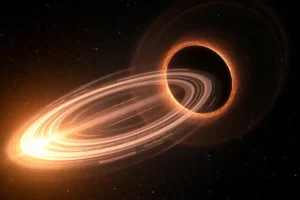
Questions surrounding the universe’s shape captivate many. Is it flat, spherical, or hyperbolic? Cosmologists have pondered these mysteries, driven by the implications they hold for understanding the cosmos. Einstein’s theory of general relativity suggests that mass and energy warp the geometry of space. Consequently, the universe’s shape is not merely a question of aesthetics but one that influences its fate and ultimate destiny.
5. Tiling the Plane: The Art of Tessellation
Tessellation, the seamless filling of a plane with geometric shapes without gaps or overlaps, is a compelling geometric art form. The study of tessellations reveals a rich interplay between mathematics and aesthetics. Artists like M.C. Escher have harnessed this principle to create mesmerizing artworks that challenge perceptions and inspire endless fascination. The mathematics behind tessellation invites deeper contemplation regarding symmetry, order, and creativity.
6. The Euler Characteristic: Connecting Dimensions
The Euler characteristic is a topological invariant that provides a connection between geometry and topology. Defined as V – E + F = 2 for polyhedra, where V represents vertices, E edges, and F faces, this elegant formula underscores a fundamental property of spatial relationships. Its ability to unify diverse geometric shapes encourages explorations that traverse various mathematical fields, revealing underlying principles that govern seemingly disparate entities.
7. Symmetry: The Language of Balance
Symmetry is a prominent theme in geometry, signifying harmony and balance. It manifests in nature, architecture, art, and even in the human body. Symmetrical shapes invoke a sense of order and predictability, appealing to our innate preference for balance. The study of symmetry extends beyond mere aesthetics, prompting deeper inquiries into the structure of reality, where symmetry plays a crucial role in physics and chemistry.
8. Dimensions Beyond Our Perception
While we operate within a three-dimensional existence, the concept of higher dimensions tantalizes the imagination. Theoretical physics suggests the possibility of up to eleven or more spatial dimensions, each with unique properties that challenge conventional understanding. These higher dimensions open new pathways for contemplating the nature of reality, expanding the geometric models we use to describe the universe.
9. Geometry in Art: The Intersection of Form and Function
Artists across the ages have drawn upon geometric principles to convey meaning and structure within their works. From the crisp angles of Cubism to the harmonious spirals of Baroque architecture, geometry serves as a bridge connecting form and function. Artistic movements often reflect underlying geometrical ideals, illustrating how this mathematical discipline can inspire creativity and innovation while adhering to its principles.
10. The Secrets of Geometry: Computer Science and Algorithms
In the realm of computer science, geometry has fostered the development of algorithms that power everything from graphics rendering to geographic information systems. The application of geometric principles facilitates the creation of realistic virtual environments and simulations, revealing more profound connections between mathematics, technology, and the realities we inhabit. These innovations demonstrate how geometric reasoning transcends traditional boundaries, shaping the digital landscape.
In wrapping up this exploration of geometry’s multifaceted world, it becomes evident that this discipline is not merely a collection of rules and formulas. Its applications and implications permeate our existence in deeply transformative ways. From the smallest fractals to the vastness of the universe, geometry encourages a deeper understanding of the complexities surrounding us. As we ponder these ten shape-shifting fun facts, we discover that geometry has the power to evoke fascination, challenging our perceptions and inviting us to explore the mathematical beauty woven into the very fabric of our reality.
FAQ
What is the Golden Ratio and why is it important?
The Golden Ratio is a unique number approximately equal to 1.618 that appears frequently in nature and art, symbolizing aesthetic harmony and mathematical beauty.
How do fractals demonstrate complexity in geometry?
Fractals show infinite complexity through repeating patterns at every scale, bridging mathematics with natural and artistic forms.
Why is non-Euclidean geometry significant?
Non-Euclidean geometry expands traditional geometry to curved spaces, providing insights into space-time and the universe's structure.
What role does tessellation play in geometry and art?
Tessellations fill surfaces without gaps or overlaps, combining mathematical precision with artistic creativity.
How is geometry applied in computer science?
Geometry underpins algorithms in graphics rendering, simulations, and geographic information systems, enabling realistic virtual environments.



Leave a Reply