
Short Answer
Europe, a mosaic of diverse cultures, languages, and histories, has an enthralling narrative woven through time. Spanning from the ancient civilizations to contemporary societies, the stories of Europe are filled with intrigue and revelations. In this exploration, we present ten fascinating historical facts that illuminate the continent’s rich tapestry. Each fact unveils a unique facet of Europe, shedding light on its multifarious past.
1. The Birthplace of Democracy
The concept of democracy, a revered ideal today, finds its inception in ancient Athens, Greece. In the 5th century BCE, Athenian statesman Cleisthenes initiated a system of governance where citizens engaged directly in decision-making. This radical departure from monarchical rule inspired future democratic ideals across the globe. While Athenian democracy was limited to free male citizens, its foundational principles have significantly influenced modern democratic systems.
2. The Roman Empire’s Ingenious Engineering
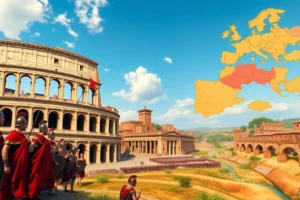
The Roman Empire, an behemoth of ancient civilization, is celebrated for its impressive engineering feats. Among them, the construction of aqueducts stands out as a testament to Roman ingenuity. These elevated structures transported water across vast distances, ensuring that cities thrived. The Aqueduct of Segovia, still standing today in Spain, exemplifies this extraordinary engineering legacy. The Roman infrastructure, which includes roads and bridges, facilitated trade and cultural exchange throughout the empire.
3. The Age of Enlightenment
The Age of Enlightenment, spanning the 17th and 18th centuries, marked a transformative period in European thought. Intellectual luminaries such as Voltaire and Rousseau illuminated the contours of philosophy, advocating for reason, individualism, and scientific inquiry. This era instigated profound societal changes, challenging traditional authority and enhancing the value of human experience and rationality. The ideals disseminated during the Enlightenment laid the groundwork for revolutions and advancements throughout Europe and beyond.
4. The Plague that Changed Europe
The Black Death, which ravaged Europe in the 14th century, was a calamitous pandemic that claimed millions of lives. Spreading through trade routes, this devastating outbreak resulted in the deaths of approximately one-third of Europe’s population. While it wrought unimaginable suffering, the aftermath saw significant societal transformations. The labor shortage led to improved wages and living conditions for survivors, thus altering the socio-economic fabric of medieval Europe.
5. The Artistic Renaissance
The Renaissance, a cultural movement that blossomed in Italy during the 14th century, heralded a revival of art, literature, and humanistic thought. Masterpieces from legendary artists such as Leonardo da Vinci and Michelangelo emerged, showcasing a newfound emphasis on realism and human emotion. This artistic reawakening fostered advancements in various disciplines, including science and philosophy. The Renaissance bestowed Europe with an unparalleled legacy, shaping cultural paradigms for centuries to come.
6. The Industrial Revolution’s Catalyst
The Industrial Revolution, which commenced in Britain in the late 18th century, signifies a pivotal shift from agrarian economies to industrialized societies. This transformative period brought forth groundbreaking innovations such as the steam engine and mechanized textile production. The socioeconomic consequences were profound—urbanization surged as individuals flocked to cities seeking employment in factories. The Industrial Revolution not only revolutionized production but also altered social structures, enhancing the complexity of European life.
7. The Formation of the European Union
In the aftermath of World War II, the desire for peace and unity sparked the creation of the European Union (EU). Establishing cooperation among member states aimed to prevent future conflicts and foster economic collaboration. The Maastricht Treaty, adopted in 1992, formalized the EU, promoting a shared market and common currency, the Euro. Today, the EU encompasses 27 member states, reflecting Europe’s commitment to collective governance and regional integration.
8. The Cold War Divide
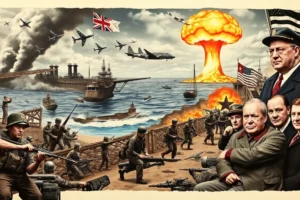
The Cold War, a protracted geopolitical tension from the late 1940s to the early 1990s, divided Europe, with the Iron Curtain symbolizing this rift. Eastern Europe fell under Soviet influence, marked by authoritarian regimes, while Western European nations embraced democracy and capitalist ideals. The dissipation of the Soviet Union in 1991 marked a seismic shift, leading to the reunification of Germany and the expansion of both NATO and the EU, serving as a catalyst for a new era of collaboration.
9. The Rise of Nationalism
Nationalism, a potent force throughout European history, emerged prominently during the 19th century. As nations sought self-determination and cultural identity, movements burgeoned across the continent, culminating in events such as the unification of Italy and Germany. Nationalism, however, was not without its complexities—it often sowed discord, leading to rivalries and conflicts. The balance between national pride and the pursuit of harmony continues to shape European politics and identity today.
10. Cultural and Linguistic Diversity
Europe is a veritable tapestry of languages, each echoing the unique stories of its inhabitants. With approximately 200 languages spoken across the continent, the linguistic landscape reflects a rich historical mosaic. Among the most widely spoken languages are English, French, German, and Spanish, but regional dialects and minority languages flourish, preserving local heritage. This cultural diversity adds depth to European identity, fostering an environment of creativity and innovation.
In conclusion, the history of Europe is a captivating exploration of resilience, transformation, and interconnection. From the birth of democracy to the complexities of cultural diversity, each historical fact encompasses a narrative that has shaped the continent’s evolution. Understanding these moments offers insights into the present and future, reminding us how the past informs our shared humanity. As Europe continues to adapt and grow, the legacies of these events will linger, weaving a continuous narrative that binds its nations together.
FAQ
What are some key historical events in Europe?
Key historical events include the birth of democracy in Athens, the construction of Roman aqueducts, the Age of Enlightenment, and the formation of the European Union.
How did the Industrial Revolution impact Europe?
The Industrial Revolution marked a significant shift from agrarian economies to industrialized societies, leading to urbanization and socioeconomic changes.



Leave a Reply