
Short Answer
Egypt, the land of the pharaohs, has long captivated the imagination of scholars, historians, and curious travelers alike. Its rich tapestry of history, culture, and monumental achievements invites us to explore the depths of its ancient civilization. Herein lies a journey through ten fascinating facts about Egypt, each promising a shift in perspective and sparking curiosity about this enigmatic realm.
1. The Pyramids: Architectural Marvels of Precision
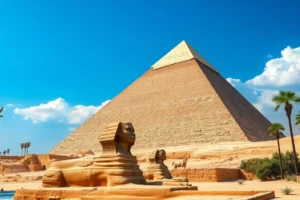
The pyramids of Giza, particularly the Great Pyramid, stand as extraordinary testaments to ancient engineering prowess. Constructed around 2580–2560 BCE, this colossal edifice was originally clad in highly polished Tura limestone, which would have shimmered brilliantly under the sun. What’s even more astonishing is that it was built with astonishing precision—aligned almost perfectly with the cardinal points of the compass. This feat raises intriguing questions about the ancient Egyptians’ understanding of geometry and astronomy, hinting at a sophisticated level of knowledge that astounds historians to this day.
2. The Nile: Lifeblood of Civilization
Flowing majestically through the heart of Egypt, the Nile River was more than just a waterway; it was the very lifeblood of ancient civilization. Spanning over 4,100 miles, the Nile is the longest river in the world, its annual flooding depositing nutrient-rich silt that nurtured agriculture in an otherwise arid landscape. This cyclical phenomenon allowed ancient cultivators to grow crops, forming the backbone of the economy and enabling the rise of cities like Memphis and Thebes. The Nile was not merely a river—it was a divine gift, embodied in the person of the god Hapi, signifying fertility and abundance.
3. Hieroglyphs: The Sacred Language of the Gods
The ancient Egyptians developed one of the most intriguing writing systems known as hieroglyphics, comprising over 700 distinct symbols. Each glyph held a dual nature, representing both sounds and ideas, making it a complex form of communication steeped in religious significance. Used primarily for monumental inscriptions and sacred texts, hieroglyphs adorned temple walls and tombs, serving as a gateway to the afterlife. The Rosetta Stone, discovered in 1799, was instrumental in deciphering this intricate script, allowing modern scholars to unlock the mysteries of ancient Egyptian society.
4. The Afterlife: A Journey Beyond Death
The ancient Egyptians had a profound belief in the afterlife, viewing it as a continuation of existence beyond death. This belief was intricately intertwined with their elaborate burial practices, including mummification, aimed at preserving the body for eternity. Pharaohs and affluent individuals were buried with an array of grave goods, ensuring their comfort in the next world. The iconic Book of the Dead, a collection of spells and prayers, guided the deceased through the perilous journey to the afterlife, where their heart would be weighed against the feather of Ma’at, symbolizing truth and justice.
5. Cleopatra: The Last Pharaoh
Often romanticized in literature and film, Cleopatra VII was not only the last active ruler of the Ptolemaic Kingdom of Egypt but also a savvy politician and an astute diplomat. Born in 69 BCE, she was a member of a Greek dynasty following Alexander the Great’s conquest. Her relationships with powerful Roman figures like Julius Caesar and Mark Antony were not mere romances but strategic alliances that sought to protect Egypt’s sovereignty. Cleopatra embodied the fusion of Greek and Egyptian cultures, captivating the world with her intellect, charm, and political acumen.
6. The Sphinx: Guardian of the Giza Plateau
Resting serenely at the foot of the pyramids, the Great Sphinx of Giza has long intrigued and mystified observers. Carved from limestone, this colossal statue features a lion’s body and a human head, believed by many to represent Pharaoh Khafre. The Sphinx’s enigmatic expression has spurred countless theories and legends, fueling speculation about its purpose—whether as a guardian of the tombs or a representation of royal power. Over millennia, it has withstood the test of time, whispering secrets of an era long past.
7. Temples of Karnak: A Testament to Devotion
The Karnak Temple Complex in Luxor is one of the largest religious structures ever built, dedicated to the worship of the Theban triad: Amun, Mut, and Khonsu. Sprawling over 200 acres, it features a forest of colossal columns and intricate hieroglyphs that narrate the tales of gods and pharaohs. The sheer scale and craftsmanship of Karnak testify to the might and devotion of ancient Egyptian civilization, highlighting a deep reverence for spirituality interwoven with governance. Visitors to this sacred site are often left in awe of the grandeur that embodies the soul of ancient Egypt.
8. Advances in Medicine: The Bank of Wisdom
Ancient Egypt was remarkably advanced in the realms of medicine and surgery. Their extensive understanding of the human body and ailments is evidenced in texts like the Ebers Papyrus, which details numerous medical practices, remedies, and surgical techniques. Physicians were revered figures, often considered healers sent by the gods. The practice of dentistry, orthopedic treatments, and even basic surgical procedures such as trepanation underscore their medical prowess, hinting at a sophisticated approach to health and well-being.
9. The Obelisks: Pillars of Sun Worship
Obelisks, towering stone structures typically made from red granite, served as powerful symbols of the Sun god Ra. These monuments, often inscribed with hieroglyphs, were strategically placed at temple entrances to elevate the pharaoh’s divine status. Erecting an obelisk was no small feat; it required immense resources and labor, displaying the engineering ingenuity of the Egyptians. The presence of these majestic structures across Egypt serves as a testament to their adoration of the sun and the cosmic order they deeply revered.
10. The Rosetta Stone: A Bridge to Understanding
The Rosetta Stone, discovered in 1799, acted as a crucial key for unlocking the language of ancient Egypt. Carved in 196 BCE, it features the same text in three scripts: Greek, Demotic, and hieroglyphics. This tri-lingual artifact enabled scholars, most notably Jean-François Champollion, to decode hieroglyphics, rekindling interest in a long-dormant language and culture. The Rosetta Stone embodied the intersection of history and linguistics, providing a tangible link between the past and present and deepening our collective understanding of a civilization that continues to inspire.
In conclusion, the allure of ancient Egypt transcends mere historical facts; it propels us into a realm of profound complexities, creativity, and wonder. Each fact weaves together the threads of a culture that has shaped human civilization in myriad ways. As we reflect upon these facets of ancient Egypt, we are not only left with curiosity but with a renewed appreciation for the legacy of this magnificent civilization that continues to resonate through the sands of time.
FAQ
What were the main achievements of ancient Egyptian civilization?
Ancient Egypt is known for its impressive architectural achievements, such as the pyramids, advancements in medicine, and a complex writing system.
How did the ancient Egyptians view the afterlife?
The ancient Egyptians believed in an afterlife, which influenced their burial practices, including mummification and offerings for the deceased.



Leave a Reply