
Short Answer
Stars have captivated humanity for millennia, filling the night sky with their brilliance and offering a glimpse into the vast cosmos. These celestial wonders have inspired countless myths, scientific inquiries, and artistic endeavors. From their formation in nebulae to their ultimate demise as supernovae or white dwarfs, stars play an essential role in the universe’s grand tapestry. Here are ten twinkling fun facts about stars that illuminate their fascinating nature and the mysteries they hold.
1. Stars Are Born in Nebulae
Stars originate in giant clouds of gas and dust known as nebulae. Within these colorful, expansive regions of space, gravitational forces clump material together, leading to an increase in temperature and pressure. Over time, this process results in a protostar, which will eventually ignite nuclear fusion at its core, marking the birth of a new star. The intricate dance of creation within a nebula is a beautiful testament to the wonders of astrophysics.
2. The Lifecycle of Stars is Diverse
The life of a star is not a one-size-fits-all journey. Depending on its mass, a star can take on many forms throughout its lifecycle. Massive stars may end their lives spectacularly as supernovae, leaving behind neutron stars or black holes. In contrast, smaller stars like our sun transition through stages to become red giants and ultimately rich, glowing white dwarfs. This diversity in stellar evolution speaks to the complexities of cosmological processes.
3. Light-Years and the Distance of Stars
When we observe stars, we witness them as they were in the past, due to the finite speed of light. The term “light-year” describes the distance that light travels in one year, which is approximately 5.88 trillion miles. Consequently, a star that is 10 light-years away appears as it was ten years prior, providing astronomers with a snapshot of the universe’s history. This temporal aspect of starlight adds a profound layer of depth to our astronomical observations.
4. The Color of a Star Reveals Its Temperature
The color of a star is a window into its temperature and, consequently, its age. Hotter stars radiate a blue hue, while cooler stars emit a reddish glow. The temperature of a star can range from around 3,000 Kelvin for the dimmest red dwarfs to over 30,000 Kelvin for the hottest blue supergiants. The hues of stars create a vibrant palette across the cosmos, providing valuable insights into their physical attributes and conditions.
5. Stars Have Their Own Unique ‘Fingerprint’
Each star possesses a distinctive spectrum, akin to a cosmic fingerprint, which astronomers can analyze to determine its composition and movement. By examining the absorption and emission lines within a star’s spectrum, scientists can identify the elements that comprise it, measure its temperature, and even detect exoplanets orbiting nearby. This technique, known as spectroscopy, has been instrumental in unveiling the secrets of our universe.
6. The Twinkling Effect of Stars
The twinkling effect that makes stars appear to shimmer is not due to their inherent properties but rather the Earth’s atmosphere. As starlight traverses layers of air with varying temperatures and densities, it bends and distorts, creating the illusion of flickering. This phenomenon, called “stellar scintillation,” can lead to moments of awe as stars dance across the night sky, creating a majestic show of celestial beauty.
7. Stars Can Be Luminous and Variable
Not all stars shine uniformly. Some are classified as variable stars, which experience fluctuations in brightness due to intrinsic or extrinsic factors. Intrinsic variables, like Cepheid variables, pulsate due to changes in their internal structures, while extrinsic variables may dim when they pass in front of another star. These dynamic shifts in luminosity provide astrological insights and help astronomers measure cosmic distances with impressive precision.
8. Our Sun is a Second-Generation Star
Stars are not isolated instances; they are part of an ongoing astronomical cycle. Our Sun is classified as a second-generation star, formed from the remnants of earlier stars that exploded as supernovae. These earlier stars dissolved in a fiery exit, distributing elements across space that contributed to the formation of new celestial bodies. This recycling of stellar material illustrates the interconnectedness of the universe’s lifecycle.
9. The Milky Way is Home to Billions of Stars
The Milky Way galaxy is a vast and complex swirl of stars, containing an estimated 100 to 400 billion stars. Spanning approximately 100,000 light-years in diameter, this stunning galaxy is just one of the billions of galaxies scattered throughout the observable universe. Each star, with its own unique story, contributes to the galactic community, painting a breathtaking picture of the cosmos.
10. Black Holes: The Final Chapter for Massive Stars
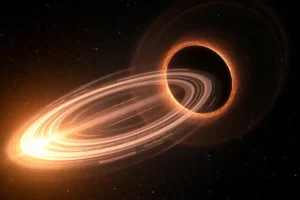
When massive stars exhaust their nuclear fuel, they can collapse under their own gravity, leading to the creation of black holes—regions of space with gravitational pulls so strong that nothing, not even light, can escape them. Black holes represent a mysterious and enigmatic aspect of stellar evolution, pushing the boundaries of our understanding of physics and the very fabric of spacetime itself. Their presence hints at the fundamental mysteries that still elude astronomers.
In conclusion, stars are more than just luminous points in the night sky; they are complex entities with dynamic lifecycles and significant roles in the universe. From their birth in nebulae to their dramatic deaths as black holes, these celestial bodies have much to teach us about the cosmos and our place within it. By exploring these ten fun facts about stars, we foster a deeper appreciation for the magnificence of the universe and its myriad wonders.



Leave a Reply