
Short Answer
Galaxies are the sprawling cosmic structures that encompass the vastness of the universe, housing billions of stars, planets, and other celestial phenomena. The sheer diversity and scale of these galactic formations are enough to intrigue even the most casual stargazers. In this exploration of cosmic wonders, we delve into ten compelling facts about galaxies that will expand your understanding and ignite your curiosity about the universe.
1. The Immensity of Our Milky Way
The Milky Way, our home galaxy, is a barred spiral galaxy that spans approximately 100,000 light-years in diameter. Astonishingly, it is estimated to contain over 100 billion stars, each potentially hosting its own planetary system. To put this into perspective, if you could travel at the speed of light, it would take you about 100,000 years to journey from one edge to the other!
2. Galaxies Aren’t All Alone
Galaxies do not exist in isolation; they often reside within groups or clusters. Our own Milky Way is part of the Local Group, which contains more than 50 galaxies. Among these, the Andromeda galaxy is the most notable neighbor. Fascinatingly, these galactic clusters can contain hundreds or even thousands of galaxies, locked in a gravitational dance as they orbit around common centers.
3. Dark Matter: The Invisible Glue
Approximately 85% of the matter in the universe is thought to be dark matter, a mysterious substance that cannot be seen but significantly influences the formation and movement of galaxies. Dark matter acts like a cosmic glue, holding galaxies together and preventing them from flying apart due to their rotational speeds. Its elusive nature has sparked countless scientific endeavors to uncover its true identity and properties.
4. The Age of Galaxies
Galaxies have existed for billions of years, and their ages can be remarkably different. The oldest known galaxies, observed through powerful telescopes, date back to over 13 billion years ago, close to the time of the Big Bang. This reveals that galaxies began forming relatively soon after the universe emerged from its primordial state, shedding light on the processes that led to cosmic evolution.
5. Galaxies Come in Various Shapes
Galaxies are classified into three primary shapes: spiral, elliptical, and irregular. Spiral galaxies, like the Milky Way, boast distinct arms that swirl around a central bulge. Elliptical galaxies appear more dome-shaped and usually lack the intricate structures of spirals. Irregular galaxies, on the other hand, defy classification and can exhibit bizarre shapes due to gravitational interactions. Each type reveals unique insights into the life cycle of galaxies.
6. Galactic Cannibalism
Galactic evolution is not always peaceful; it can resemble a brutal cosmic battleground. Larger galaxies can consume smaller ones in a process called galactic cannibalism. When two galaxies collide, their gravitational forces can lead to the merging of their structures and populations, creating a new, more massive galaxy. This phenomenon occurs frequently, with evidence suggesting that our Milky Way is currently absorbing smaller galaxies, such as the Sagittarius Dwarf Galaxy.
7. The Role of Supermassive Black Holes
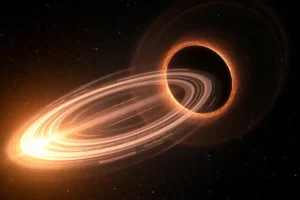
At the centers of most large galaxies lies a supermassive black hole, which can be millions to billions of times more massive than our Sun. These giants exert immense gravitational forces on their surrounding stars and gas, influencing galaxy formation and evolution. The presence of active supermassive black holes is often marked by an intense emission of energy known as active galactic nuclei, which can outshine entire galaxies.
8. Galaxy Formation and Evolution
The processes that give rise to galaxies are complex and multifaceted. Initially, galaxies formed from small fluctuations in density shortly after the Big Bang. As dark matter clumps began to form, they attracted gas and dust, eventually coalescing into galaxies. Over time, galaxies evolve through various stages, experiencing star formation, mergers, and sometimes, catastrophic events like quasar activity, dramatically altering their structure and behavior.
9. Cosmic Expansion and Redshift
Galaxies are not static; they are part of an ever-expanding universe. Edwin Hubble’s observations revealed that most galaxies are moving away from us, a phenomenon that results in redshift—a lengthening of wavelengths due to the Doppler effect. This discovery supports the Big Bang theory and emphasizes the fact that as space expands, galaxies drift further apart, which is a fundamental characteristic of our universe.
10. The Ongoing Search for Life
With the discovery of exoplanets within habitable zones around stars, the quest for extraterrestrial life has gained momentum. Galaxies are teeming with potential habitats for life. The intricate dance of stellar development and myriad chemical processes within these vast cosmic neighborhoods offers fertile ground for life to arise. As we explore further, the question remains: are we alone, or do we share the universe with other intelligent beings?
In conclusion, galaxies are magnificent cosmic tapestries woven together through time, space, and matter. Each fascinating fact reveals layers of complexity within these celestial giants. As humanity advances in its quest for cosmic understanding, our perception of the universe’s grandeur will continue to evolve, fuelling our imagination and desire to unravel the mysteries that still lie beyond the stars.
FAQ
What is a galaxy?
A galaxy is a vast collection of stars, gas, dust, and dark matter bound together by gravity.
How many types of galaxies are there?
Galaxies are primarily classified into three types: spiral, elliptical, and irregular.
What is dark matter?
Dark matter is a mysterious substance that makes up about 85% of the universe's mass and influences galaxy formation.



Leave a Reply