
Short Answer
The ancient world is replete with marvels that continue to mystify historians and archaeologists alike, but none quite capture the imagination like the pyramids. These iconic structures, often associated with the grandeur of ancient Egypt, are shrouded in enigma and fascination. They stand as monumental testaments to engineering prowess, spiritual significance, and the aspirations of a civilization long gone. Prepare to embark on a journey through some of the most astonishing facts about these towering edifices—facts that may compel you to reassess your understanding of history.
1. The Origin of the Pyramids: A Complex Evolution
Initially conceived as massive burial mounds, the vacuum-like simplicity of earlier tombs transformed into the complex architectural forms we now recognize as pyramids. The first true pyramid, the Step Pyramid of Djoser, was constructed around 2670 BCE. This evolution showcases humanity’s daring exploration into geometry and structural integrity, setting a precedent for future architectural feats.
2. The Great Pyramid of Giza: A Cosmic Alignment
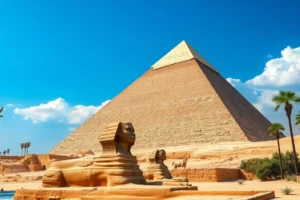
The Great Pyramid of Giza, the largest of all pyramids and one of the Seven Wonders of the Ancient World, is not just an architectural accomplishment; it aligns almost perfectly with the cardinal points of the compass. Intriguingly, its north side is aligned to within 0.15 degrees of true north. This precise orientation hints at the Egyptians’ profound understanding of astronomy and their desire to connect the earthly realm with the cosmic order.
3. Construction Techniques: Ingenious Workers, Not Slaves
Contrary to popular belief, the construction of pyramids was not predominantly executed by slaves but rather by a well-organized workforce comprising skilled laborers. These workers were likely employed on a rotating basis, receiving sustenance and compensation for their skills. This suggests a societal structure that valued craftsmanship, as well as a deep communal connection to these monumental undertakings.
4. An Astonishing Workforce: The True Numbers
Estimates suggest that tens of thousands of workers might have contributed to the construction of the Great Pyramid alone. Some historians argue that approximately 20,000 to 30,000 laborers worked in three distinct shifts to ensure that the construction continued around the clock. This sheer volume of manpower raises questions about supply chains, logistics, and management in ancient Egypt.
5. The Intricacies of Mathematics and Design
Pyramids embody more than just practical design; they represent an intricate understanding of mathematics. The ratio of the pyramid’s perimeter to its height yields the Greek mathematical constant pi (π), suggesting that ancient Egyptians possessed an understanding of complex mathematical principles. This insight reflects a society deeply engaged in scientific thought long before many established cultures.
6. The Hidden Chambers: Secrets Within
While the exterior majesty of the pyramids is captivating, the interior holds secrets that continue to be uncovered. The Great Pyramid contains several chambers and passageways, including the King’s Chamber and the controversial Queen’s Chamber, which were intended for the deceased pharaoh. Recent technological advancements have led to the discovery of hidden voids within the structure, igniting debates on their purpose and the potential treasures they may conceal.
7. Not Just for Pharaohs: The Pyramid of Djoser
The Pyramid of Djoser was not merely a royal tomb; it was a revolutionary idea that set the stage for subsequent dynasties. Situated in Saqqara, this step pyramid is considered the world’s earliest large-scale cut stone construction. Its architect, Imhotep, emerged as a legendary figure in Egyptian history, later deified as the god of architecture and medicine. This indicates that the pyramid was a symbol of progress and innovation.
8. Cultural Significance: Beyond the Grave
Pyramids served not only as tombs but also as cosmic gateways for the deceased pharaohs, believed to ascend to the afterlife. These structures were designed to mirror the rays of the sun, symbolizing a connection between the earth and the divine. Such beliefs underline the cultural significance of pyramids as mediators between life and death, reflecting a profound spiritual ideology deeply woven into the social fabric of ancient Egyptian civilization.
9. The Rediscovery: Modern Perceptions and Wonders
In the 18th century, European explorers began to rediscover these ancient marvels, sparking a fascination that persists today. Travel literature, archaeological studies, and popular culture have transformed the pyramids into a symbol of ancient mystery. The influx of tourism has offered new insights but has also raised concerns over preservation, leading to ongoing debates about how best to honor this legacy.
10. The Genetic Legacy: Modern Descendants
In an intriguing twist, archaeological findings suggest that many modern Egyptians share genetic links to the builders of the pyramids. This continuity hints at a remarkable resilience of culture, traditions, and lineage, challenging narratives that depict ancient Egyptians as a distant, isolated civilization. Their legacy, interwoven with the fabric of contemporary society, serves as a powerful bridge through the corridors of time.
As we unravel the extraordinary tapestry of the pyramids, a deeper appreciation emerges not just for their structure but for the civilization that birthed them. These ancient giants whisper tales of ingenuity, belief, and cultural evolution that transcend time. From their cosmic alignments to the skilled hands that sculpted their forms, each fact nudges upon the door of curiosity, beckoning us to linger longer within the shadows of their splendor. Consider the pyramids not merely as relics of the past but as dynamic connectors to an unending story that continues to unfold.
FAQ
What are the pyramids?
The pyramids are monumental structures built in ancient Egypt, primarily as tombs for pharaohs and significant figures, symbolizing their connection to the afterlife.
How were the pyramids constructed?
The construction of pyramids involved skilled laborers using advanced techniques and a well-organized workforce, rather than slaves.
What is the significance of the Great Pyramid of Giza?
The Great Pyramid of Giza is renowned for its architectural precision, cosmic alignments, and as one of the Seven Wonders of the Ancient World.




Leave a Reply